Lê aqui em português a entrevista exclusiva de Markus Duevel a MoustachesToys
“Music should inhabit the space — not be fired into it.”
— Markus Duevel
Duevel is one of the few home-audio brands systematically working with truly omnidirectional concepts. Their approach, technical yet intuitive, contrasts sharply with industry norms, typically based on forward projection and listening positions centered on the “sweet spot.” In this interview, Markus Duevel recounts his journey of questioning this tradition and seeking alternatives that make the listening room an active part of the sonic result.
The following summarizes the main ideas Markus shared, before the full Q&A transcription.
Philosophy and Starting Point
Markus’s main concern is not just technical fidelity, but how sound manifests in a real space. Listening should not depend on a fixed position. Omnidirectionality is less a statement of intent than an attempt to approximate how sound naturally disperses in an environment.
Breaking with Conventional Directionality
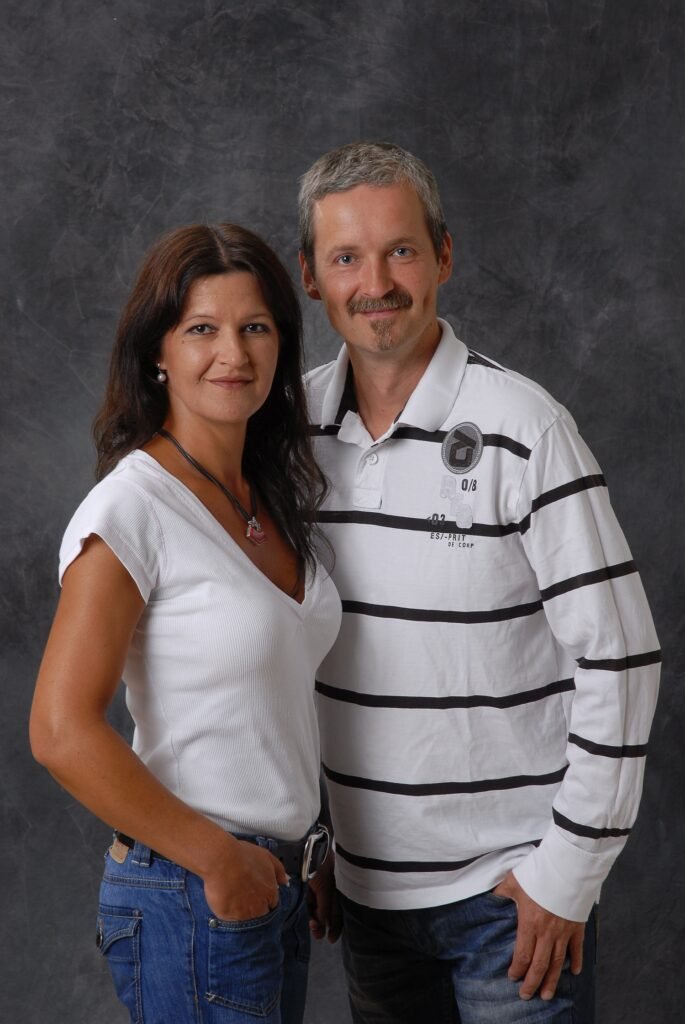
The turning point came from practical observation: most domestic playback is shaped by the room, both in amplitude and spatial perception. For Markus and his wife Anette, the limitations of traditional speakers became clear after years of listening and experimentation, prompting them to explore alternative approaches.
Development and Technical Process
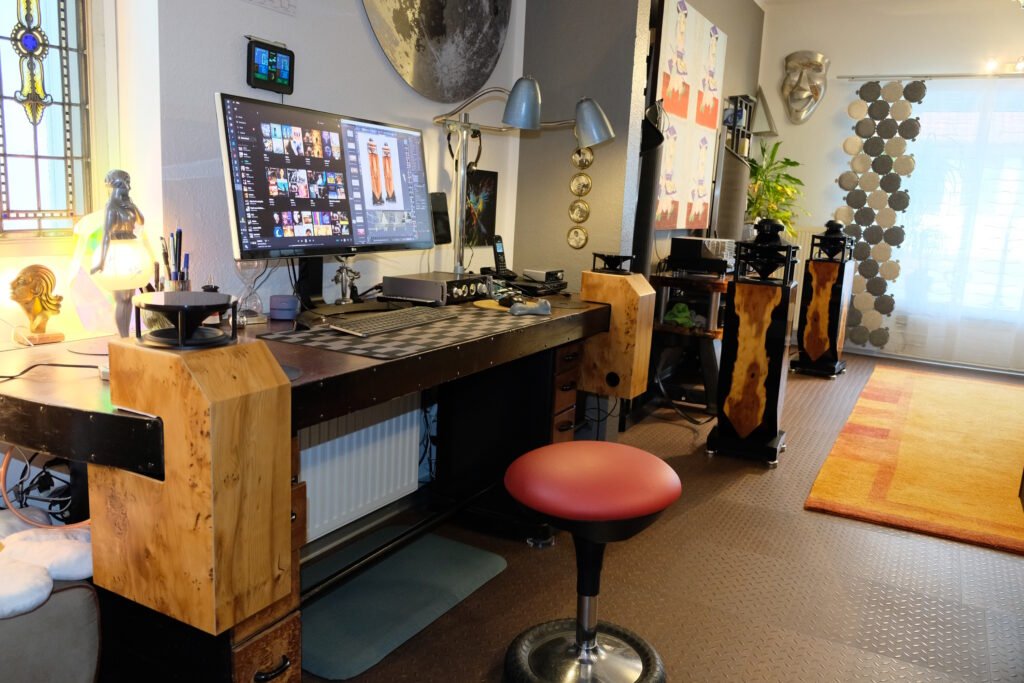
Building a Duevel speaker involves continuous experimentation: cabinet geometry, dispersion, materials, simulations, and successive prototypes. A key milestone was abandoning conventional crossovers and creating custom solutions to ensure temporal and spatial coherence in a 360° field. Final tuning is always conducted in real rooms, not just in laboratories.
“Measurements matter — but listening matters more.”
— Markus Duevel
Psychoacoustics and Engineering
Psychoacoustics guides design: how the brain interprets sound, the relationship between timing, timbre, and spatiality. Markus emphasizes that some aspects critical to musical perception are not captured by conventional measurements.
Challenges of Omnidirectionality
Dispersing sound evenly over a full arc without distortion or irregularities was a long-term challenge. Radial horns, materials, and phase control were studied extensively until consistent results were achieved.
Recent Innovations
Recent breakthroughs include: new horn and driver concepts, advanced membranes, and high-precision acoustic simulations — enhancing spatial stability and sound signature control.
Key Models and Identity
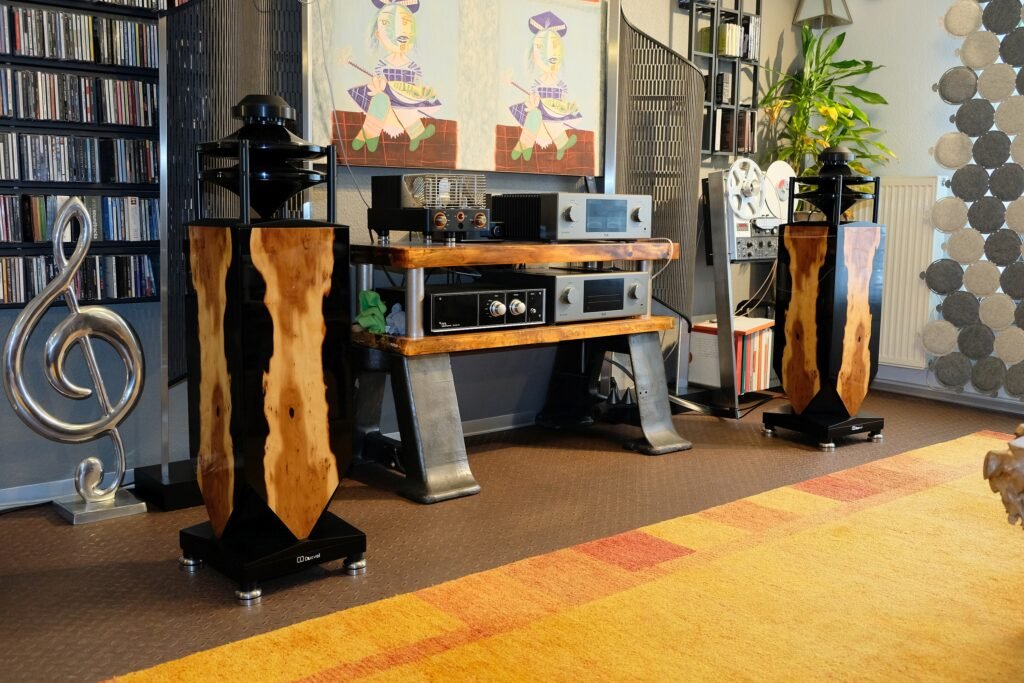
The Bella Luna often represents the brand’s work — not for commercial reasons, but because it embodies what Markus considers essential: compact scale, naturalness, and expressivity.
Precision and Emotion
Precision, especially temporal, is a prerequisite for musical experiences to carry emotional weight. Markus reframes the usual hi‑fi dichotomy: technical rigor and emotional impact coexist.
Perceptions and Misconceptions
Common misconceptions about omnidirectional systems include loss of detail, diffuse imaging, or phase issues. Markus explains that when rigorously applied, these solutions overcome such critiques.
The Role of The Planets
The Planets model is the brand’s entry point, allowing access to omnidirectional spatial reproduction for domestic contexts on smaller budgets.
Reflections, Diffuse Field, and the “Keyboard of Hearing”
Concepts described by Anette Duevel — controlled reflections, diffuse field, and the “keyboard of hearing” — illustrate how room characteristics are integrated into speaker design, emphasizing natural behavior and listening consistency.
Paths for the Future
Markus anticipates a growing interest in immersive representations, less reliant on the classic stereo triangle, alongside clearer and less jargon-heavy technical communication.
Listening More Attentively
The interview concludes with reflection on listening habits: simplify systems, value the room, listen attentively, and revisit recordings to rediscover subtle details.
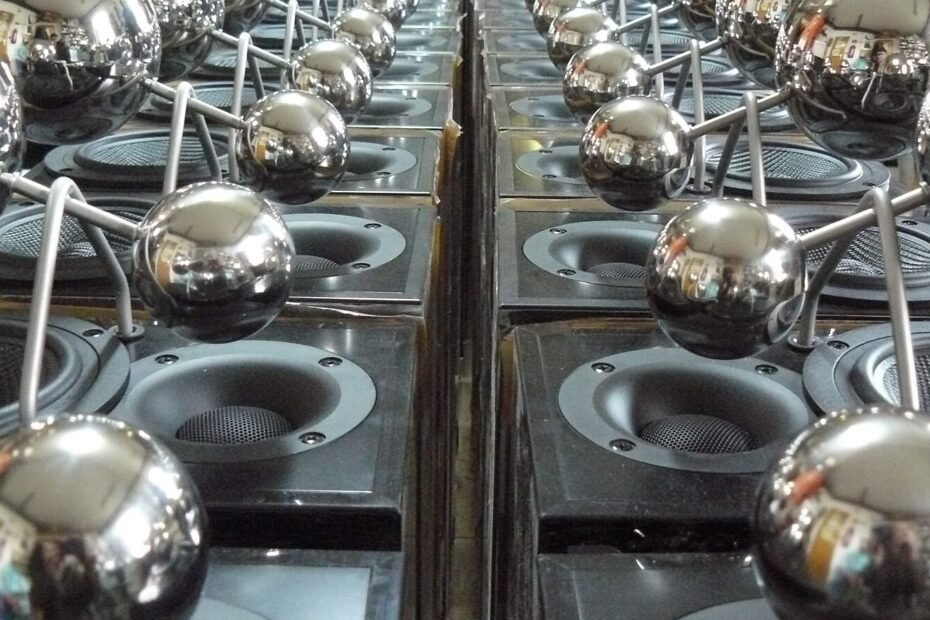
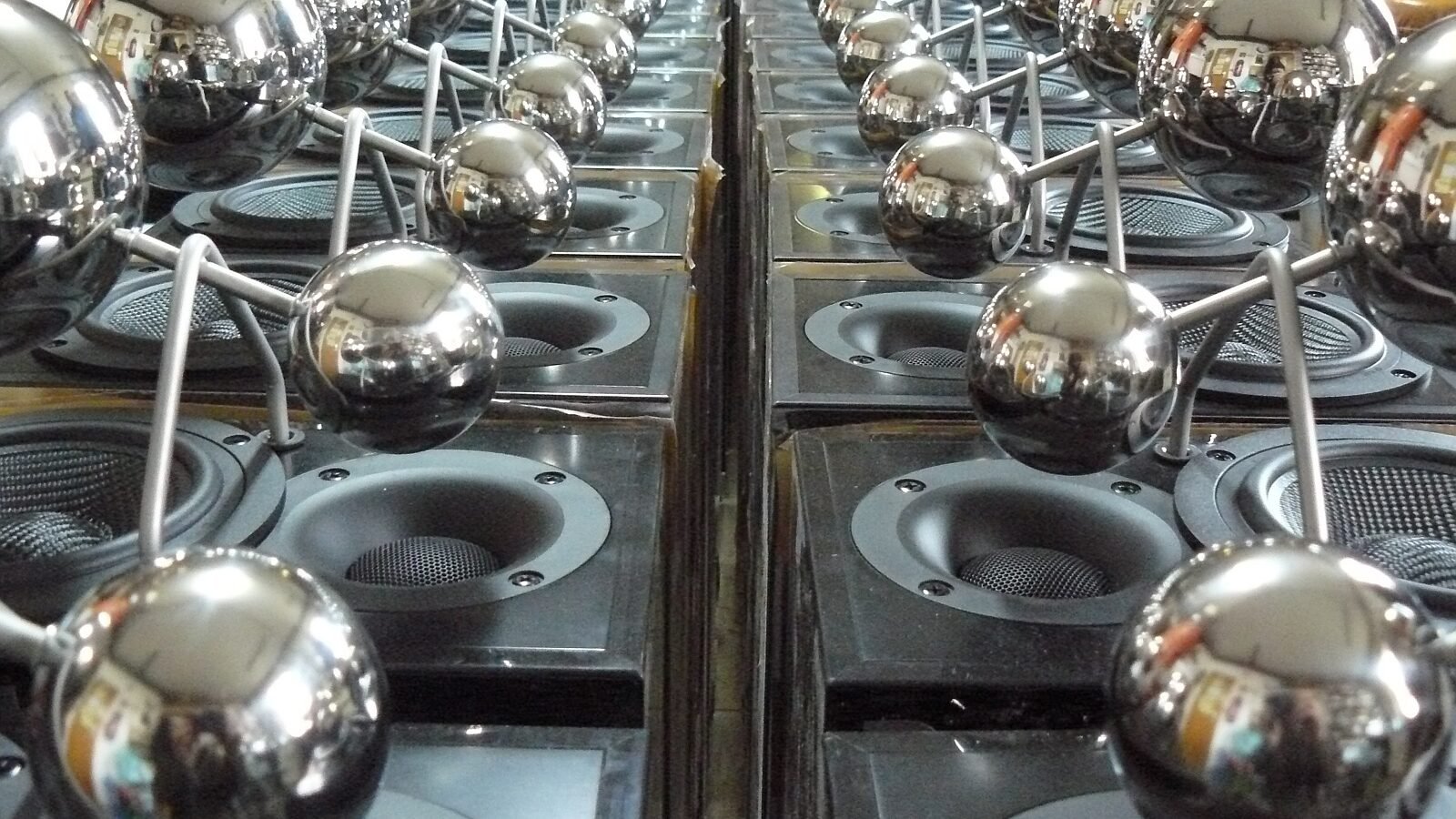
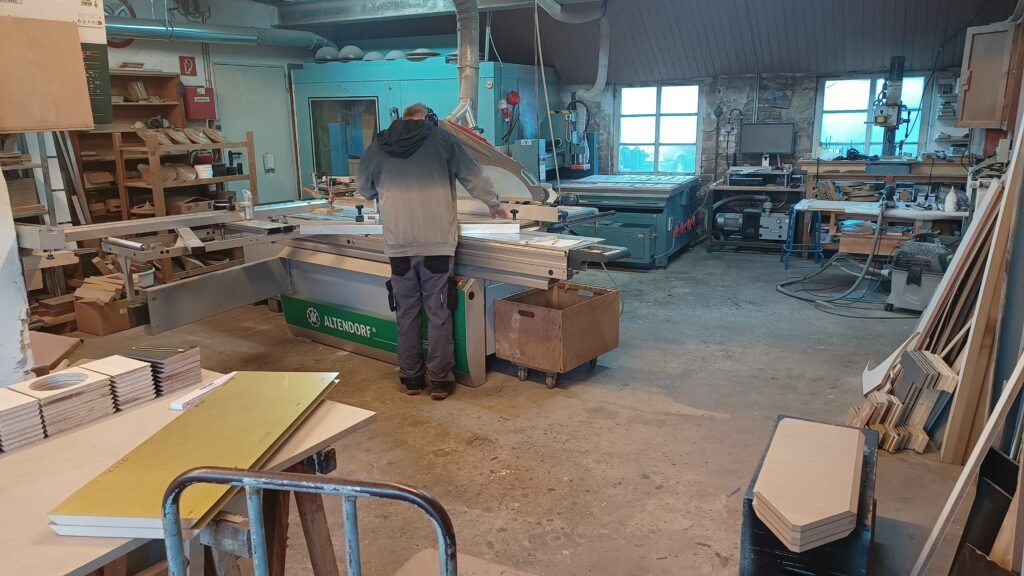
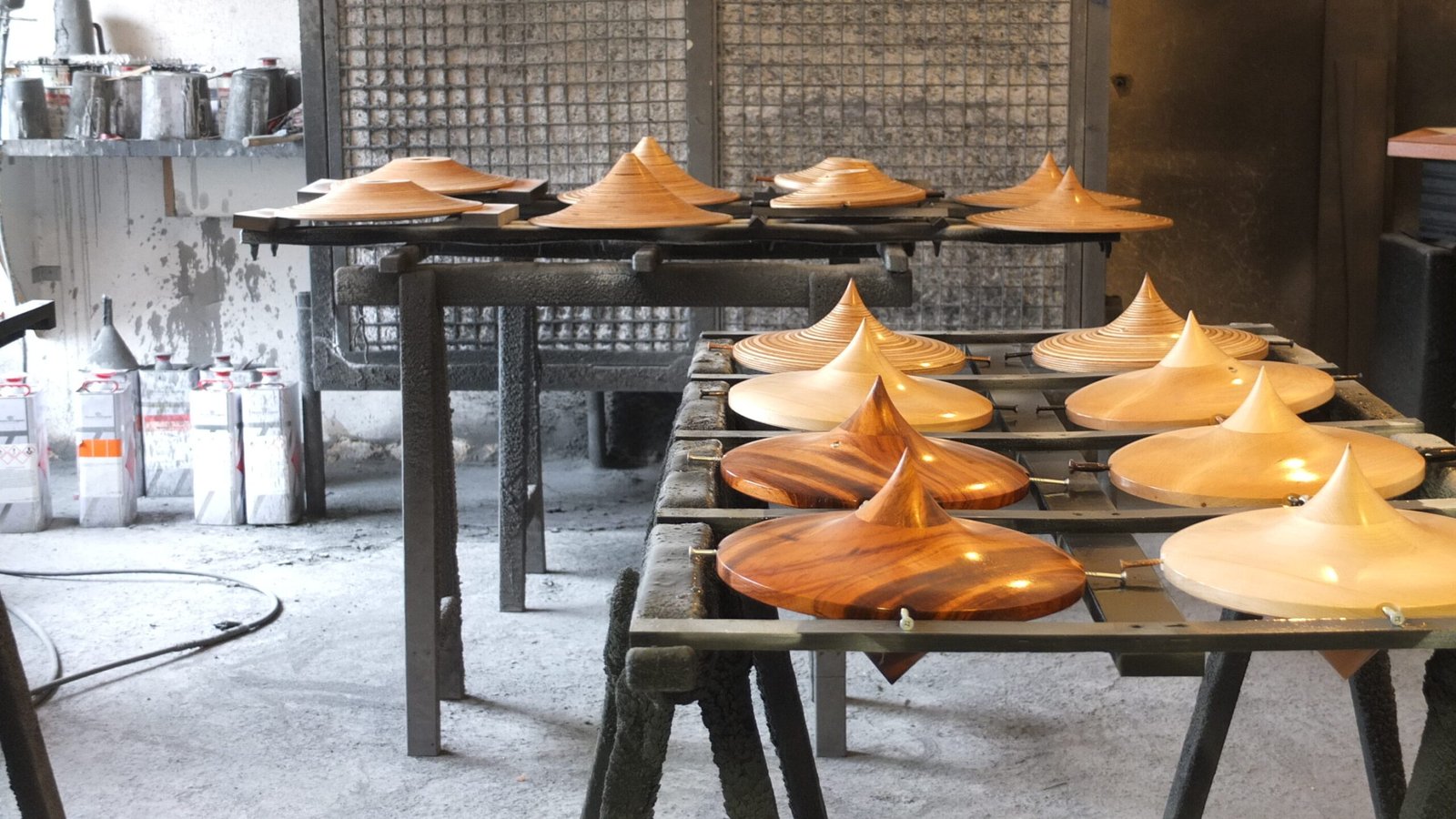
Videos of the manufacturing process:
THE ORIGINAL Q&A
1. Duevel decided to walk a different path. How would Markus define the core philosophy that drives the company: the desire to challenge conventions, the pursuit of a more natural auditory experience, or something deeper?
The pursuit of a more natural, lifelike listening experience and a pleasant, complete sound experience for everyone present, without a sweet spot.
Focus: Realistic spatial and sonic reproduction through omnidirectional (360-degree) concepts and an emphasis on the musical experience rather than supposedly “technically perfect” measurements.
A philosophy that recognizes the listening space as an integral part of the sound, as a final audio component, and immerses the listener in the most authentic sound world possible.
2. The shift from direct-radiating loudspeakers and horn systems to omnidirectional designs was pivotal in Duevel’s history. What inner dissatisfaction or curiosity triggered this transition?
A plausible motivation behind the change was that direct radiation and conventional horn systems often limited the soundstage too much to a central radiation direction, thus making the listening experience dependent on the room’s acoustics and the listener’s position. My wife and I were dissatisfied, and it was time to explore new avenues:
- the desire for a more natural, room-filling soundstage that incorporates the entire listening space
- the realization that omnidirectional designs create the musical experience “around the listener” and support a more realistic spatial perception
- the pursuit of making the stereo image and surround character not only measurable but also emotionally tangible, regardless of seating position in the room
In short: the desire to re-examine conventions and create a soundstage that more accurately reflects natural room acoustics and the live experience.
3. Could you walk us through Duevel’s loudspeaker design process, from the first conceptual spark to the finished omnidirectional loudspeaker?
- Initial idea and objective: To develop an omnidirectional loudspeaker. Focus on natural spatial imaging, wide dispersion, and reduced dependence on listening position.
- Concept development: Consideration of cabinet shape, omnidirectional characteristics, dispersion angle, material selection, and damping to achieve even sound distribution in the room.
- Simulation and early models: Use of acoustic analyses, room dynamics, and initial prototypes to test the effects of cabinet design, port/driver arrangement, and reflections.
- Prototype construction: Production of initial testing models, often with different driver configurations and cabinet shapes, to assess practicality, sound character, and room integration.
- It became apparent that conventional crossover circuits were unsuitable, necessitating the development of a new filter topology to achieve phase-coherent dispersion.
- Listening tests and fine-tuning: Adjustment of timbre, impulse response, sound localization, and stereo imaging within typical living room/listening room environments; adjustments to frequency response, diffusion, and phase response.
- Iterations: Multiple iterations of prototypes and measurements to achieve a balance between neutrality, musicality, and spatial imaging.
- Finalization: Final adjustments to the cabinet finish, connections, stability, and preparation for series production, including quality control.
4. Duevel speaks of the ear’s complexity and the brain’s emotional processing of sound. How do these insights influence their engineering decisions?
In short: Understanding the complexity of the ear and emotional sound processing influences technical decisions toward natural, spatial sound reproduction and musicality, even if measurements alone don’t explain everything.
How this translates into concrete results:
- Spatial imaging instead of mechanical measurements: Focus on wide, even dispersion and perfect timing so that the listener perceives the sound as in the original recording.
- Emotionally rich timbre: Fine-tuning of timbre and impulse response to support musicality and naturalness instead of simply pursuing linear accuracy.
- Temporal response: Minimizing unintentional phase shifts and timing delays so that sound sources remain localizable and the audio signal is perceived as vibrant.
- Profile-oriented testing: Listening tests in real-world room settings (living room, speaker placement) instead of just lab measurements to ensure that changes actually enhance the emotional impact.
- Dynamics and detail resolution: Strategies for the clean reproduction of subtle nuances so that the listener is more emotionally engaged.
5. In the brand’s early years, the radial horn concept required fundamental research and years of experimentation. What has been the most difficult challenge in perfecting omnidirectional horn systems?
In short: The biggest challenge was achieving precise, uniform sound dispersion across the entire listening field without introducing unwanted directivity, phase shifts, or frequency dependencies that distort the spatial image.
In brief:
- Seamless impulse response: Uniform distribution of sound energy in all directions with good temporal accuracy.
- Frequency coverage: Consistent levels across the entire frequency range, from bass to treble, without significant level fluctuations or cavitation from the horn.
- Phase and timing coherence: Minimizing phase shifts between drivers and within the horn system to preserve localization and musicality.
- Realistic room response: Evaluation and optimization in real-world living spaces, not just in the lab, to achieve natural timbre and stereo imaging.
- Structural implementation: Development of durable, stable horn designs that do not compromise acoustic properties.
6. What innovations, materials, technologies, or acoustic concepts have been most transformative in his recent work?
My most recent work was groundbreaking in its combination of innovative horn and driver concepts, advanced membrane and material systems, and precise acoustic simulations.
7. There is a series of speakers that each marked a turning point in Duevel’s evolution. Is there a model that Markus feels captures the purest essence of the company’s vision? Why?
Good question. I think the Bella Luna, with its compact design and musical charm, represents our company.
8. How does Duevel balance the tension between engineering precision and the emotional impact of music: the pursuit of goosebumps, as Kai has described it?
Duevel aims to present technical precision (precise timing, linear reproduction) and emotional impact (goosebumps, musicality) not as contradictory, but as two sides of the same coin. Key approaches:
- Technical foundation: advanced horn/driver designs, high-quality diaphragms, accurate measurement technology and simulations for consistent spatial imaging.
- Emotional appeal: emotion-oriented sound control, fine-tuning of timbre, temporal response and dynamics, adaptation to the actual listening room.
9. Omnidirectional systems still face prejudice in certain segments of the audio community. What misconceptions does he believe persist, and how does Duevel address them?
We address common misconceptions about omnidirectional systems with clear explanations and practical examples. Key points:
- Misconception: Omnidirectional systems are always “diffuse” and details are lost. Counterargument: Duevel emphasizes that orthogonal electronics, radiation pattern, and spatial imaging are designed to preserve transparency and detail resolution. Targeted geometry, high-quality drivers, and diffusion structures achieve realistic spatial imaging with precise nuances.
- Misconception: Sound is inhomogeneous or unbalanced near walls. Counterargument: Careful calibration, spatial diffusion, and individual room optimization aim for consistent imaging across the listening position.
- Misconception: Phase and timing problems are unavoidable. Counterargument: High-quality driver arrangement, unique crossover topology, precise cabinet design, and software-based tuning control the temporal behavior, preserving musicality and impulse response.
- Misconception: Omnidirectional systems are less precise in their imaging detail. Counterargument: With the right timing, the opposite is true.
10. Duevel has long championed accessibility. What role does the Planets model play in the broader mission of the company?
The Planets are our entry-level model. We also want to offer people with smaller budgets the opportunity to enjoy pleasant and omnidirectional music in their homes.
11. Anette Duevel’s writing in the website highlights the importance of reflections, diffuse field, and the “keyboard of hearing”. How do these psychoacoustic principles shape Duevel loudspeakers?
Reflections: Duevel loudspeakers utilize controlled reflections to create a spatial image. Wide dispersion produces clear room reflections that enhance localization and deliver a realistic surround sound.
- Diffuse sound field: The system aims to achieve uniform diffusion across the listening position. This results in a more homogeneous sound perception across the entire listening area, rather than just at a single point, with fewer spot or front effects.
- Keyboard of listening: This concept refers to the fine gradations of timbre, impulse response, and volume that allow the listener to consciously “play” or hear different sonic qualities. In practice, this means precise timing and tonal adjustment, combining musicality, articulation, and detail with intuitive perception. Specific impact on Duevel loudspeakers:
- Specific cabinet designs and driver arrangements aimed at spatial diffusion and realistic soundstage imaging.
- Easy setup to achieve the desired reflections and diffusion behavior in the respective room.
- No complex front end is necessary.
12. Looking ahead, what direction does Markus foresee for loudspeaker design, both for Duevel and for the hi-fi landscape as a whole?
- Greater interest in spatial representation and diffusion techniques, not just a direct focus on level and linearity.
- Focus on user experience, intuitive operation, and clear, understandable communication of technical concepts.
- Finally, moving away from the rigid stereo triangle.
13. Finally, what advice would he offer to listeners seeking to rediscover the emotional purity of music at home, beyond formats, trends, and technological conditioning?
- Focus on personal resonance: Listeners should give space to their own emotional response instead of being driven by format- or trend-driven approaches.
- Use space as an instrument: Consider the listening room as part of the sonic effect (positioning, lighting, minimal interference) to enable natural musicality.
- Set clear priorities: Less technical clutter, more clarity in timbre, timing, and nuance. Experience authentic timbres instead of perfect measurements.
- Rediscover through intimacy: Direct, unedited music listening in a relaxed setting; use pauses to perceive details.
- Trust in physical musicality: Consciously enjoy the advantages of analog-like reproduction, natural impulse response, and spatial depth.
- Patience and repetition: Listen to pieces multiple times, compare different interpretations to trace emotional nuances.
Pingback: MoustachesToys meets Markus Duevel: Um Horizonte de 360 Graus - MoustachesToys | High-End Audio Reviews & Experiences