My wife likes to think I have autistic traits.
We live in times when everything seems to end in a diagnosis. I’m of a different generation — one that prefers to believe that most of these “traits” are simply personality, and that too many therapists have graduated lately, each one entitled to make a living.
But why this introduction? Because I am, apparently, prone to obsessions.
I used to be something of a petrolhead. Fines and increasingly draconian regulations made it almost impossible to truly enjoy a great car. That particular obsession slowly faded — until, just over a decade ago, something else returned to take its place: the idea that I have the right to hear the music I love the way it deserves to be heard. And fittingly, it all started with a car. But that story is for another time.
For years, I fed my passion through high-performance automotive content. One of those dream manufacturers was Pagani — a company that fascinated me not just for the engineering, but for the obsession with detail. The idea that every invisible element exists to push performance further, and to create something emotionally overwhelming for whoever is lucky enough to experience it.
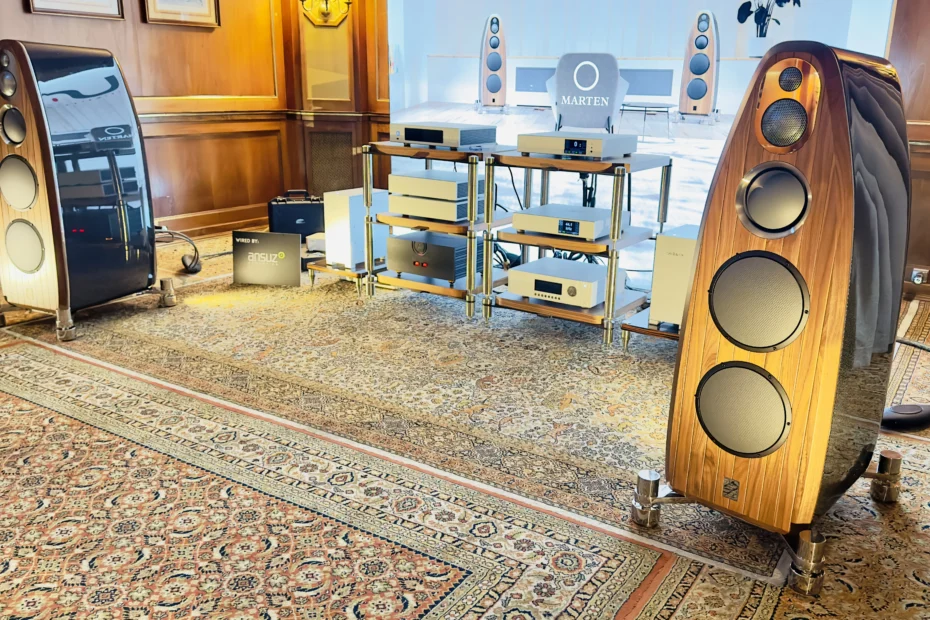
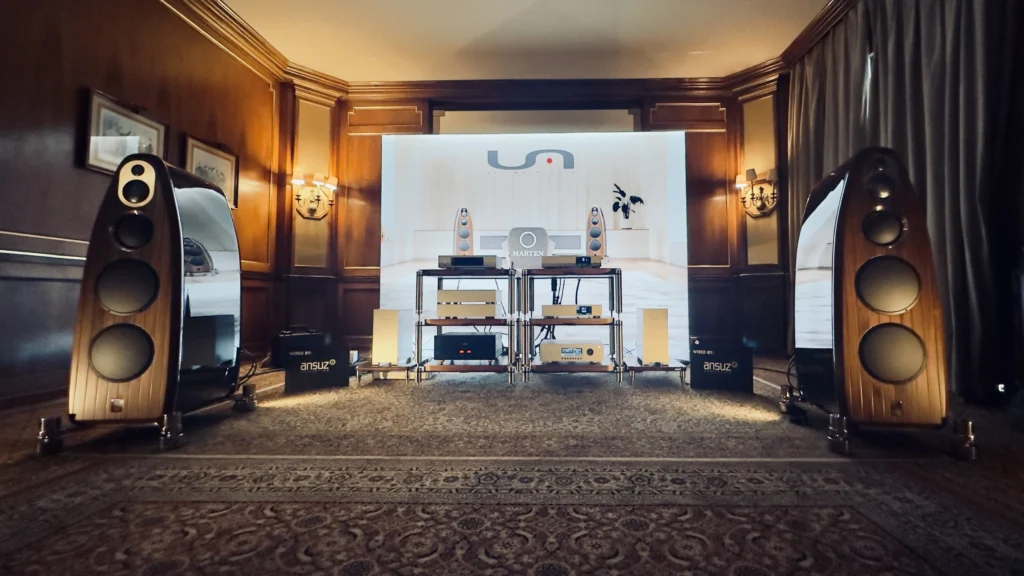
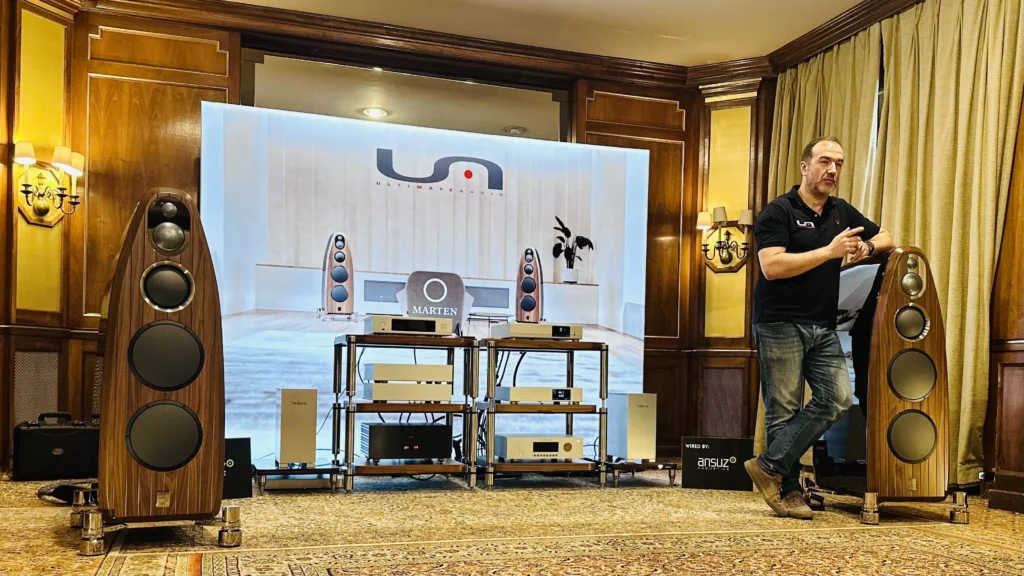
The system I had the privilege of hearing — or rather, experiencing — at the latest Ultimate Sessions Extreme, in the Bridge Room of the Palácio Hotel do Estoril, took me directly into that territory.
Yes. That kind of comparison.
The System
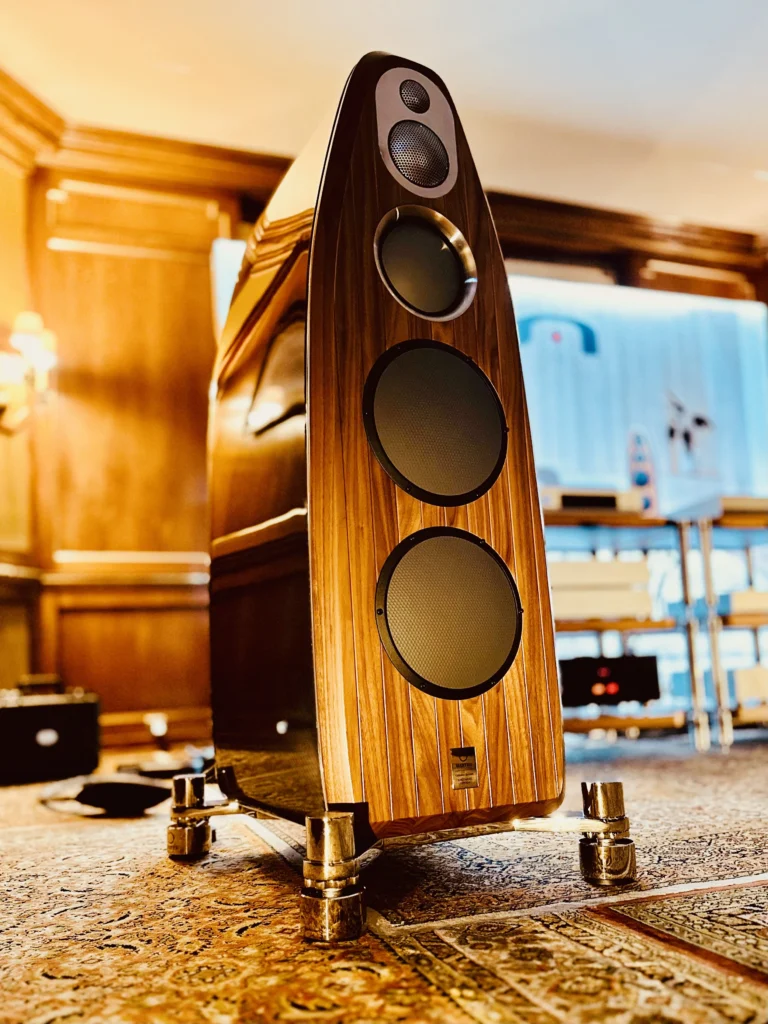
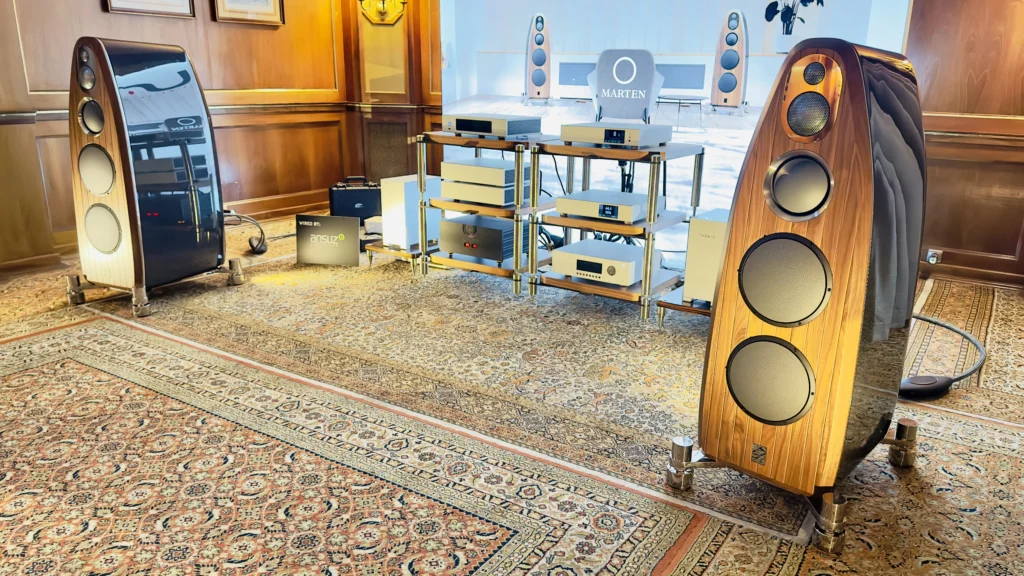
The loudspeakers — the strikingly beautiful Marten Coltrane Quintet — are sculptural objects. They confirm a personal theory: speakers don’t just have to sound right, they have to look right. These would look extraordinary in my listening room… if my bank account agreed. As for the sound — we’ll get there — but there’s no point pretending: they sang. And they enchanted.
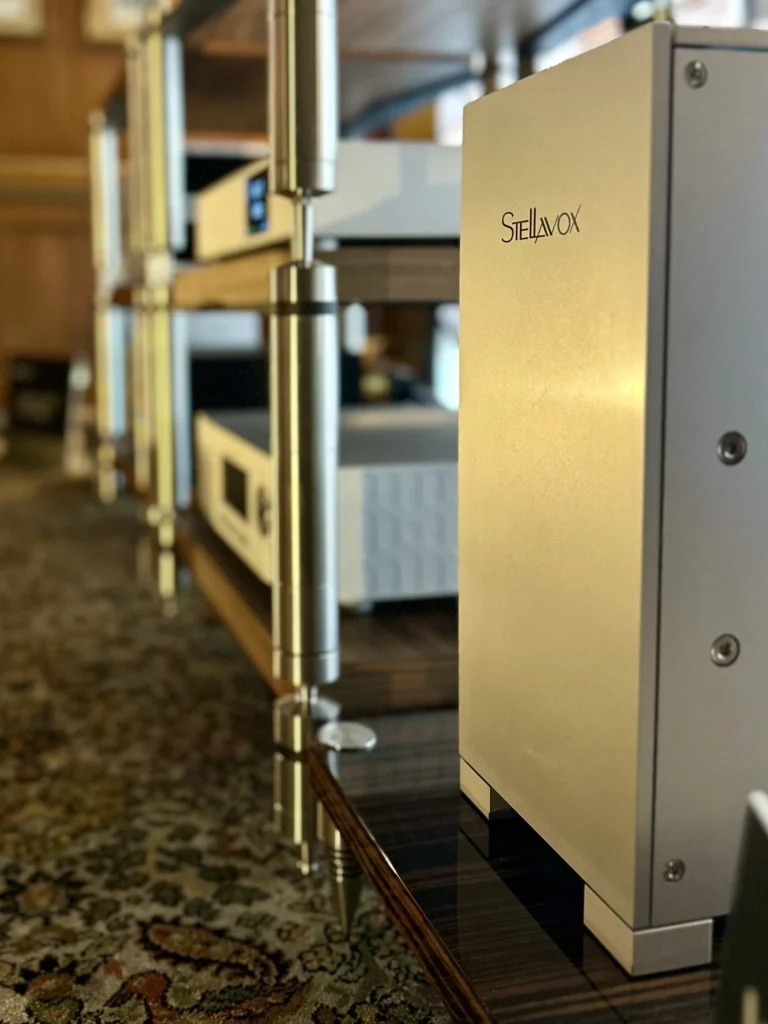
On the amplification: the Stellavox Idem monoblocks, paired with one of the preamplifiers I most admire, the Boulder 1110. I’ve seen it perform miracles in systems well below — and well above — its price point, which is already beyond the reach of most.
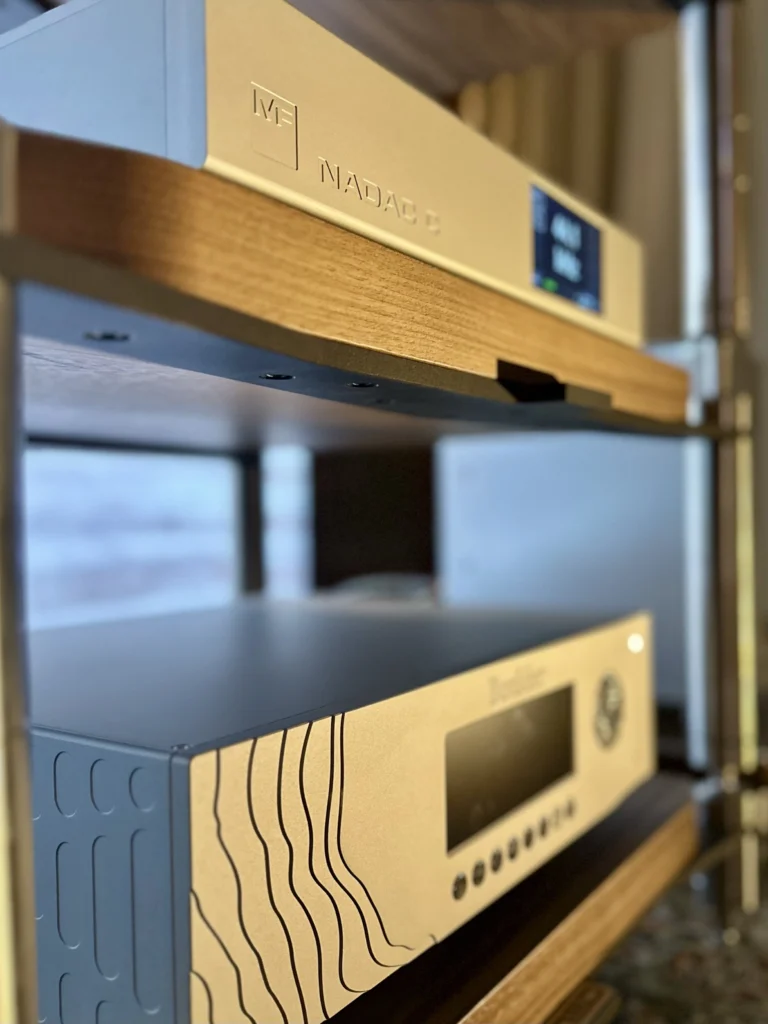
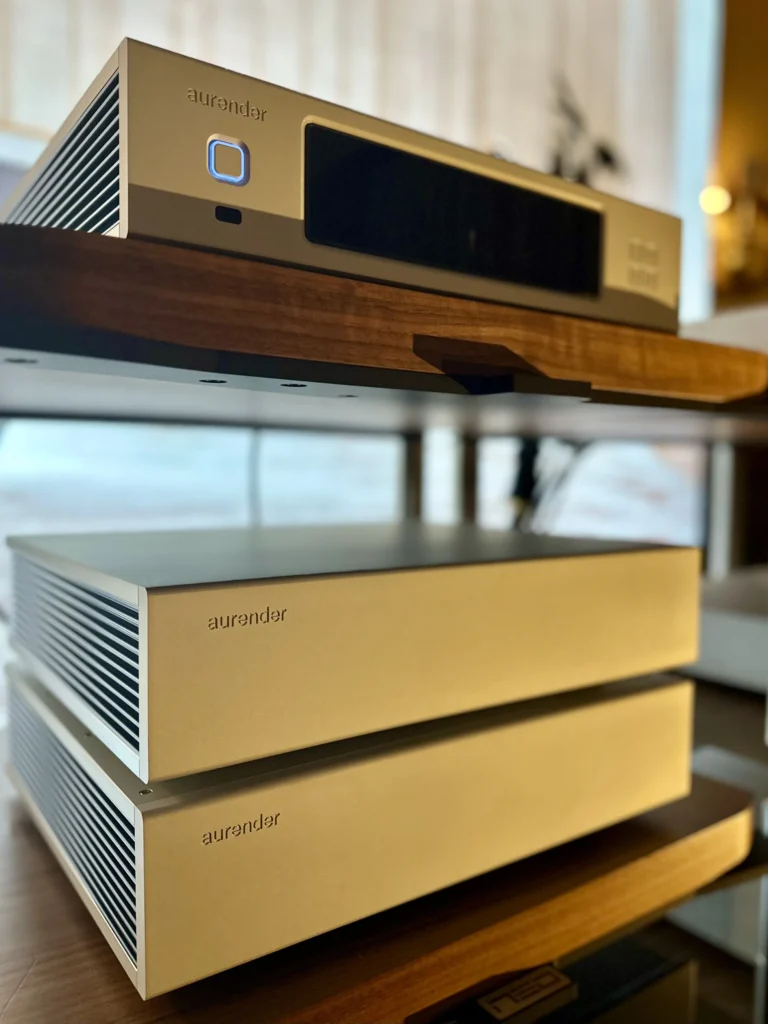
The digital source was handled by the Master Fidelity NADAC D and C (DAC and clock), fed by the Aurender N50 network streamer — the Korean brand’s flagship, fitted across three chassis.
Any one of these components would impress on its own. But as with a Pagani, it’s not just the hand-assembled AMG V12, nor the exclusive design, that defines the experience. It’s the obsession with detail that reaches all the way down to the invisible — to the titanium grade-7 palladium-coated bolts, custom-made, each stamped with the Pagani name, costing the company €80 a piece to produce.
That’s where the parallel closes.
Because in this system, that same level of obsession extended to everything: full Ansuz D-TC Gold Signature cabling throughout, network conditioning via Taiko router and filter, Audiotricity Stheno power conditioning, Arya Kyoon power filters on every outlet in the room. Links included for those who want to explore each of these “bolts” further.
Nothing was left to chance.
The total? A system north of €600,000. The cabling and power treatment alone account for roughly the equivalent of a well-specced Porsche Boxster S.
Those who can, enjoy! Those who can’t — well, there’s always the next demonstration. I’ll be at the upcoming Ultimate Session in Porto, ready to get my fix again.
And How Does It Sound?
A system like this isn’t measured in specifications. It’s measured in whether it keeps you in your seat — or not.
We opened with St. James Infirmary (Live Edition) by Angela Brown. What projected into the room wasn’t just her voice — it was her presence. The energy, the body, the performance. It didn’t feel like a recording of a live event. It felt like the event itself, happening right there. The Martens disappeared, and Angela took their place.
With O Primeiro Dia by Sérgio Godinho — a Portuguese singer-songwriter with the kind of weathered, intimate voice that resists polishing — I wasn’t at a demonstration. I was at the concert, seated in a comfortable chair at the Palácio Hotel. That slight grain in his voice, the way the words lean into the melody — all of it present, unvarnished. Godinho, in the Bridge Room.
Blues for Madeleine by Bodil Niska brought a saxophone with a woody, almost rough texture — never aggressive, but with that rare balance between detail and density. You could feel the air moving, the metal vibrating. Exposed sound, but not a trace of sterility.
The Thrill Is Gone by Fragile, confirmed the pattern: absolute control without killing the emotion. This system always with headroom to spare. Music at the surface of the skin — and the skin of the drums.
And then came Bach — Toccata and Fugue in D Minor.
The room filled. It vibrated at the frequency of the pipe organ. Literally — and not only.
These are moments when I stop analysing. The sound pressure, the scale, the weight — were no longer there just sound. It was pure physical presence. I felt it in my body. And beyond that, I felt that dangerous impulse: I want this!
Professionalism? Out the window. The truth is, after two full days of listening to dozens of systems, every trace of fatigue had evaporated. I didn’t want to leave.
Rebonds B by Christoph Sietzen showed another dimension: speed, attack, transient control. Every impact had a beginning, a middle and an end — nothing bled, nothing blurred. Pure energy, but disciplined.
Then a jump to Take Five by the Kenichi Tsunoda Big Band. Swing, space, interplay between sections. The soundstage was almost visual — you could practically see the musicians distributed across it, each in their place, effortlessly.
Drown by ZABO proved the system doesn’t only shine on audiophile recordings. Dense layers, modern production — everything separated and intelligible, but without sacrificing impact. If anything, more impact, more authority. All without breaking a sweat.
Chris Botti’s My Funny Valentine with Sting brought intimacy. The trumpet opens with controlled brilliance; Sting’s voice responds, raising the stakes. Here, less was more — and the system knew how to step back.
Dindirindin by the Calmus Ensemble was an exercise in vocal purity. Harmony, breath, microdynamics — those small variations that separate hearing voices from feeling an ensemble.
Diferencias sobre las Folias by the WoodAir Quartett let the cello lead, with a naturalness that was almost disarming. Body, wood, resonance — nothing artificial or exaggerated. And space, when needed, for the winds to step forward.
Marcus Miller’s Jean Pierre brought groove. Bass with authority — fast, articulate, present but never overpowering. Hard to do. Even harder to do well. Done here with a cherry on top.
And to close, Garota de Ipanema by Rosa Passos. Simple. Fluid. Effortless. As it should be.
And perhaps that is what impresses most: not the spectacle, not the price, not even the technical obsession.
But the rare sensation that everything is exactly where it should be. In time and in space.
To Close
Last year the bar was already high. I left convinced it would be difficult to repeat — let alone surpass.
This year they not only repeated it — they made the problem worse: they left in the air the dangerous idea that there is always room to go further.
And for someone prone to obsessions… that rarely ends well.
But there are worse problems to have — a system like this, at least, won’t wrap itself around a tree.
Pingback: Is Hi-Fi About Equipment? Goldmund Answers - MoustachesToys | High-End Audio Reviews & Experiences
Pingback: Abril no Estoril — Ultimate Sessions Extreme 2026 - MoustachesToys | High-End Audio Reviews & Experiences