There are events that need digesting. This is mine of Goldmund’s arrival in the Iberian market — in a showcase at Ultimate Audio Lisbon Headquarters, three rooms, three systems, one of them featuring a pair of monoblocks that look like they escaped from Space: 1999 (remember that?). It belongs, quite clearly, to a category apart from what I’ve grown used to in recent years. I took my time writing this piece on purpose — because the first impression of a hi-fi event is almost always emotional, and believe me, the temptation to lean into that emotion was strong. Goldmund, more than any other brand I’ve heard recently, invites that immediate desire (emotion). But once some time had passed, a few cold showers along the way, what stayed wasn’t the memory of “good speakers” or “good amplification.” What stayed was the clear sense that Goldmund is, right now, on a plane apart from everything I’ve heard since I started writing about these experiences.
This isn’t a slight to every other brand I’ve known — far from it. It’s, rather, an acknowledgment that above excellence, there’s still another territory. A place where we stop assessing “very good, excellent reproduction” and start assessing honesty in music, full stop. That’s exactly what the three rooms, each with a distinct proposition, forced me to reconsider: listening not as a critic, but as someone genuinely sitting in front of an orchestra, a guitar, a singer.
I also had the chance to speak with Rodolphe Boulanger, Goldmund’s representative, and Christophe Savioz, from Stenheim, the Swiss brand that “lent” one of its reference-line speakers to the monumental 4800 monoblocks system in the “heavy artillery” room — because for heavy artillery, you need ammunition to match. As for the interviews, here they are:
Room 1 — Active Goldmund speakers + Eidos Streamer
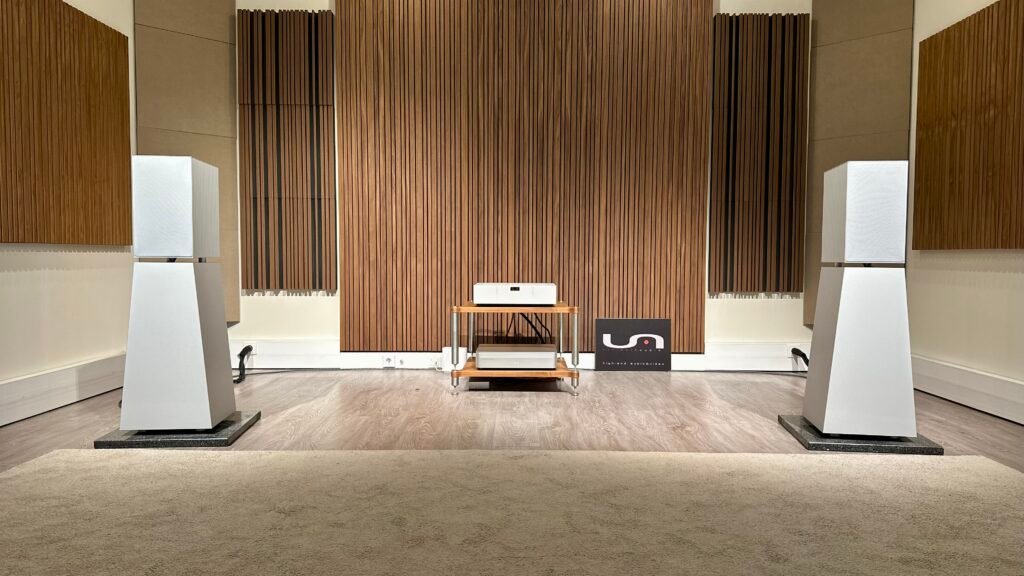
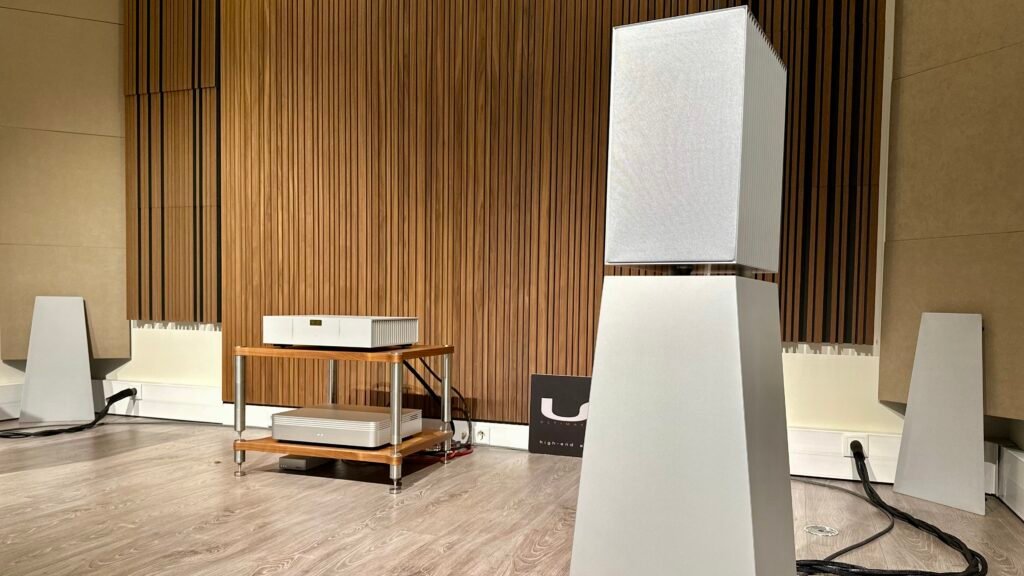
The first room presented the “simplest” architecture, but the boldest philosophy: the Eidos streamer feeding directly the active Asteria speakers. No preamp, no separate amplifier, no web of cables competing for the spotlight. I’ll admit I walked in with a certain bias — the idea that chain simplicity means simplicity of result. I had to back down, and quickly.
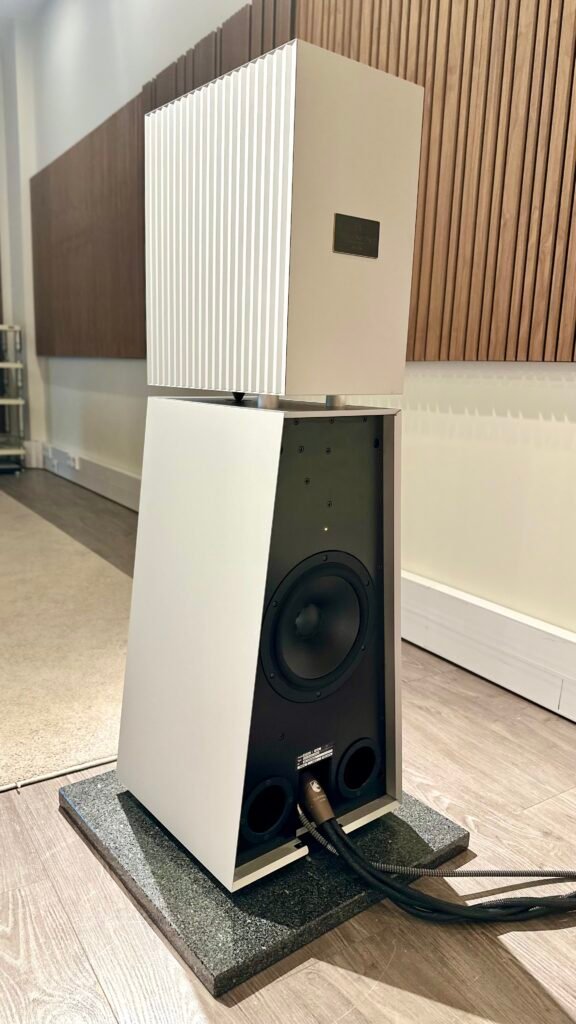
Right from River of Tears, by Eric Clapton, the guitar wept in a kind of instrumental outpouring — overwhelming and, at the same time, cleansing. Next came The Heroic Weather-Conditions of the Universe, Pt. 7, by Alexandre Desplat, his tribute to the finale of Tubular Bells Part One, with the room showing above-average tonal coherence, likely helped by being an active system — free of the patchwork seams that so often betray the joining of separate components.
But it was with Com Que Voz — Camané performing Camões’s poem set to Alain Oulman’s composition, this time on Mário Laginha’s piano — that the Asteria disarmed me completely. I expected a more “architected,” more restrained reproduction given the simplicity of the design; instead I found something organic, honest, realistic, faithful to the lament the track demands.
Chasing Cars, in Chantal Chamberland’s textured, smoky voice, brought intimacy and vulnerability — almost a secret shared by candlelight. Raising Venus, with Malia and Boris Blank’s electronica rich in three-dimensional texture, showed hypnotic sensuality and an enveloping bassline that never lost control. And Into My Arms, in Camille O’Sullivan’s dramatic signature, was perhaps the most theatrical moment I heard in this room: it starts as a whisper and collapses into a cathartic, torn vocal delivery, amplified by reverb and a palpable tension served up on a tray by the Asterias.
If there was one point where this room fell slightly behind the other two, it was in note decay and that sense of “aliveness” — arguably the least “alive” of the three systems on demonstration, though that in no way undermines its timbral naturalness, which sat well above average. It was precisely here, in fact, that I found myself, metaphorically, wobbling on the wall between this room and the one with the Telos 690 integrated amp and Kroma Jovita speakers — undecided about which medal to hand to whom.
What struck me most, though, was the separation of orchestral sections — honest, real, free of the “fireworks” so often talked about, frequently by people who’ve never actually sat in front of a real orchestra. Anyone chasing spectacle needs to look further up the brand’s hierarchy, or simply elsewhere.
And above all: the system disappeared. The music — yes, music, not sound — came from the room, not from the speakers. No harshness or sharp edges, despite a level of detail worthy of a MRI scan; no exaggerated treble (and those who follow me know how sensitive I am in that range); no dynamic compression.
Room 2 — Goldmund Telos 690 integrated amp + Kroma Atelier Jovita + HZ streamer
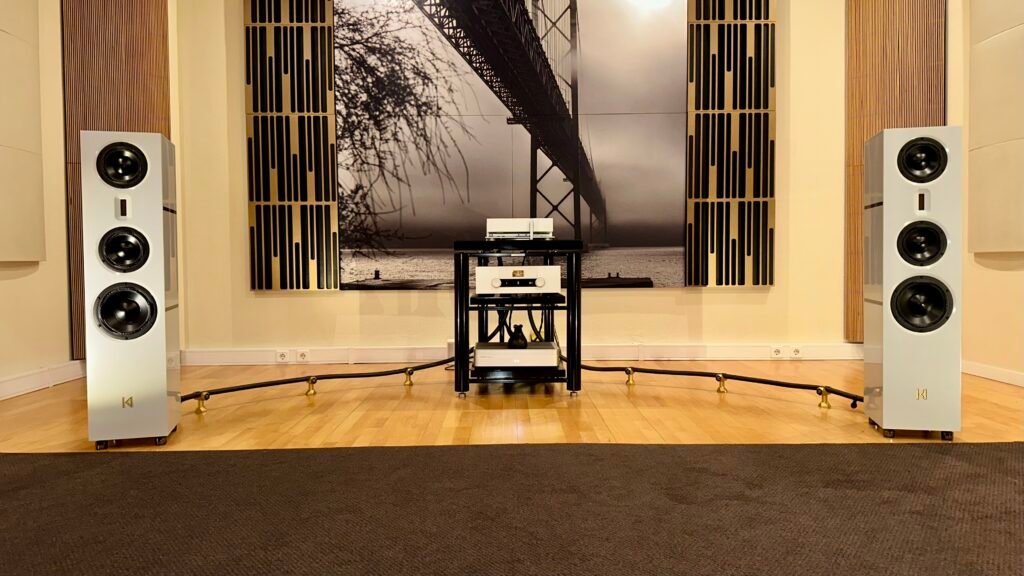
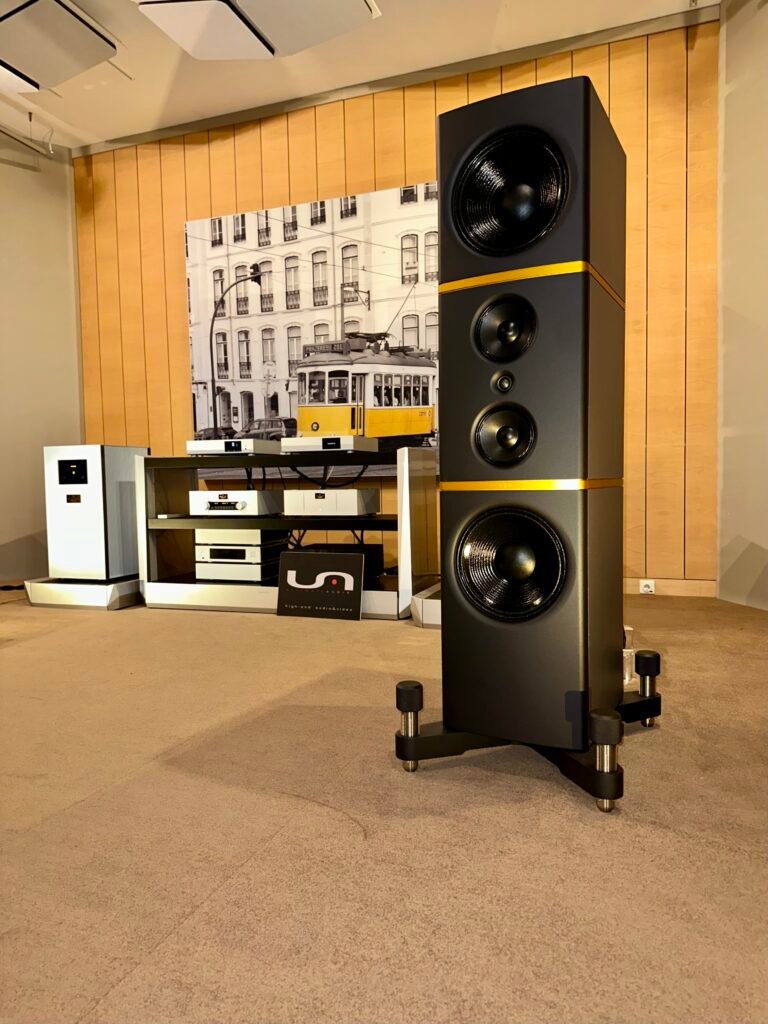
If the first room was a lesson in delivery, the second was a lesson in communion with the music. Here, the HZ streamer fed the Goldmund Telos 690 integrated amp, connected to the Kroma Atelier Jovita speakers — and from the very first track, House of the Rising Sun by The Ghost of Johnny Cash, I realized I was in front of the system I most easily “forgot” I was evaluating, simply staying there to feel.
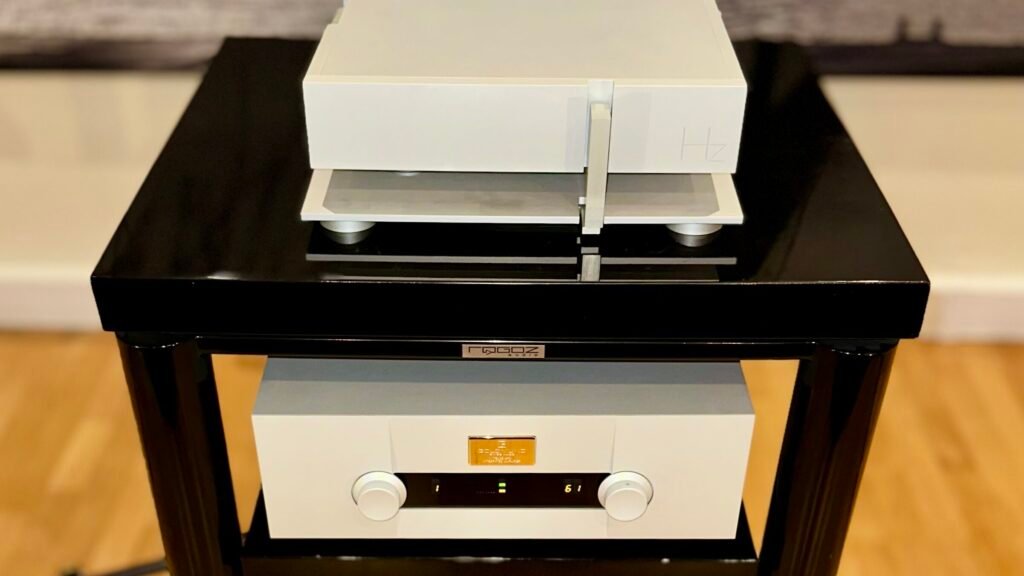
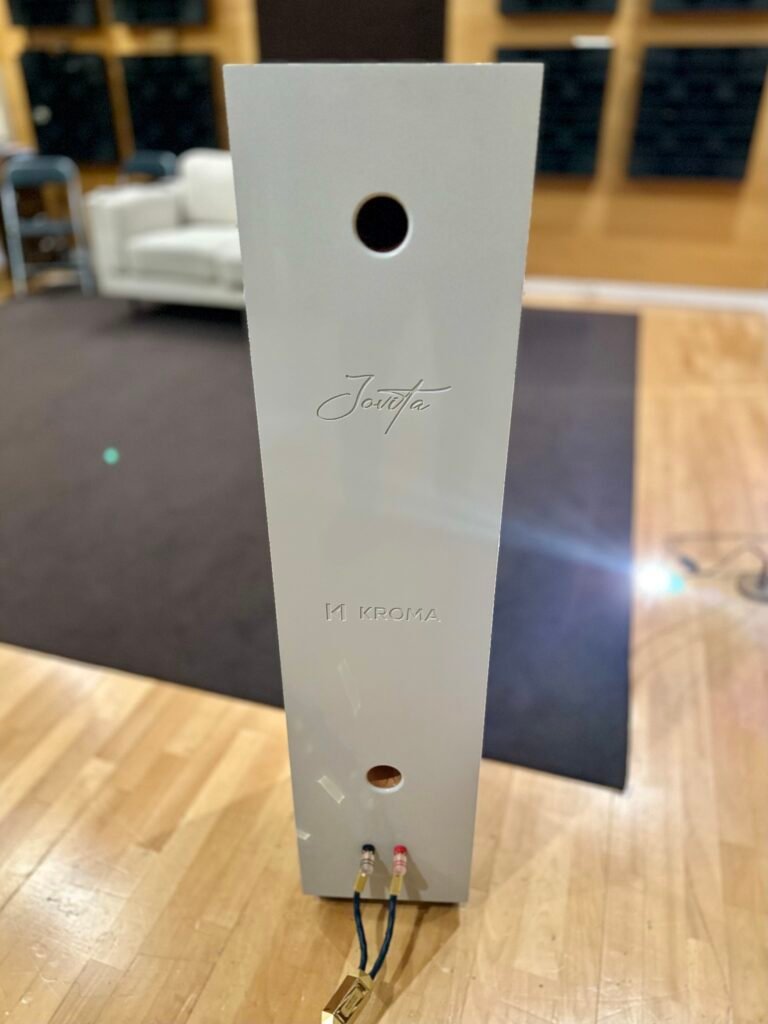
In Scheherazade, with the Chicago Symphony Orchestra under Fritz Reiner, the room responded with a scale and authority that owed nothing to any room of the same caliber of the 4800-monoblock room, which I’ll get to shortly. But it was above all with Time After Time, in Miles Davis’s live version, that everything clicked: I felt every musician in communion, and the exchange between trumpet and guitar was, without exaggeration, magical. Though here the communion was, above all, between the musicians and me — and, I’d guess, with everyone else in the room at that moment.
From there, track after track, the system kept revealing itself as increasingly impressive. In its bass control, for instance — as in Invocation (A Prophecy), by Richard Bona — and particularly striking in The Astounding Eyes of Rita, by Anouar Brahem, where I noticed something that doesn’t always hold true: absolute transparency and the full transport of everything embedded in the recording, and music, don’t always go hand in hand — but here they did.
There was still room for the more intimate side of the listening session: in Purple Rain (Acoustic), sung by John Adams, and in Mama This One’s For You, again with Chantal Chamberland, once more confirming how her textured voice seems there to test the tonal coherence of audio systems. Asa Branca, in Arild Remmereit’s orchestration with the NDR Radiophilharmonie, brought the orchestral dimension back into the room, and Avalanche, by Prince, again highlighted attack, naturalness and note decay. And closed with Createur Immobilier, by Joscho Stephan live — a perfect ending for a system that, from start to finish, never once sounded fatiguing, yet remained consistently impressive in its ability to captivate me.
It was in this room that I felt the hardest balance to put into words: total transparency without ever reminding you there’s equipment standing between you and the music.
The Heavy Artillery Room: Goldmund 4800 + Stenheim Ultime Two SX
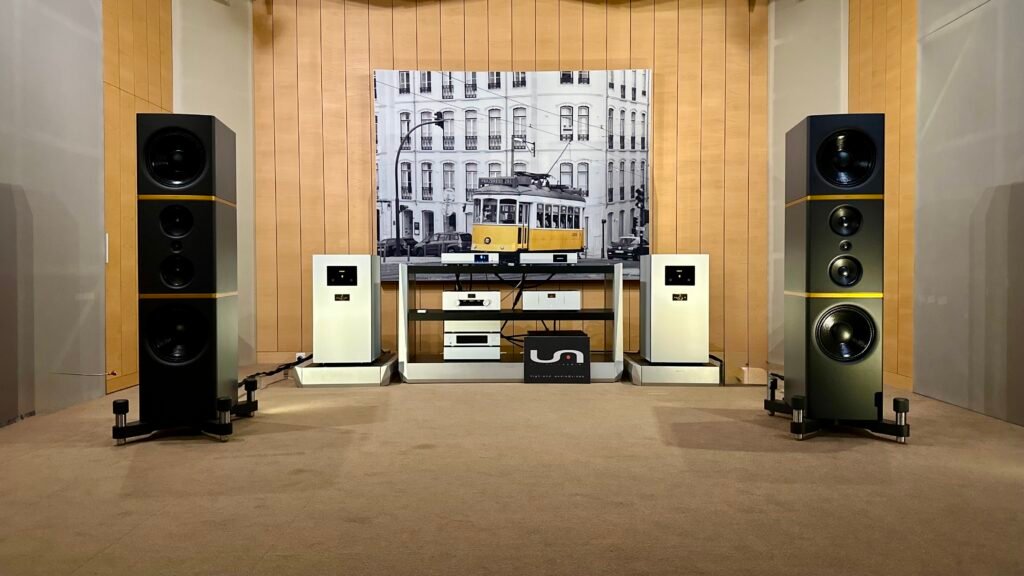
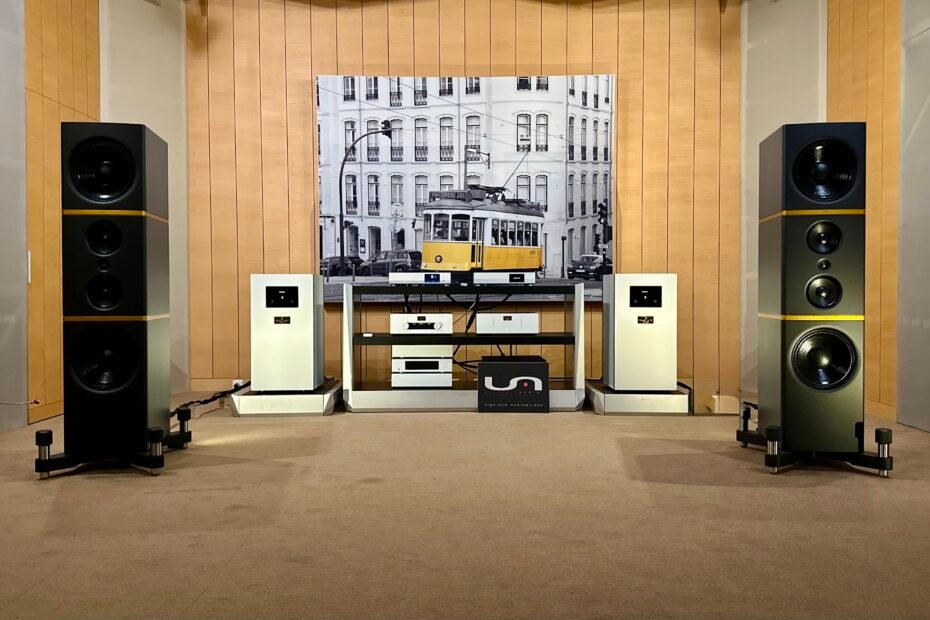
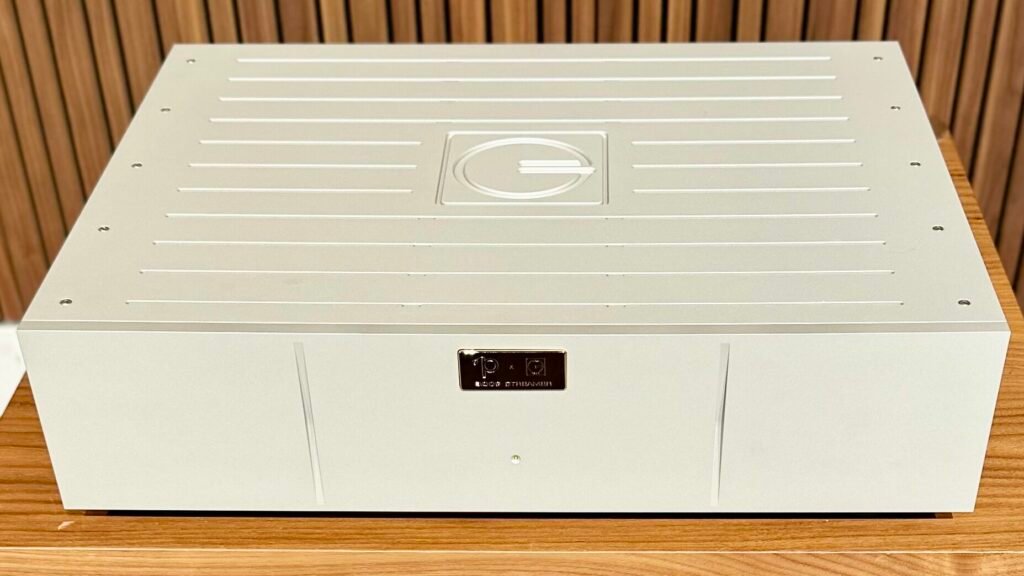
For heavy artillery, you need artillery-grade ammunition. The third room needed no introduction, even before the music started: the monumental Goldmund 4800 monoblocks, paired with a set of reference-line speakers from Stenheim, another Swiss brand.
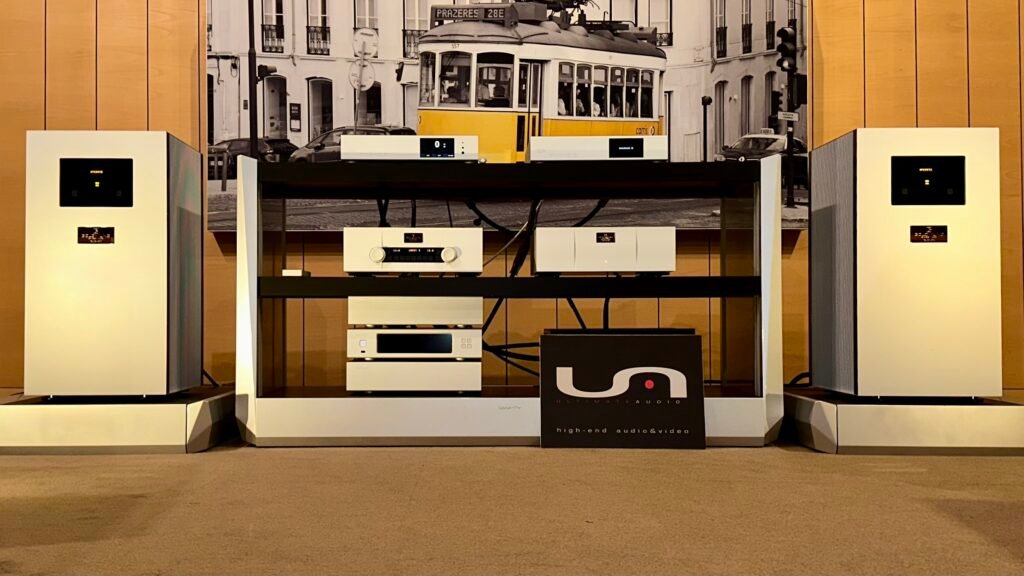
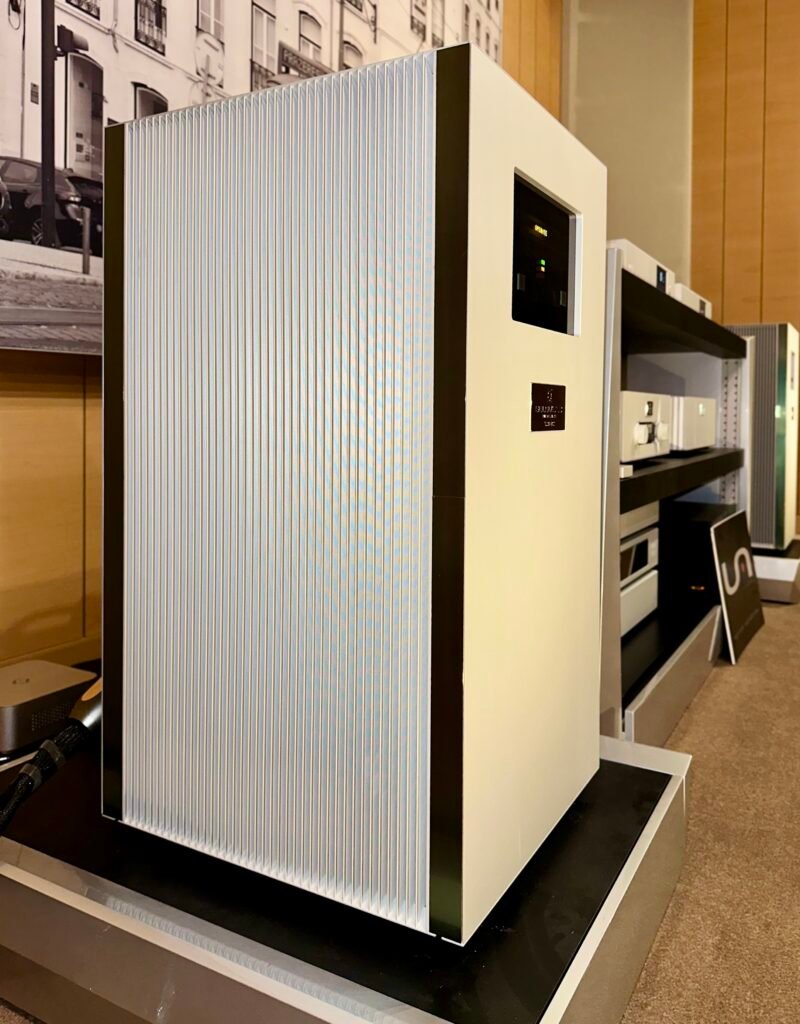
The choice of repertoire here felt deliberately challenging. Summertime, in Patricia Barber’s voice, served as a warm-up. Ancient Poem, by Savi Band, made me think the Eurasian tectonic plate might have shifted — such was the power, and the ease with which it was handled, shown respectively by the monoblocks and speakers of these two Swiss brands. Til Fader Vor At Ende, by Anne-Lise Berntsen and Nils Henrik Asheim, brought the room to an almost sacred register, a delicacy that deliberately contrasted with the physical scale and monumentality of the monoblocks and the two aluminum towers in front of me.
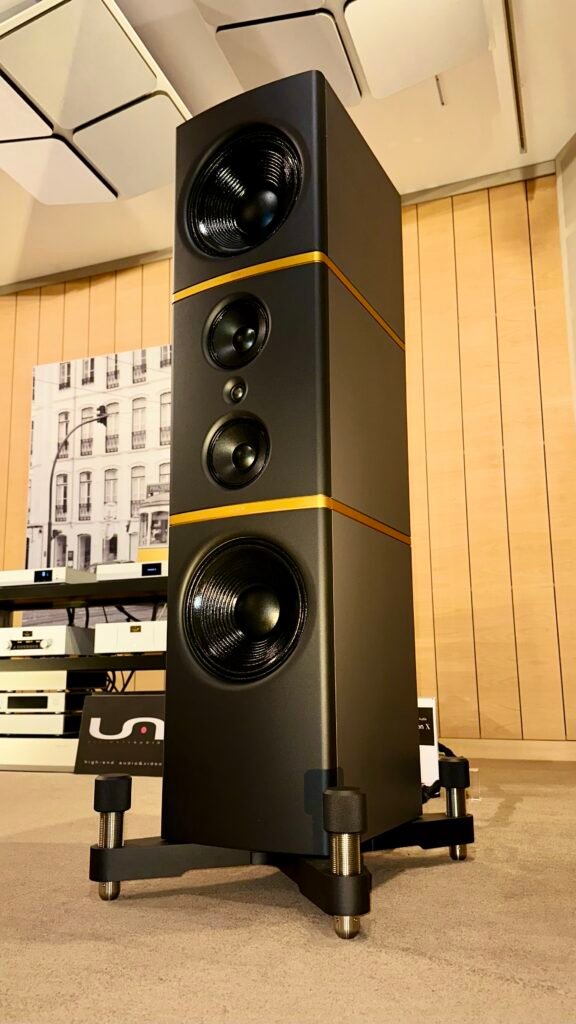
Hallelujah I Love Her So, in Harry Belafonte’s unmistakable voice, and the irresistible Pink Panther, by Markus Philippe, brought the room back to a more relaxed register — proof that power here doesn’t mean losing the ability to “play” with the music. But it was with the Piano Concerto No. 3 in C Minor, Op. 37: I. Allegro con brio, by the Swedish Radio Symphony Orchestra under Daniel Harding, with Maria João Pires on piano, that the room reached its most revealing moment: I concluded, once again, with striking clarity, that the piano is, at its core, a percussion instrument — and this system showed it without any restraint, every hammer strike arriving with mass, body, and perfectly proportioned decay. And with the two words I kept repeating to anyone who asked about what I’d heard: “honest realism“.
This was, unsurprisingly, the “what if I won the lottery” room — the kind of thought only truly superlative systems manage to provoke in me.
What remains, once the initial spell wears off
I heard, across all three rooms, a sound that was realistic and honest, basically free of fireworks, and yet deeply organic — with varying levels of emotional impact depending on the room, but never, in any of them, an intentional attempt to impress purely through spectacle. There was fireworks, mind you, but only in the artillery room, born of the temptation of who was at the controls to demonstrate another trait of the 4800s paired with the Ultimes: the ability to make shifting tectonic plates look easy.
The main room, with the 4800s and the Stenheim, left me wondering whether I could survive on just one kidney. But if this event taught me anything about myself as a listener, it’s that, personally, my heart and gut leaned, in the end, toward the room with the Telos 690 and the Kroma Jovita — perhaps the hardest balance to strike between scale, control, and the ability to disappear. I confess I’m curious how this same integrated amp would sound paired with the also-Swiss Stenheim Alumine Two.Five — without straying beyond equipment I already know reasonably well, or beyond the brands present at this event. Consider that a challenge thrown at Ultimate Audio.
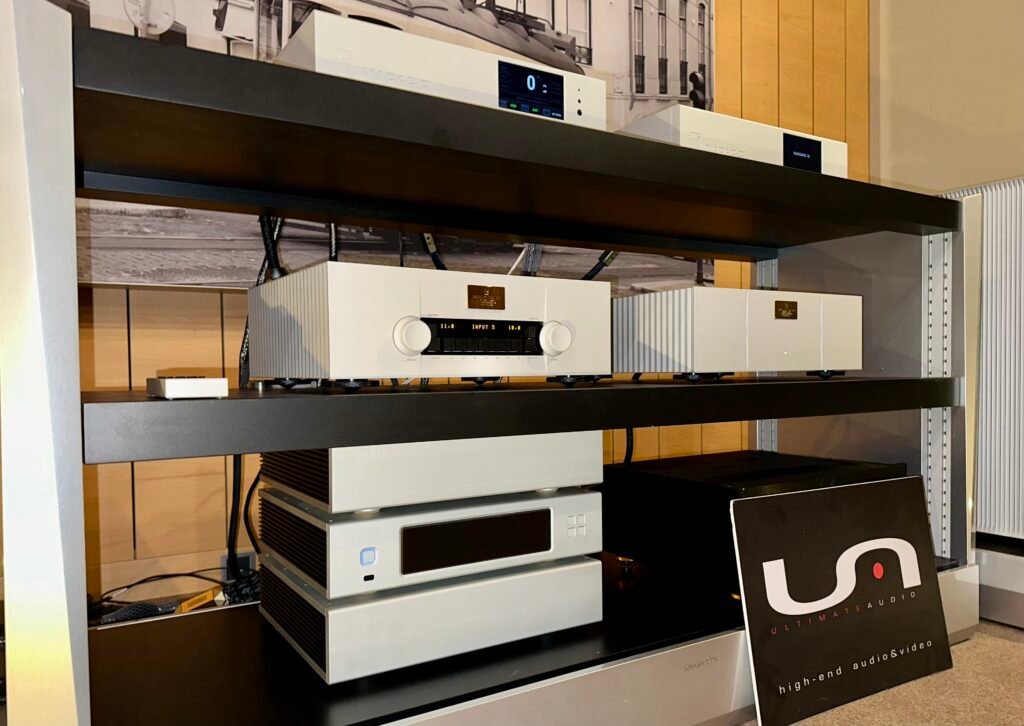
And then there’s the Asteria. For the 99.9% of the world that would rather not build towers of stacked components tangled in a web of cables, Goldmund’s proposition — Eidos streamer plus Asteria active speakers — is probably the most logical of all the systems on show. And yes, I’ll admit it without hesitation: I still belong to that other 0.1%.
In the end, what this Iberian-market showcase made clear wasn’t just that Goldmund makes good products. It’s that there is, genuinely, a level above — not through marketing, not through price-for-price comparisons, but through a coherence of philosophy that runs across three completely different rooms and always arrives at the same destination: music!, not the equipment. For anyone lucky enough to one day live with one of these systems, consider this fair warning — don’t go looking for spectacle. What you will find is reality. An honest one. And be warned: you run the risk of never listening to music the same way again.
Impressions gathered during Goldmund’s presentation to the Iberian market at Ultimate Audio Lisbon, with the Stenheim Ultime Two SX in the “1812” room.
If you like the way we cover the world of audio here at MoustachesToys, you’re always welcome to give the Mous’letter a go – you’ll find things that you won’t anywhere else.
Pingback: "We want to be honest": Christophe Savioz on the philosophy of Stenheim - MoustachesToys | High-End Audio Reviews & Experiences
Pingback: Goldmund: The End of the Audiophile Journey? — MoustachesToys meets Rodolphe Boulanger - MoustachesToys | High-End Audio Reviews & Experiences
Pingback: MoustachesToys meets Audiovector. The brand did the one thing nobody expected - MoustachesToys | High-End Audio Reviews & Experiences
Pingback: Alta-Fidelidade é sobre equipamento? A Goldmund responde em Portugal e Espanha - MoustachesToys | High-End Audio Reviews & Experiences