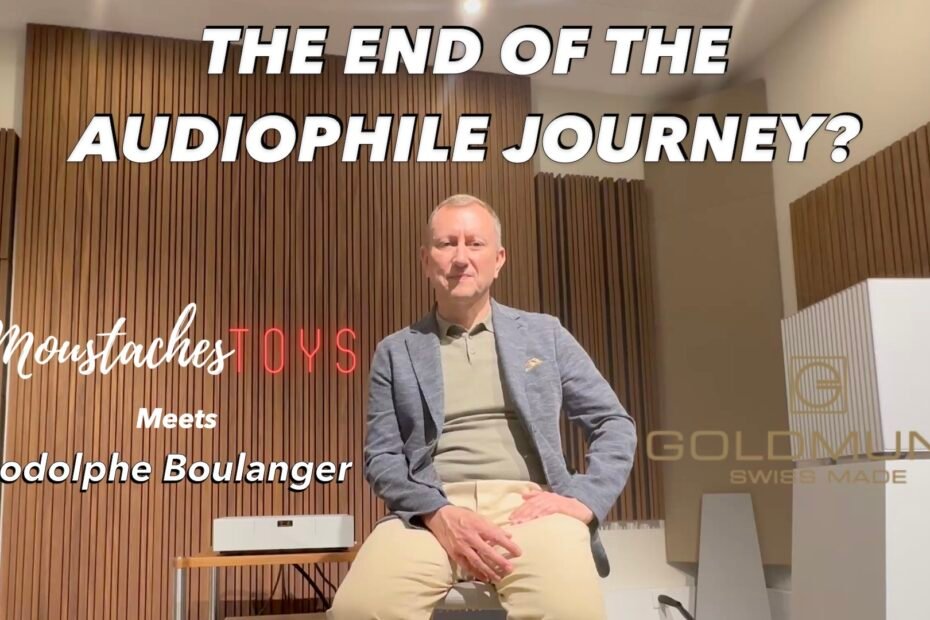
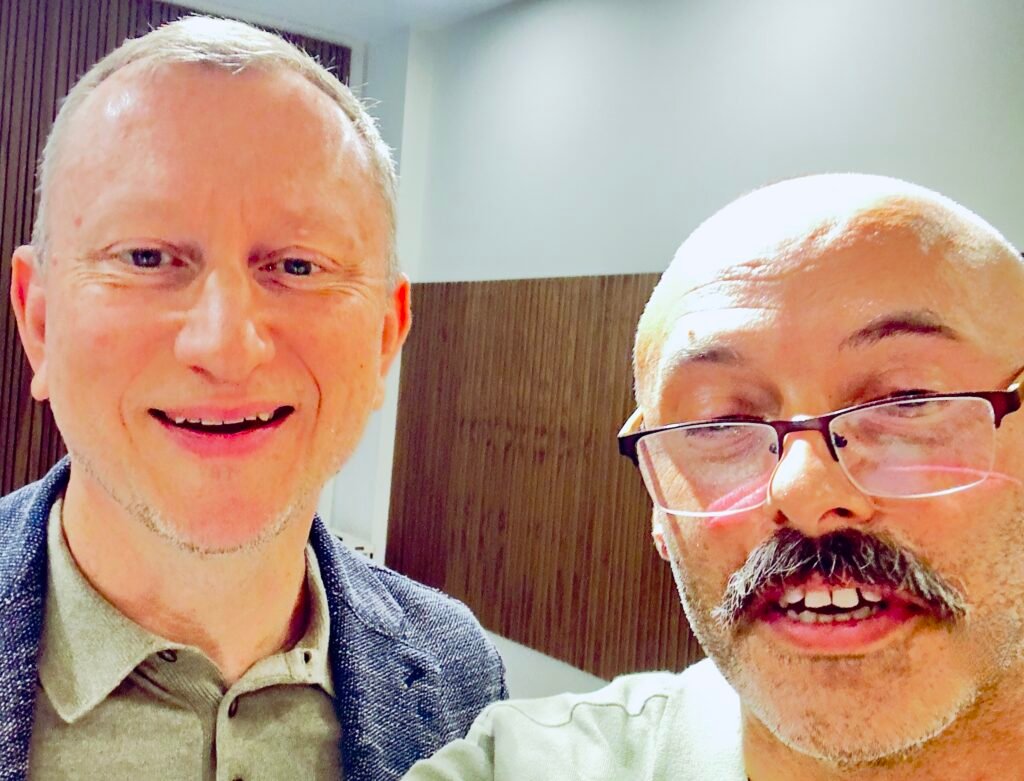
During Goldmund’s presentation to the Iberian market, in Lisbon, I sat down with Rodolphe Boulanger and we talked about the Swiss brand’s philosophy, TELOS technology, the longevity of its products, and the pursuit of reproduction without colouration. At some point, the conversation left amplifiers and speakers behind and landed somewhere far more uncomfortable: is there such a thing as the end of the audiophile journey?
Want to jump straight to the interview? The full video is available at the end of this article.
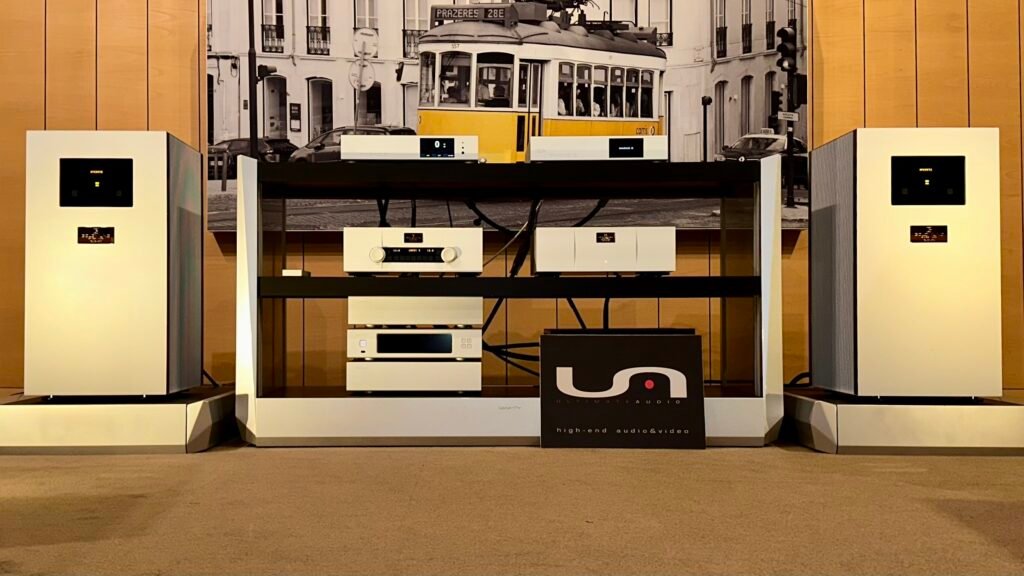
Some interviews are a red carpet for a brand’s own language. This one started exactly there — with the three systems presented at the event marking Goldmund’s return to the Iberian market, from the flagship TELOS 4800 to the integrated TELOS 690, by way of the Asteria active loudspeakers. I didn’t leave it at that.
From a turntable to TELOS technology
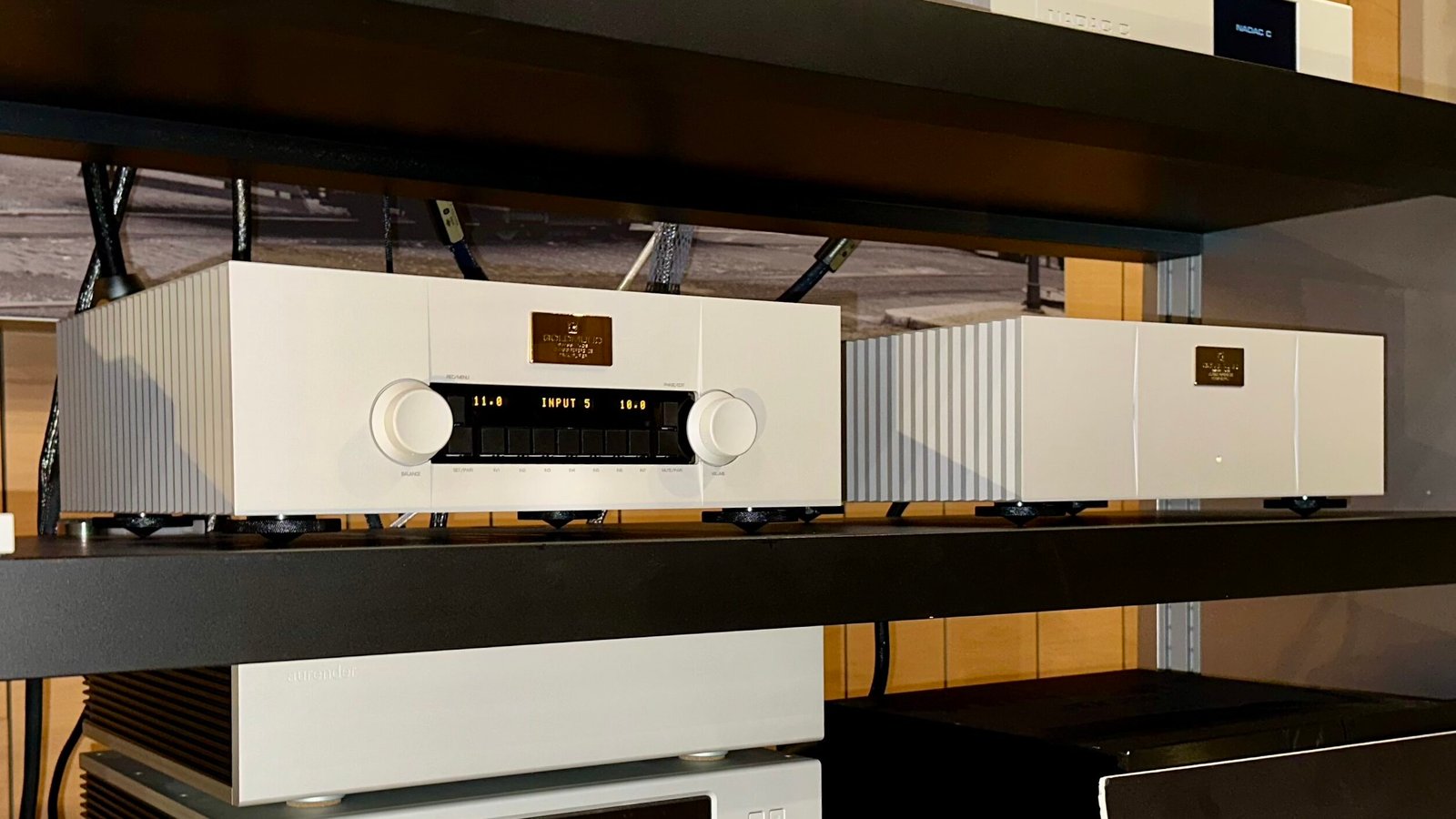
Goldmund was born in 1978, with a turntable still remembered fondly by many enthusiasts today. Building on what they learned, the company went on to create its own amplification technology, named TELOS, which decades later remains one of the brand’s pillars — now present across very different products.
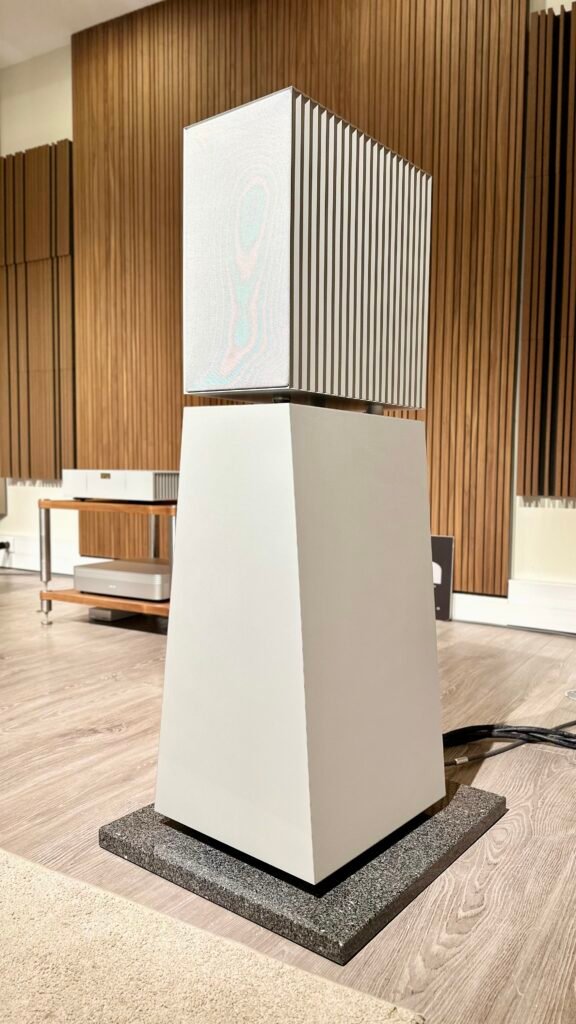
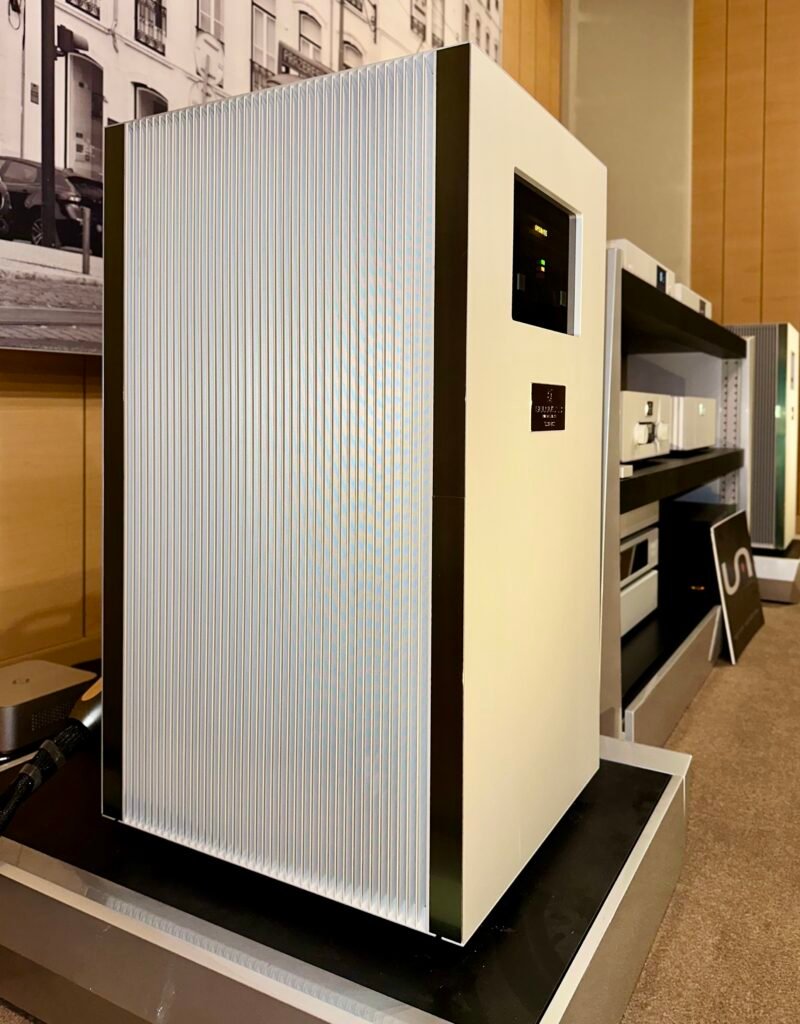
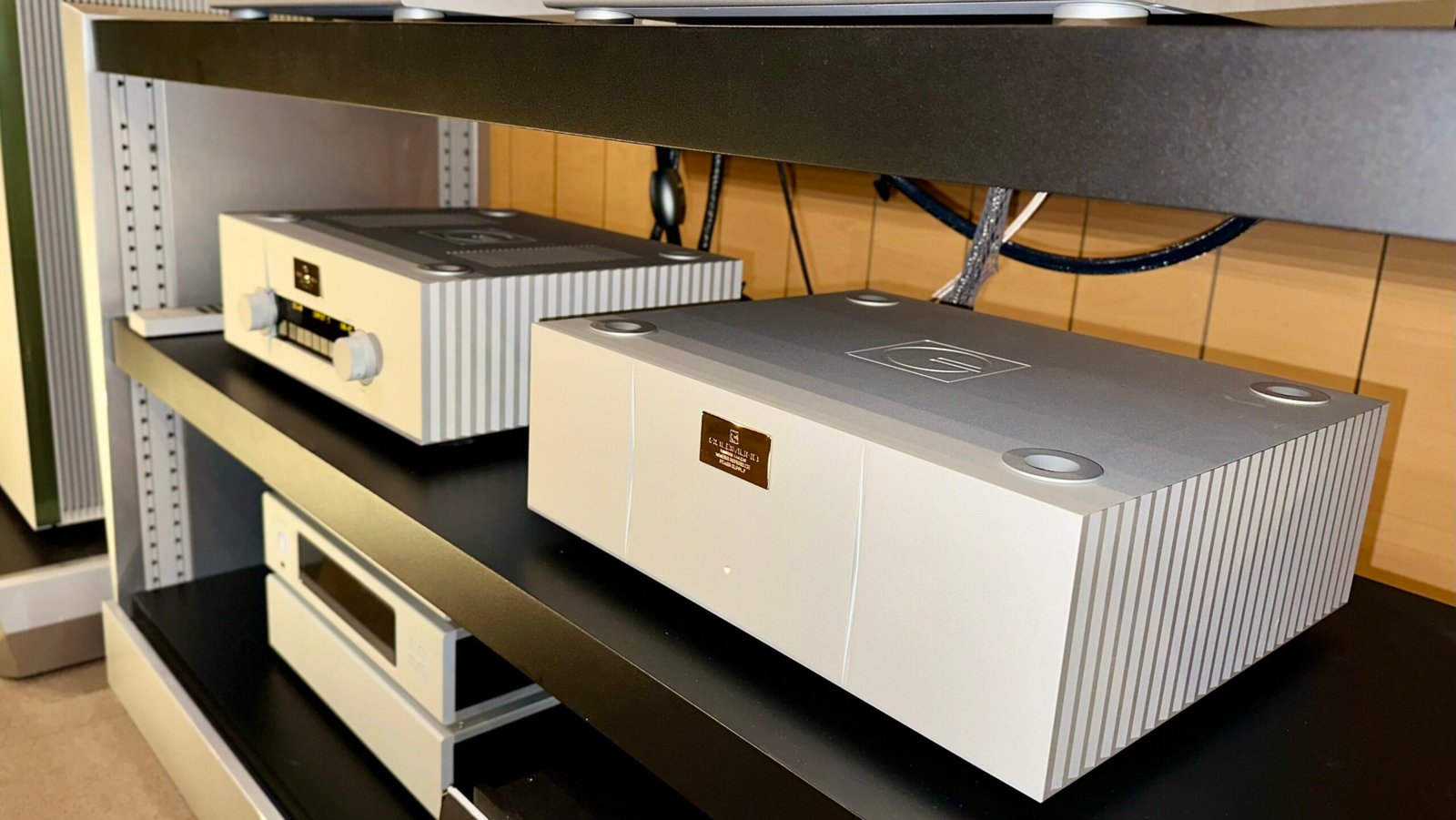
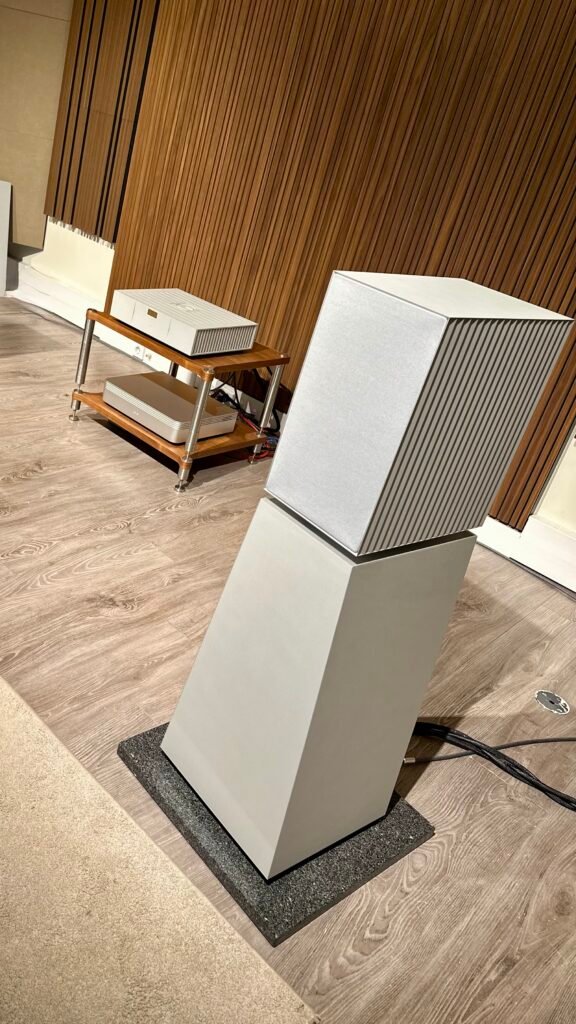
That was exactly what the three systems present in Lisbon’s showcase set out to demonstrate. The TELOS 4800 as the fullest expression of Goldmund’s approach in separates configuration. The TELOS 690 showing how the same philosophy fits into an integrated amplifier. And the active Asteria taking the concept further still, with amplification and processing built directly into the speaker.
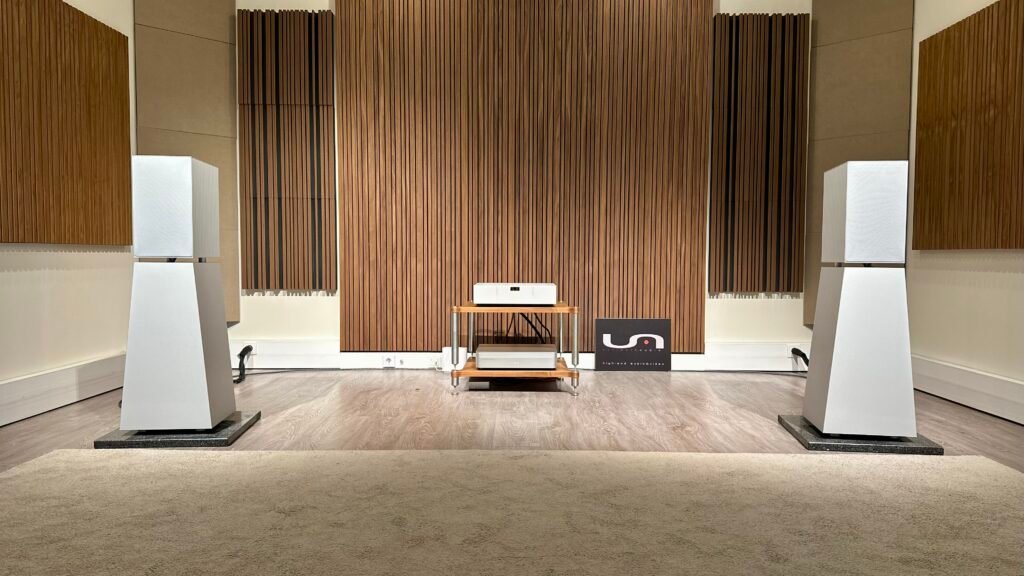
Boulanger doesn’t see this as a choice between better and worse products, but as applying the same technology to different needs, rooms, and ways of living with music. And there’s an idea worth keeping in mind, later on: for some listeners, an active loudspeaker may represent not the beginning, but the end of a long journey.
The Goldmund sound: “without colouration”
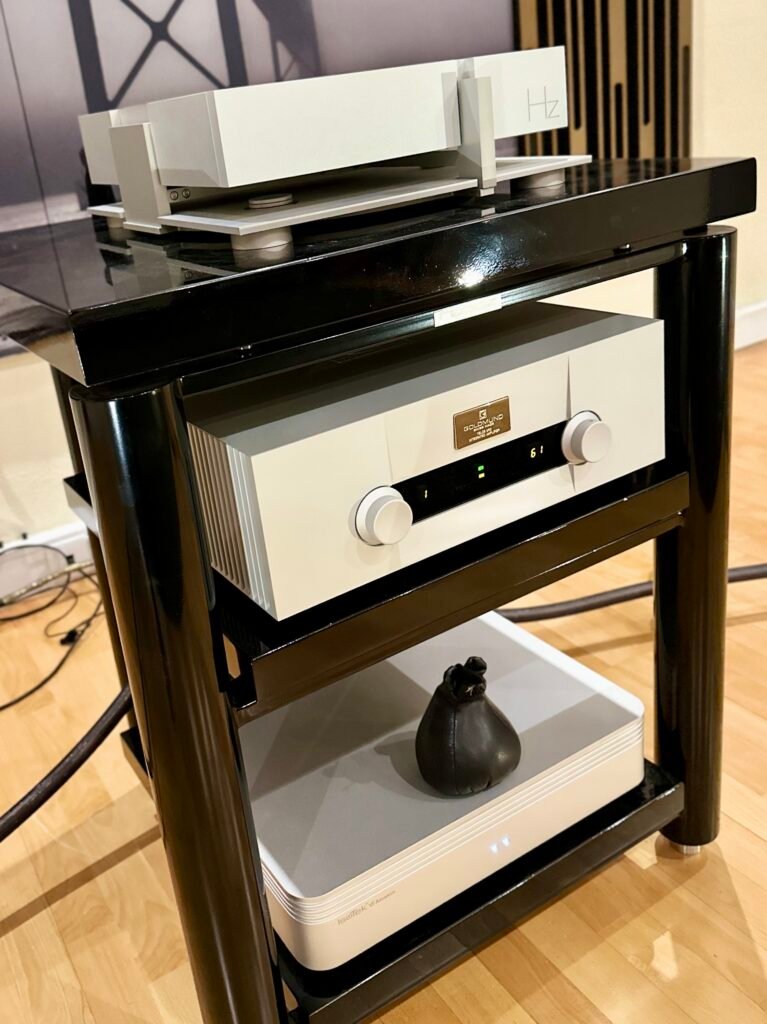
I asked Boulanger how he would describe the Goldmund sound to someone who had never heard the brand. His answer was direct: “a sound signature that is really about the reproduction without colouration.”
The intention is to reproduce what was recorded, without adding an interpretation of the artist’s work. According to Boulanger, that also shows up in the brand’s construction choices — aluminium, for instance, is used because it’s inert, keeping anything that might interfere with the interpretation out of the way.
Neutrality here doesn’t mean lack of energy. Boulanger talks about control, grip, and above all the ability to keep the drivers — the bass in particular — under control at high listening levels, without listening fatigue. Sitting through the three rooms, it became clear that Goldmund’s goal isn’t to impose a recognisable sonic signature, but to get out of the way of whatever might stop the listener from reaching what’s actually on the recording.
Mechanical Grounding: structure as part of the sound
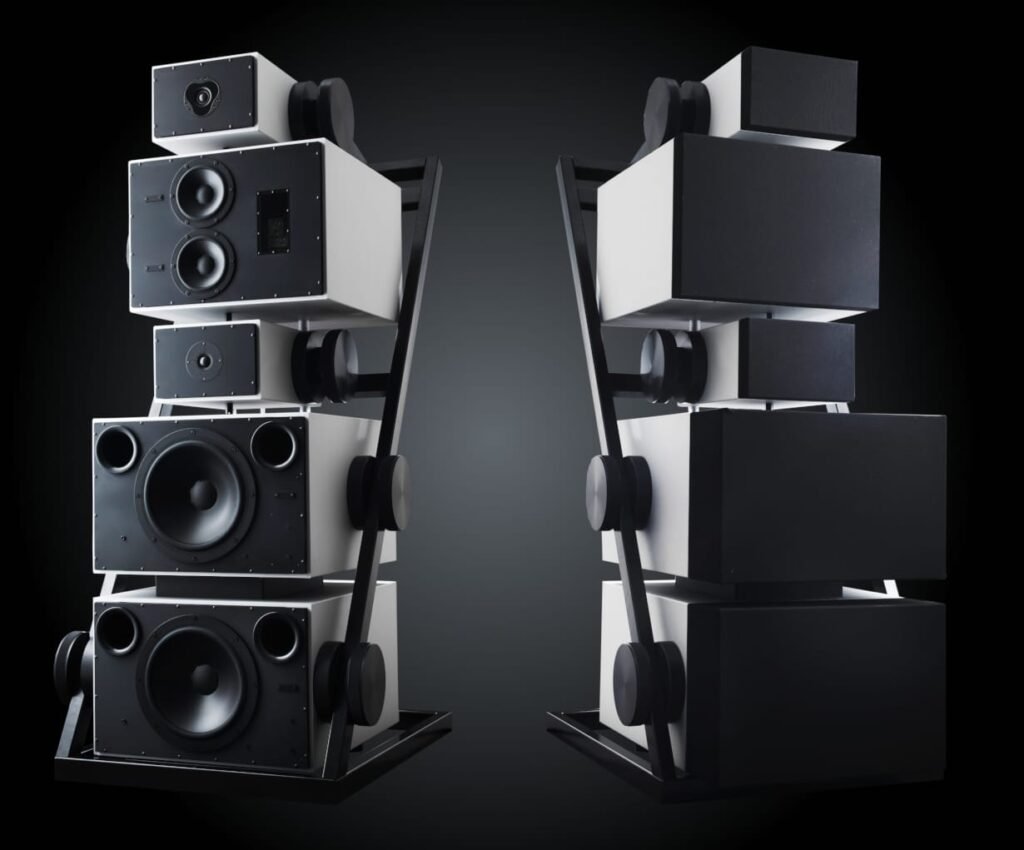
Mechanical Grounding has followed Goldmund for decades. It was born with the brand’s first turntable and has adapted, over the years, to the architecture of very different products in the lineup.
According to Boulanger, this translates into an extremely rigid structure, with mechanical energy channelled through the product itself down to the point of contact with the floor. It’s a philosophy that has run through generations of Goldmund products and, in different forms, is still present in today’s equipment.
“More than upgradable, I would say fixable”
In a market where electronic obsolescence is increasingly hard to ignore, product longevity was another strong theme of the conversation. Boulanger prefers a different word to the one I used in my question — upgradable:
“More than upgradable, I would say fixable.”
Goldmund still repairs equipment around 30 years old, looking for a solution wherever technically possible — even when certain electronic components have long gone obsolete. When someone invests significant sums in a piece of high-end equipment, the relationship with it can last decades, and for Boulanger, a brand at this level has a responsibility to keep it alive for as long as it can.
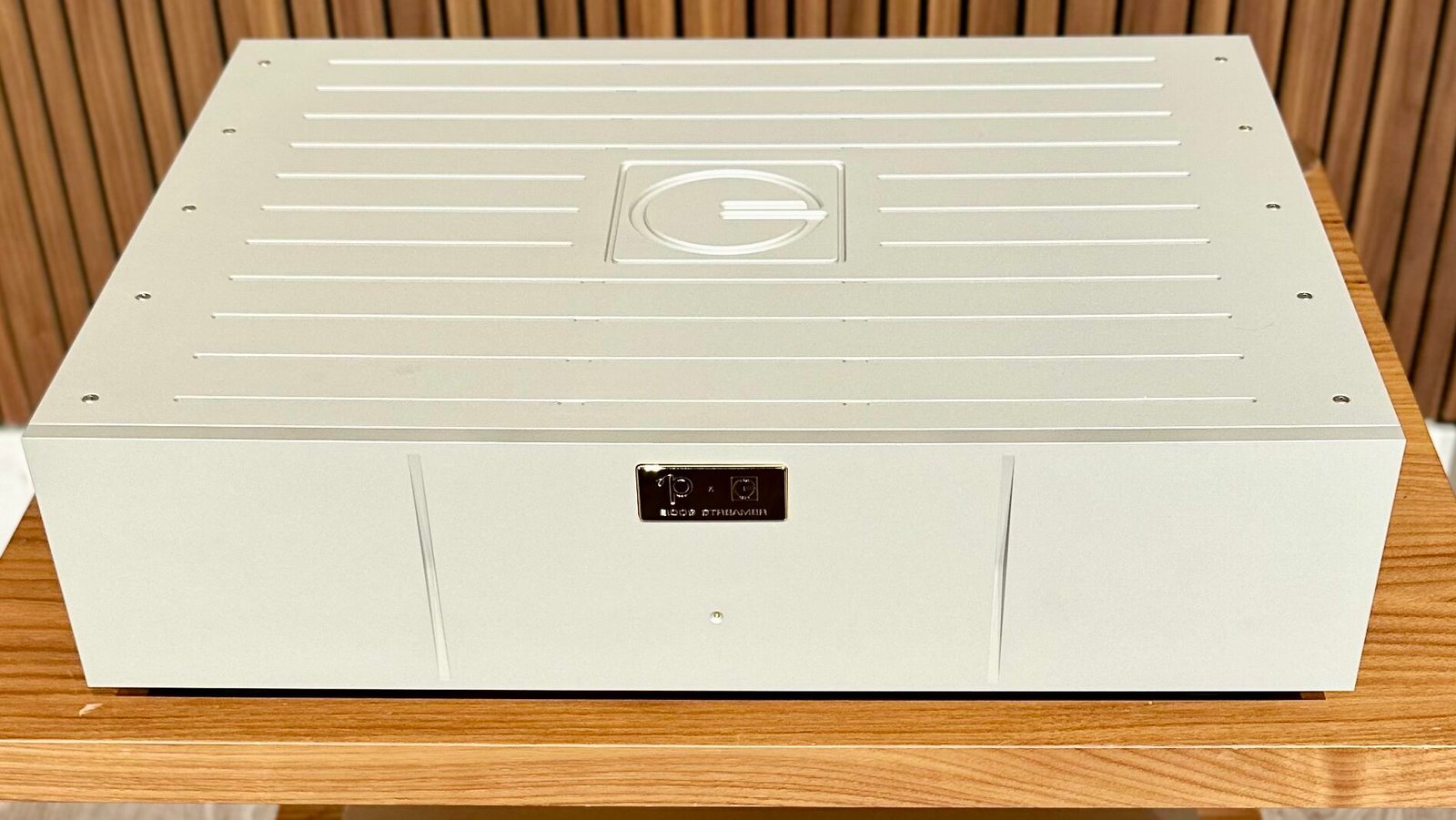
It isn’t always possible — components stop being made, parts disappear, and some solutions simply can’t be reproduced. But the attempt to repair, he says, remains part of the brand’s identity.
“We are not adding, we are not subtracting”
One of the most interesting moments of the conversation came from a deliberately uncomfortable question: if music is, by its nature, an artistic interpretation in itself, how can a brand claim both absolute transparency and an absence of colouration?
Boulanger admits it’s a difficult question. His answer is simple: Goldmund doesn’t want to reinterpret what the artist did. It isn’t about making the music more clinical, but about trying to reproduce what’s on the record.
“We are not adding, we are not subtracting.”
It’s a phrase that sums up, better than any technical specification, the philosophy Boulanger describes — one I’ve since off the record nicknamed “honest sound.” Goldmund seems to want to avoid letting the electronics decide for the listener how the music should sound, as much as possible. That’s not a promise of absolute neutrality, detached from the physical reality of a room, a recording, or a system — it’s a philosophy consistent with what I heard across the three rooms of this demonstration.
Swiss precision
I asked what sets Goldmund apart in a world of many reference brands in high-end audio, and Boulanger went back to the brand’s origins. Its founder chose to base the company in Geneva, a region deeply tied to watchmaking — if the Swiss watch industry had mastered the production of extremely small, precise components, those same skills could be applied to hi-fi.
Goldmund keeps production close to its Geneva headquarters, works with suppliers just as close by, and concentrates assembly, testing, and final preparation of its products in-house — an attempt to bring high-end audio closer to the logic of other Swiss precision objects, not just manufacturing, but carefully controlling the entire process.
The audiophile journey
It was when we started talking about Goldmund’s customers that the conversation shifted register. For Boulanger, many of them go through a genuine journey across the world of hi-fi: starting with one system, trying a different amplifier, different speakers, separate preamplification, monoblocks, cables, new sources. Climbing, comparing, swapping.
Until, eventually, some arrive at active loudspeakers — and for an audiophile, that shift is a drastic one. Giving up the logic of multiple separate components and accepting that amplification, DAC, DSP, and processing can all live inside the speaker itself isn’t a linear evolution, nor perhaps the most common one. According to Boulanger, it can take years to get there.
The man who reached the end of the journey
This is where Boulanger told a story that perhaps explains, better than any sales pitch, what Goldmund is trying to do.
An American customer had gone through several of the brand’s systems over the years — electronics, speakers, increasingly sophisticated setups — until he installed one of Goldmund’s active reference systems in his home, in Texas. After the installation and a number of listening sessions, he wrote to Boulanger. The message, in Boulanger’s own words, was happy and sad at the same time:
“I was on a journey my whole life.”
And then:
“I am at the end of that journey.”
He had found what he was looking for. The problem was, he no longer had anything left to look for — nothing to upgrade, no new preamplifier to try, no cable to swap, no component left to replace. For an audiophile, reaching the ideal system can be just as unsettling as the search to find it was thrilling.
Goldmund in Portugal and Spain
Goldmund is back in the Iberian market through its partnership with Ultimate Audio. Boulanger acknowledges that the brand already had a significant presence in the region and still keeps direct customers in Portugal and Spain, but he sees an opportunity now to rebuild visibility.
He points to something he believes brings these markets closer to other European countries: a personal relationship with music. In a global market where certain luxury equipment can also function as a status symbol, Boulanger notes a difference in how many European consumers — Portuguese and Spanish included — approach hi-fi, with a passion that tends to be far more personal.
The Lisbon event is part of that strategy: making contact, showing the products. Boulanger also acknowledged the local distributor’s attention to detail in organising the event — in a segment where clients can invest very significant sums, the experience around the product ends up becoming part of the product itself.
When music can still surprise you
The last question was deliberately personal: after so many years listening to these systems, can music still surprise Rodolphe Boulanger?
“Yes,” he answered, without hesitation. Sometimes it’s a recording he’s known for years, where he finally catches a small detail he’d never noticed before. Other times, it’s a completely new piece of music. And then something happens that any music lover will recognise: he reaches for his phone: Shazam!
At the end of a conversation about aluminium, vibration, amplification, DSP, DACs, mechanical precision, and reference systems, what remains is a simple motivation — discovering music, hearing it differently, and wanting to recreate that moment at home. If there really is a purpose to the audiophile’s journey, perhaps it is simply this: that it may never come to an end.
MoustachesToys Meets Rodolphe Boulanger — Goldmund
This interview was recorded in Lisbon on June 20, 2026, during Goldmund’s showcase to the Iberian market.
Interview: Vítor Santos, MoustachesToys
Interviewee: Rodolphe Boulanger, Goldmund
Video: Vítor Santos
Pingback: Is Hi-Fi About Equipment? Goldmund Answers - MoustachesToys | High-End Audio Reviews & Experiences
Pingback: Goldmund: O fim da jornada audiófila? — MoustachesToys meets Rodolphe Boulanger - MoustachesToys | High-End Audio Reviews & Experiences