Some devices arrive at your home and immediately claim their space. They don’t ask for permission. They don’t introduce themselves shyly. They just walk in.
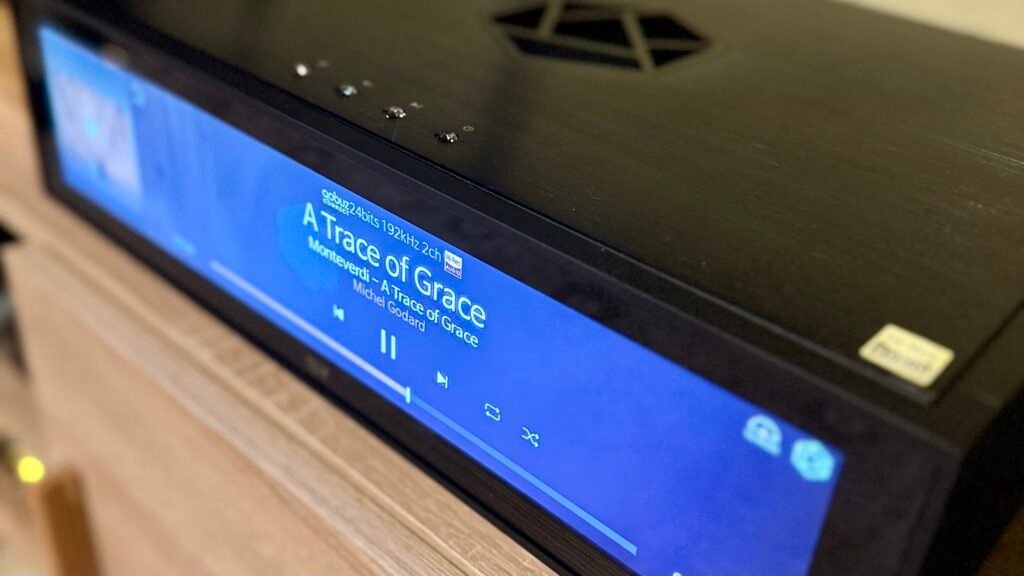
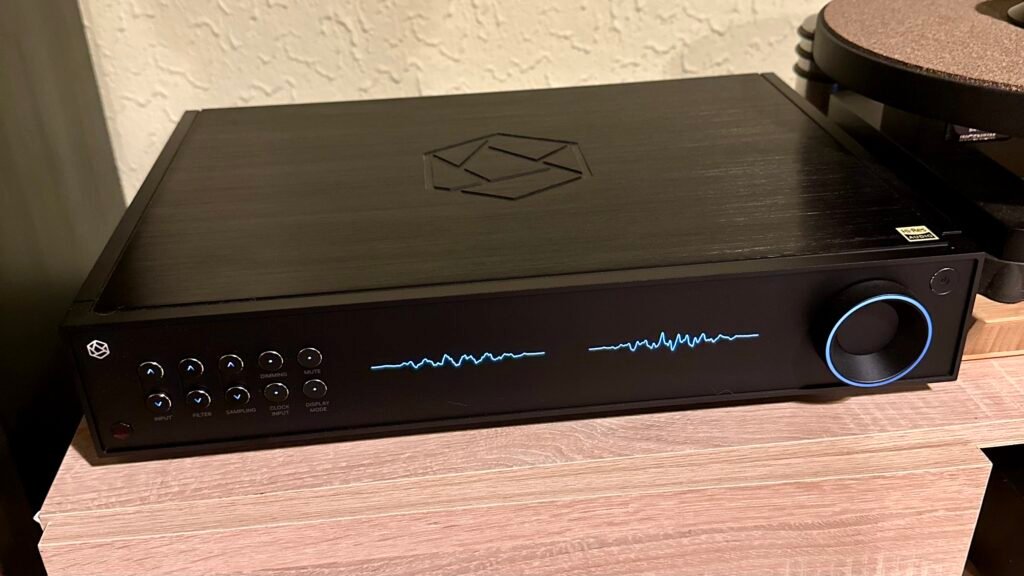
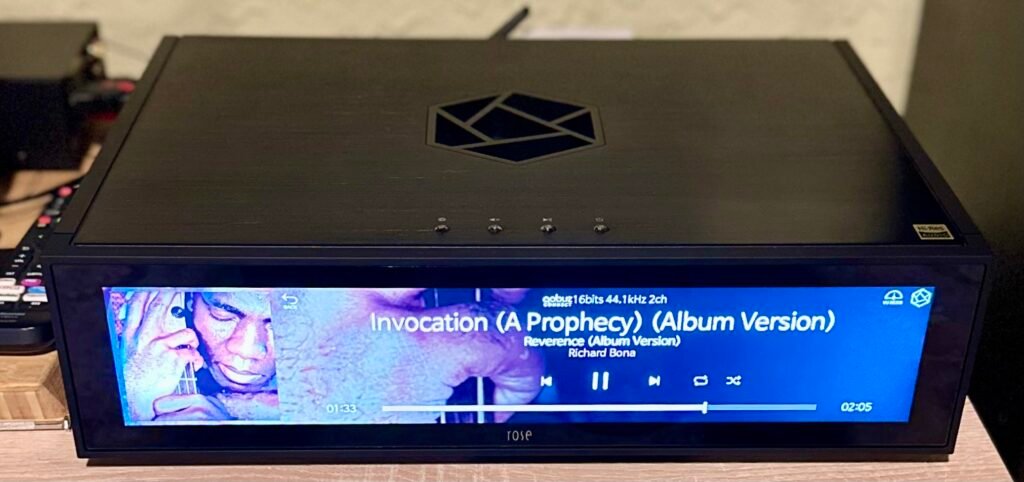
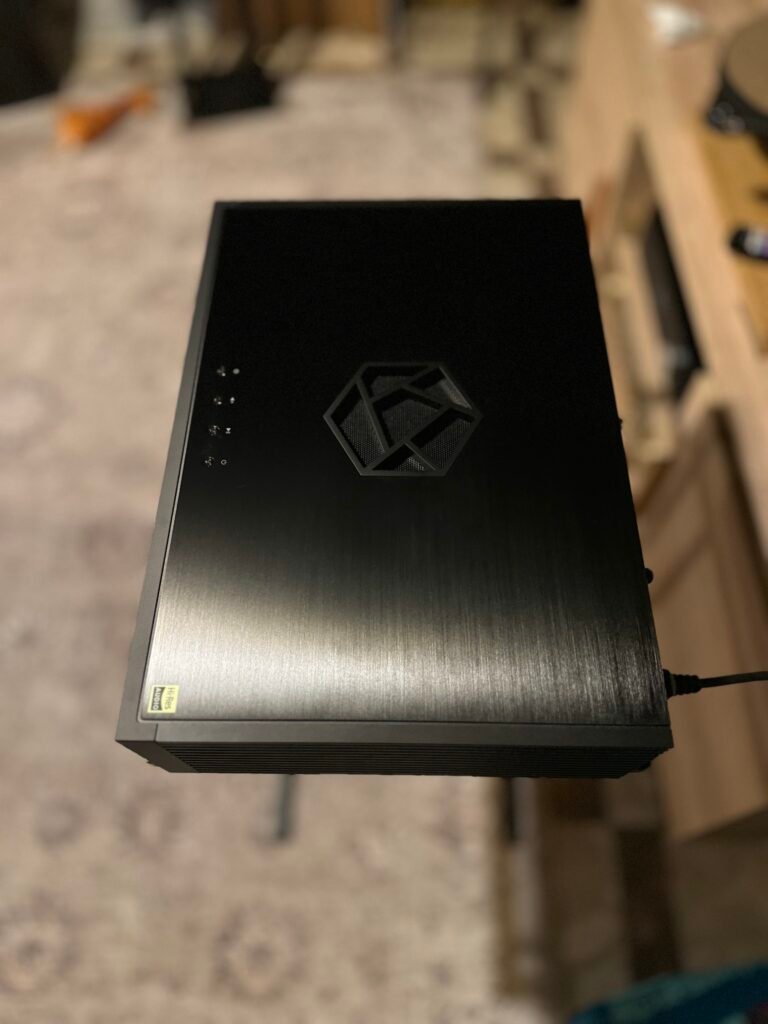
The HiFi Rose RS130 and RD160 set is like that. Korean built, with high‑purity machined aluminum and strong presence, with a 15.4‑inch screen on the streamer and a front panel with a hidden screen on the DAC that only reveals what it wants to show, when it decides to do so. Before plugging in a cable, before pressing a button, my eyes had already formed an opinion about what was in front of me.
It was good. Too good, perhaps.
The First Impressions
The RS130 is a deliberate attempt to remove the digital from the path of the music. Its entire architecture points in the same direction: isolation.
The use of optical connections, the reliance on a high‑precision internal clock, and reading music from an internal cache are all tools with a single purpose: preventing noise, instability, and the “stress” of the digital world from contaminating the signal before it reaches the DAC.
The result is more silence. Which means more detail. More texture. Better nuances. And it is within that silence that the music takes shape.
The RD160 continues this philosophy, but with another responsibility: turning that signal into sound. Here, the approach is absolute transparency. Dual‑mono architecture, multiple internal power supplies, and a careful implementation of AKM chips which, in my interpretation, do not aim to “beautify” — they aim not to interfere.
It is a DAC that doesn’t interpret. It exposes. But always in a way that remains sufficiently organic.
And all of this left my eyes “salivating“. Not only because of the perceived quality, but also because of the brilliant touchscreen that occupies the entire front panel of the RS130.
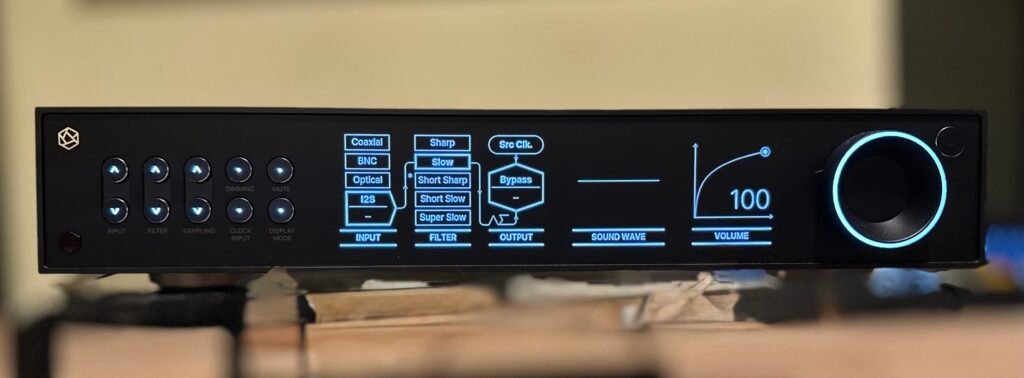
The RD160 responds with the same philosophy. That hidden screen that changes its look depending on what’s happening inside the box — sound waves, volume curves, circuit diagrams. It’s the kind of detail that didn’t need to exist. But the truth is that it makes all the difference.
Together, they form a system designed to coexist.
Visually, they are the most impressive pair to ever pass through this room. For now, the eyes have eaten — and oh, how they have!
The System (and the Inevitable Comparisons)
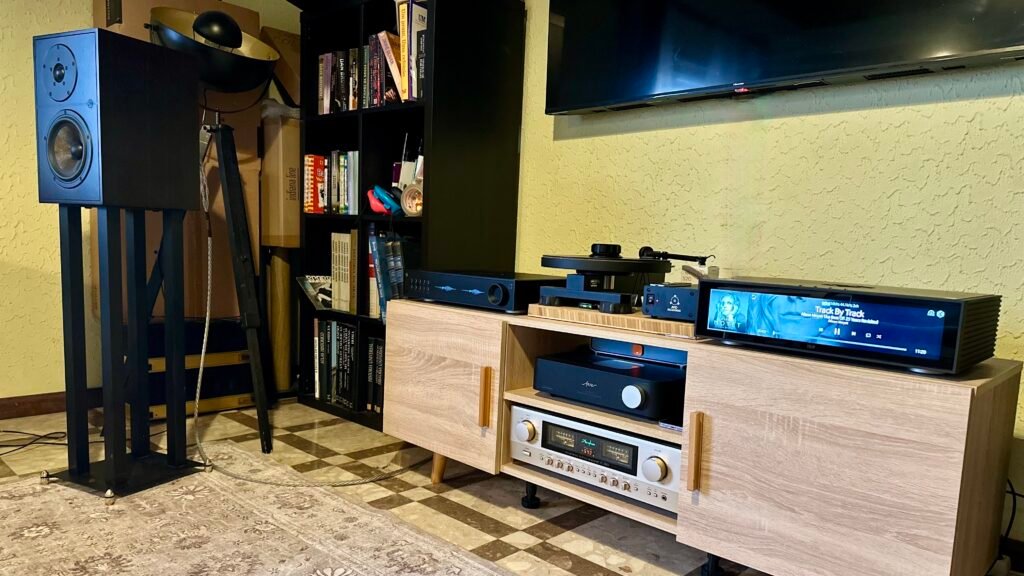
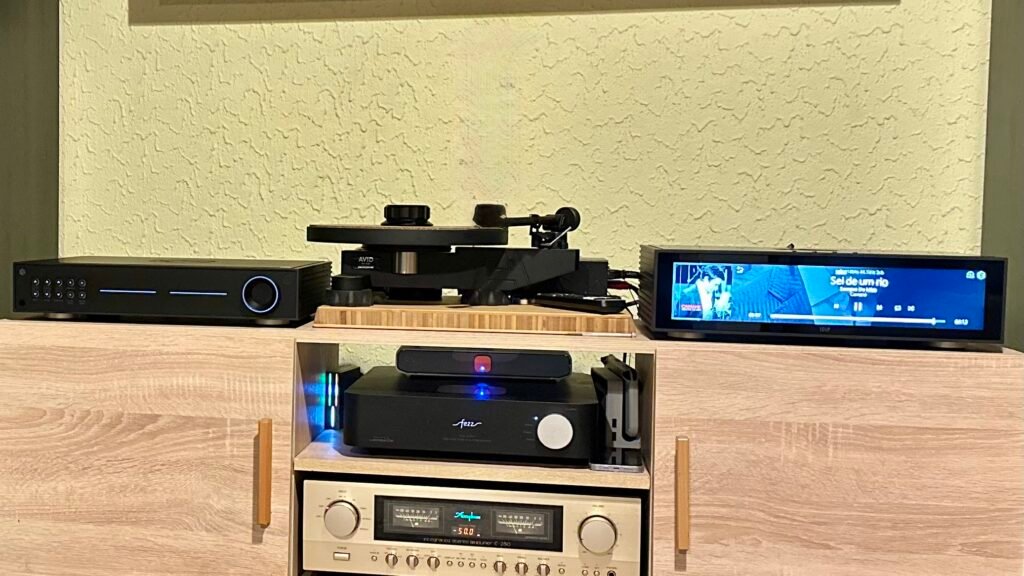
Context matters. The reference system into which the duo was integrated is documented on the Benchmark Stache page. It’s a system I know well — and for that very reason, the audible differences leave no room for doubt.
For the streamer comparison, the RS130 faced the resident Volumio Rivo — but not the Rivo in its bare form. The Rivo was equipped, as always, with the iFi Silent Power LAN iPurifier Pro filter and, starting with this review, also with a linear power supply, to make the matchup fairer for the Italian machine. Yes, there was a deliberate attempt on my part to balance the scales. Both received exactly the same network signal, through the same switch, and via two Ethernet cables identical in length.
For the DAC comparison, the RD160 faced the Fezz Equinox, by Lampizator — the resident converter, with which I’ve built hundreds of hours of listening. Knowing it well is essential to understanding what changed. And more changed in the DAC than in the streamer. The streamer’s role is to deliver the cleanest signal possible — the raw material, the ingredient of the music. The DAC must cook those ingredients according to the provided recipe, with more or fewer seasonings. As in cooking, the quality of the ingredients delivered by the streamer is important, but more is the Chef’s personal touch (the DAC).
The Sound That Took Its Time to Arrive
The verdict wasn’t immediate. There was something unresolved — a restraint in the midrange, a separation between what the duo visually promised and what it allowed me to feel in those first moments. It was technically correct. But it wasn’t yet generous. It didn’t breathe yet.
I recognized the symptom. I had gone through the same with the Equinox. So I decided to wait. Both the RS130 and the RD160 arrived as virgins at MoustachesToys Tower.
Burn‑in is not magic — it may be physics, it may be psychology, and it’s probably both in proportions no one can measure with precision. What I do know is that some equipment asks for time. And rushing to judge before that time is one of the most effective ways of not hearing what’s right in front of us.
The surrender was gradual. The soundstage expanded. The transients gained precision and organic character. The silence between notes — that space where much of what matters happens — became freer. The music began to flow with a naturalness that the first sessions did not hint at.
What I Listened to During the HiFi Rose’s Stay
During the listening sessions with the HiFi Rose RS130 and RD160, I noticed a consistent sonic signature that revealed itself across different musical genres — from classical to jazz, rock, fado and electronic music.
Revelation of Micro-details and Texture
Right from the crescendo of Mars by Holst, with Adrian Boult conducting the London Philharmonic Orchestra, the Rose system revealed impressive textures and micro‑details. I could imagine myself marching for a just cause in some distant war to the sound of this music. In Also sprach Zarathustra, under the baton of Fritz Reiner, the monumental bass of the “sunrise” made my floor shake with brutal dynamics.
Voices: Three-Dimensionality and Breath
The difference becomes particularly evident with voices. In Who Knows Where The Time Goes? (live), Sandy Denny’s voice emerged fluid, warm and intimate, yet airy and textured, with perfectly controlled sibilance. The metallic strings of the acoustic guitar displayed a fast decay with crystalline harmonics. The soundstage arranges itself with the voice centered and three‑dimensional depth.
At this point, there is no doubt.
Hurt, in Johnny Cash’s raw interpretation, his trembling, aged voice gained an impressive grain that conveyed the full emotional weight — born with Trent Reznor, wounded by Cash, and now tightening my chest as well. The acoustic guitar delivers precise attacks and crystal-clear harmonics over an absolutely silent background. At the emotional climax, “I will let you down”, the explosive dynamics are held only by the amplifier’s absolute control.
Fado: Intimacy with Resolution
In Escrito no Destino by Helder Moutinho, the singer’s vibrato appears with three‑dimensional “salt”, while the Portuguese guitar is plucked with a clear attack and ethereal decay — true filigree. The holographic soundstage gains intimacy, maintaining the characteristic closeness of fado while adding an enveloping spatial dimension. The “deserted heart” materializes.
Porto Sentido, acoustic and live, by Rui Veloso — the anthem of the Invicta that never fails to grip my chest “in every return home” — reveals the soul of Porto translated through Veloso’s voice. In the end, it was indeed “muita emoçom carago” (a lot of emotion!) with the Coliseu do Porto’s reverb blooming in the room.
Rock and Alternative: Controlled Energy
In Cure for Pain, the deep texture of the sax lazily scrapes the ears, with the late Mark Sandman’s two string bass driving the rhythm and the drums hitting deep in the floor. The soundstage transforms from a raw garage into a smoky Boston club.
Jazz: Swing and Spatiality
The delicious and groovy My Baby Just Cares For Me by Jeff Goldblum & The Mildred Snitzer Orchestra. I felt as if I were sitting in the club with the band. “Jeffy’s” bouncy piano, as Haley Reinhart calls him, with vocals rising in space, a three‑dimensional “smile,” and the jazz‑tinged breathing of Goldblum and his orchestra all revealed. Everything clicks.
Electronic/Atmospheric
Pipe Dreams by Lonely Guest, featuring Rina Mushonga with Tricky’s beats, reveals a melancholic cello with deep harmonics and an infinite decay. Mushonga’s voice gains a three‑dimensional “mist,” while the beats show precise punch without boom, creating an immersive stage as if we were inside the Bristol studio. The dynamics range from micro to macro in explosive fashion, in absolute silences.
RS130 vs. Volumio Rivo
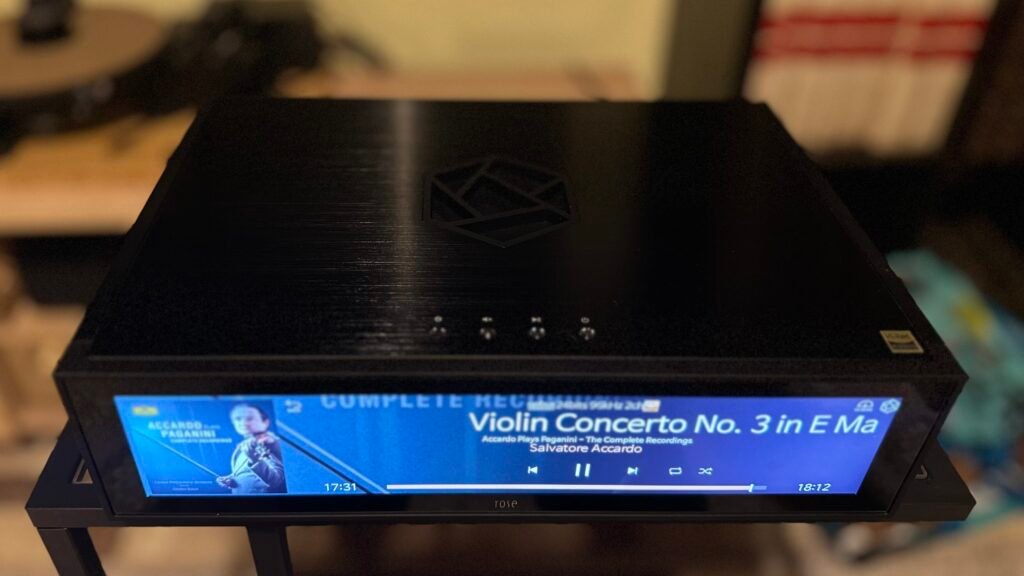
The Volumio Rivo, equiped with an optical filter and powered by the right linear power supply, is a very serious streamer. It performs with great precision and without drama — and this optimized version risks embarrassing machines at far higher price points.
The RS130 plays in another league. The difference is not so much in detail or resolution (which is there, but in truth only by millimetric margins) — it lies more in coherence. The Rivo presents the music as a whole, not as a sum of parts, but the RS130 goes one step further. The Volumio’s soundstage has real depth; the RS130 surpassed it (when paired with the Equinox), and with ink‑black precision when used with the RD160. The spatial layers separate effortlessly, but more so on the Korean network player. Qobuz, in Connect mode — my main streaming source — often gained a different life with the RS130 as transport. The information that this service delivers reaches the DAC free from the background noise which, even if imperceptible, shapes what we hear.
And that is the difference I felt between the Rivo and other streamers that have passed through my home before it. I also need glasses to see up close. When I put them on, it’s the difference between being able to see sharply or not being able to read without effort. The difference between the RS130 and the Rivo is like the moment when I’ve just cleaned my glasses and suddenly I can see the texture of the rice I’m eating, not just the separation between each grain.
The Rivo is an excellent tool, especially when compared to the vast majority of streamers out there — even some at the RS130’s price point. The RS130 is something else entirely: a statement about how the digital signal should be treated before it reaches the converter.
RD160 vs. Fezz Equinox by Lampizator
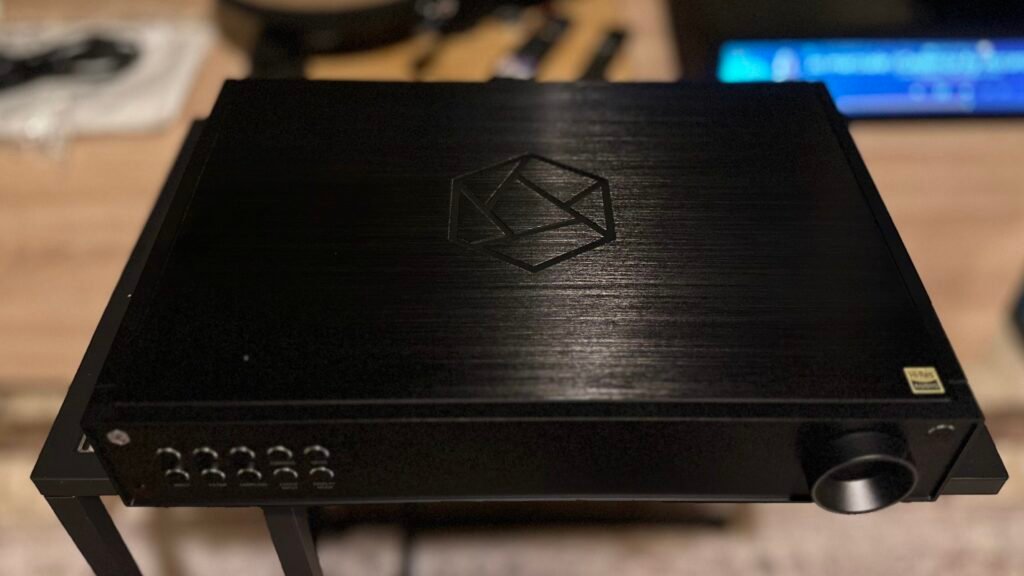
Fezz Equinox is a DAC with character. It has an organic, engaging musicality, with a texture in the mids that makes voices and acoustic instruments sound with a very particular intimacy — as if the musicians were part of the household. It is a DAC that, in a way, beautifies the music — and for my personal taste, that is exactly what one (me) wants.
RD160 plays with a different intention. It does not beautify. It reveals. The transparency is of another order — what is in the recording arrives without any perceptible mediation. In a good recording, this becomes an experience of absolute presence. In a mediocre recording, it can be unforgiving — and you will feel it! — but in the end, the dish is still served with care, and you still enjoy the meal.
The comparison between the two is not a judgment of quality — it is a matter of philosophy. The Fezz invites. The RD160 exposes. For the system I have, and for the music I listen to, the RD160 brought a level of honesty that the Equinox, with all its charm, cannot match. And that is why the RD160 goes straight onto my Best Toys list.
Conclusion: The HiFi Rose Signature
The HiFi Rose RS130 and RD160 duo presents a clear and consistent sonic signature, characterized by five fundamental attributes:
Resolution and exceptional micro‑detail – there is information here that simply does not appear in less capable equipment, yet it never sounds analytical or fatiguing.
Holographic three‑dimensional soundstage – it creates impressive depth, width and height, with instruments and voices perfectly positioned in space.
Explosive dynamics with absolute control – from pitch‑black silences to the most violent crescendos, everything is reproduced with authority and control, and in the case of my system in particular, with excellent synergy with the amplification used.
Vocal texture – voices gain a three‑dimensional “grain,” with breathing, vibrato and inflections revealed in an organic and emotionally engaging way.
Bass: tight and textured – low frequencies show weight, control and texture, with no boom or blurring.
This is not a warm and “analog” sound, as I myself sometimes make the mistake of calling it.
It is a modern, high‑resolution presentation that prioritizes timbral truth, focus, instrumental separation and dynamics.
And what you feel is coherence: transparency without coldness, detail without effort, music that flows with genuine engagement.
This Rose duo does not color or soften — it reveals, with crystalline transparency and a three‑dimensional stage, rewarding the best recordings without punishing the less fortunate ones, and it needs equally capable partners to show its full potential.
Final Thoughts
Some people separate design from sound as if they were parallel worlds. As if beauty were a concession to marketing, and what matters were hidden inside the box, far from the eyes. This HiFi Rose set dismantles that prejudice without ever arguing.
It simply exists.
And it exists so that the only possible conclusion is this: some systems sound exactly like they look. The RS130 and RD160 are precisely what they appear to be.
The eyes can eat too. And here, the dinner matched the menu.
Pingback: Os Olhos Também Comem, HiFi Rose RS130 + RD160 — a review MoustachesToys - MoustachesToys | High-End Audio Reviews & Experiences