
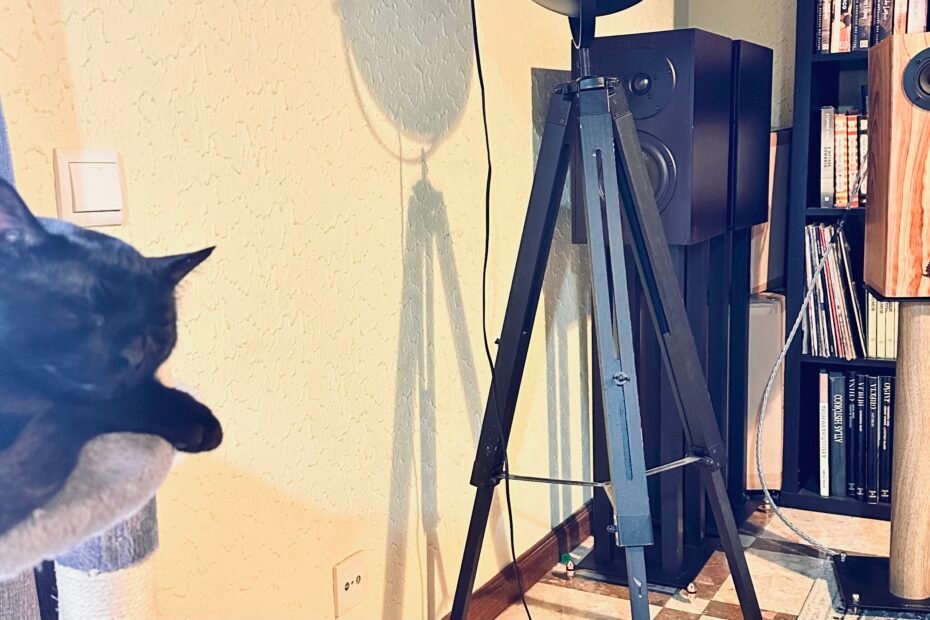
I’ll admit it: this wasn’t an easy review.
Some equipment wins you over from the very first note. The Corvo speakers were definitely not one of those cases. Straight out of the box, the sound reminded me — perhaps unfairly, but honestly — of a small battery radio, the kind people once used to listen to football match reports.
Alright, it wasn’t that bad…
But it was far from hi-fi.
So I gave them time. A lot of time.
I let them play almost continuously: TV connected to the DAC via optical cable, feeding them news broadcasts, series, and whatever else came along. They went through what you might call an intensive burn-in boot camp.
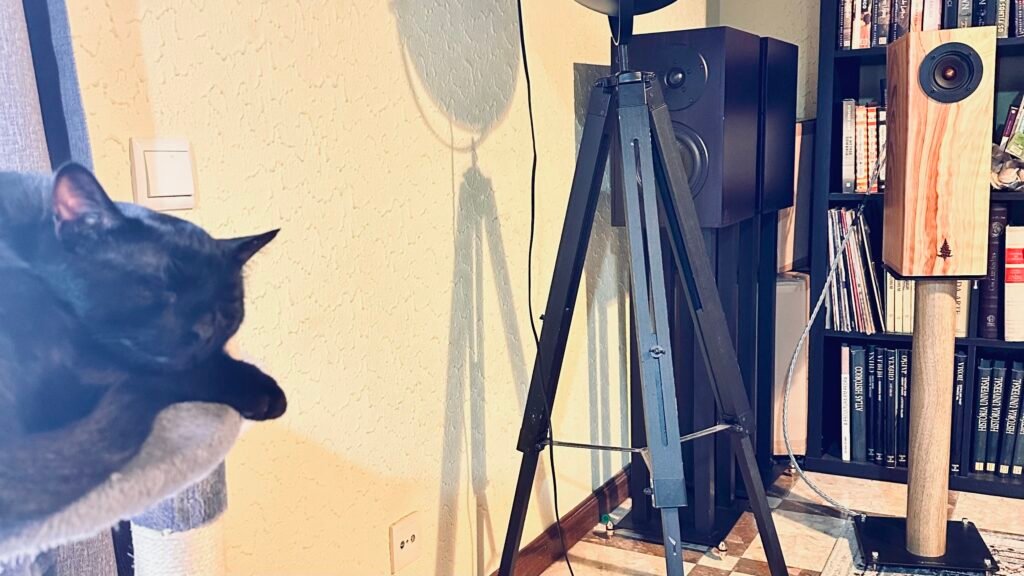
And that’s when, over days (and weeks), the surprise began to unfold.
The Surprise: Dialogue Clarity
Let me put it this way: these speakers make voices exceptionally clear.
There’s an almost didactic quality to how they reproduce human speech — clean, direct, highly intelligible. Accents, nuances, subtle inflections… everything comes through effortlessly.
If there’s such a thing as a speaker built for voices, this is it.
Azorean Craftsmanship: The Value of Imperfection
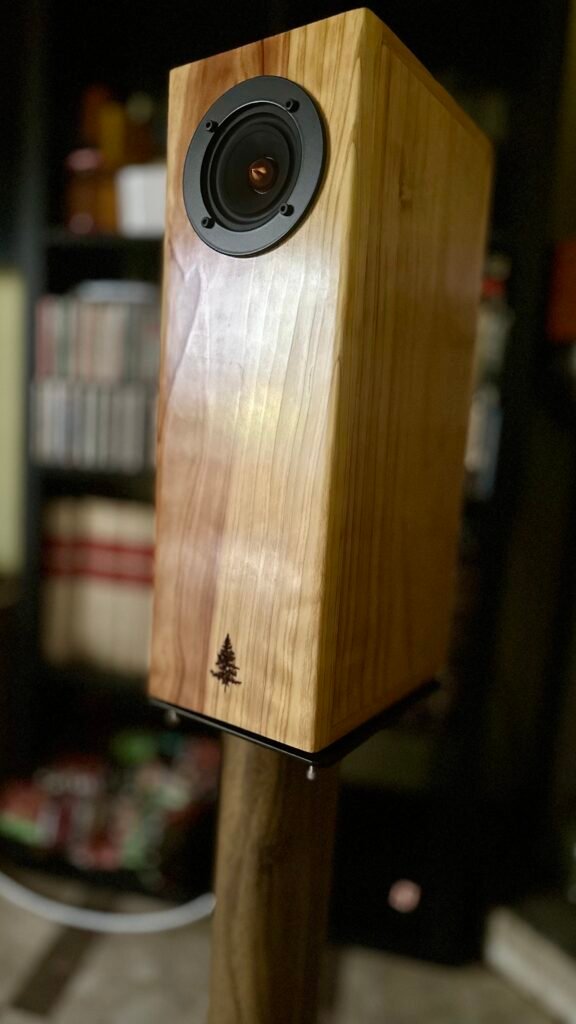
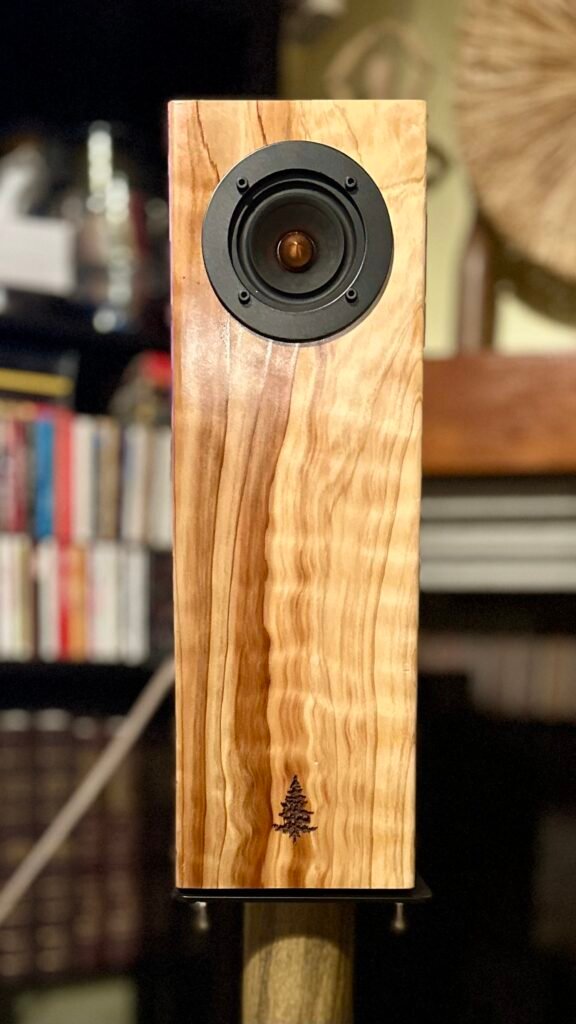
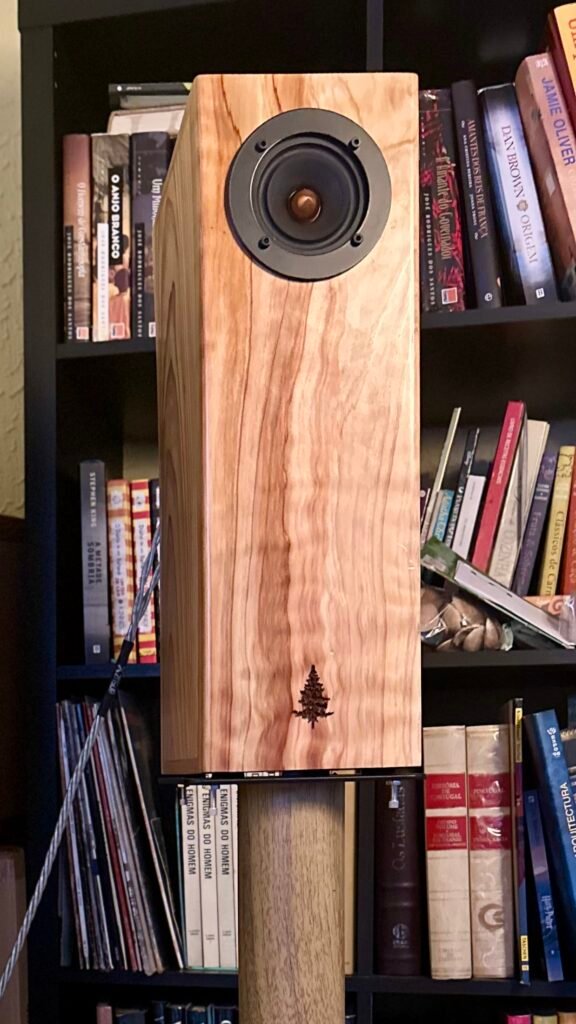
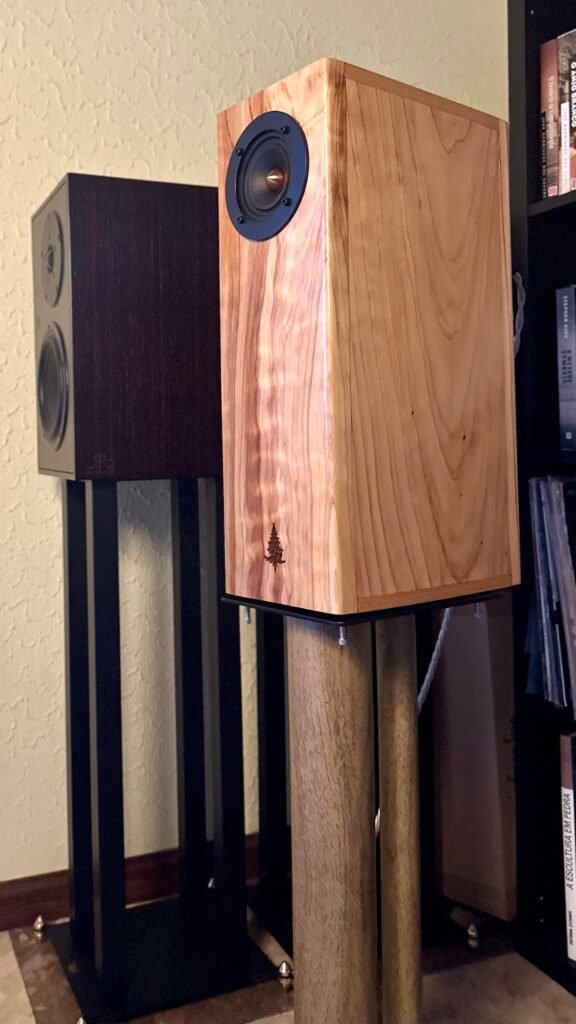
The Corvo are handmade on Faial Island in the Azores Islands. And I mean truly handmade — not “hand-finished” in a marketing sense.
Forget perfect tolerances. My pair wasn’t perfectly symmetrical. And honestly, that’s part of the charm.
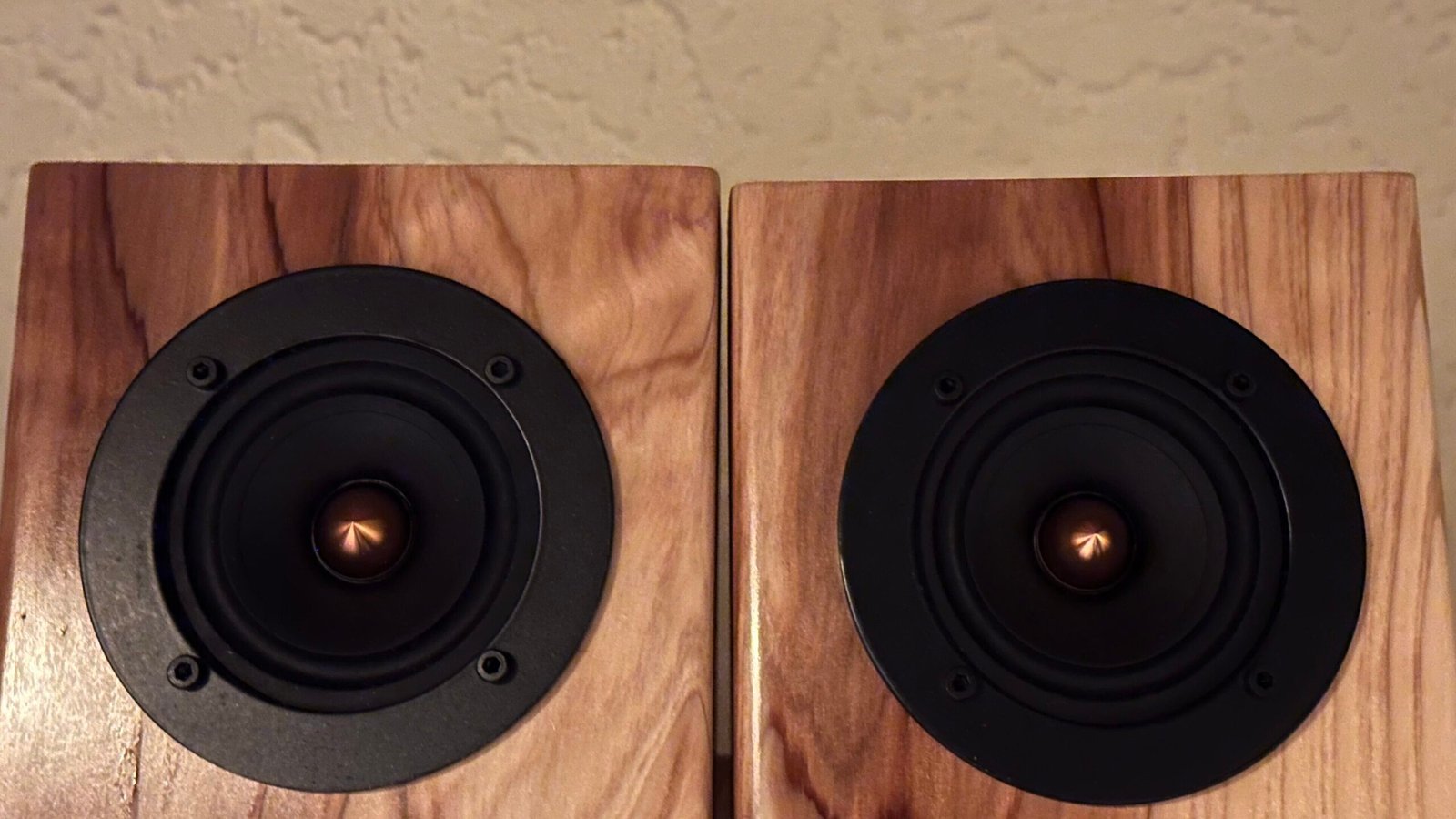
Built from solid wood and finished with beeswax, they feel more like objects than products. For months, my room carried the scent of freshly worked timber — not exactly an “audiophile feature,” but not irrelevant either.
No two pairs are identical.
And I’d wager no two pairs sound exactly the same.
That’s either romantic… or chaotic. Depends on your perspective.
Full-Range Design: Coherence with Trade-Offs
One driver. No crossover. Everything else is compromise.
The Corvo follow a full-range philosophy: a single driver handling the entire frequency spectrum.
The result?
Coherence — yes. But there’s no such thing as a free lunch.
Where they shine:
Vocals (Nina Simone, Maria Callas, folk and jazz singers)
Jazz and small acoustic ensembles
Chamber music
Where they struggle:
Large orchestral works
Dense, complex arrangements
Scale and authority
The Ride of the Valkyries doesn’t quite ride—it stumbles.
Amplification: Less Is More
These speakers are a reminder that more power doesn’t necessarily mean better sound.
With more muscular amplification (Accuphase, high-power tube monoblocks), they initially sounded confident… until they didn’t. Push them too far, and they start to compress, harden, and lose their charm.
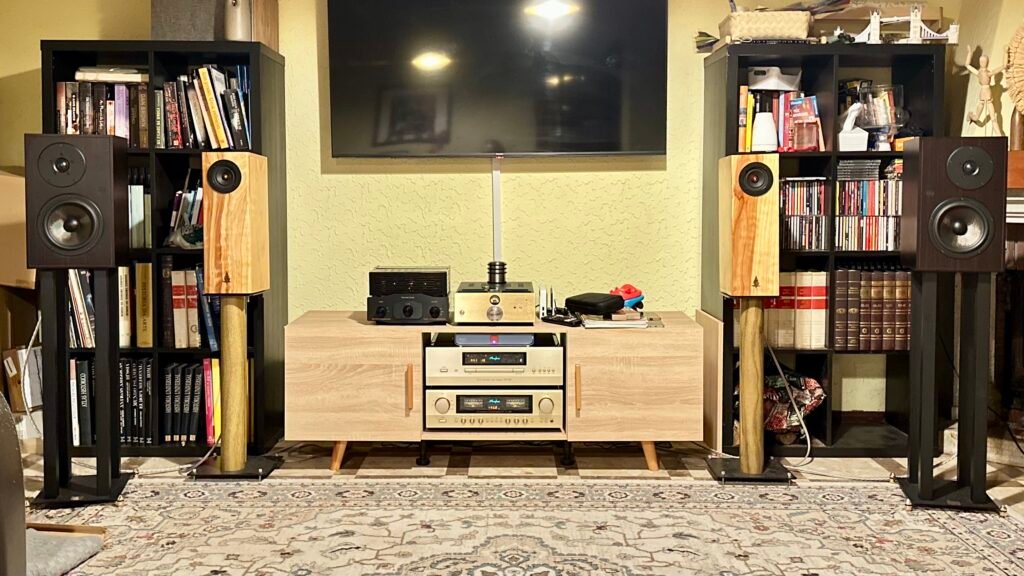
With a modest 15W tube amp, everything clicked.
Under 20 watts. Ideally tubes. And a sensible hand on the volume knob.
Sound Analysis
Tonal Balance
Bass is surprisingly present for their size, but controlled and slightly dry.
Midrange is clear and articulate, with a slightly nasal coloring that defines their character.
Treble is open and airy, but demands restraint at higher volumes.
Imaging & Soundstage
Reasonable width and some depth, though more convincing in front of the speaker plane.
Stable imaging, well-focused, with a forgiving sweet spot.
Dynamics
Macro dynamics are limited—physics is physics.
Microdynamics are decent, though subtle transitions can feel slightly smoothed.
At higher volumes, composure begins to fade.
Timbre & Texture
Light, sometimes almost ethereal presentation. A bit lacking in body.
But there’s coherence—and a distinct voice—which matters.
Transparency
Resolution and separation are appropriate for the price.
No dramatic veiling—as long as you don’t push them too hard.
System Matching & Setup
These aren’t linear across all volumes—you’ll need to find their sweet spot.
They’re not ideal for near-field listening and aren’t overly demanding in placement, but they benefit from breathing space.
At a listening distance of roughly 1.5–2 times the distance between speakers, they begin to shine.
With tube amplification, they feel at home.
With digital sources, they become less forgiving.
With vinyl, they sound more natural and relaxed.
Musicality
This is where the Corvo truly stand out.
They don’t impress with technical perfection—but they can captivate with how they communicate music, especially when voice is central. There’s flow, engagement, and emotional pull.
Music doesn’t just play—it happens.
That said, with digital sources and long sessions, some listening fatigue may creep in.
Final Verdict
The Azoric Audio Corvo are not perfect. Not even close.
But they’re not trying to be.
They’re imperfect, temperamental—and deeply engaging.
These are not speakers for those seeking a do-it-all solution.
Not for those obsessed with measurements and graphs.
They are for listeners who value character.
Who accept limitations in exchange for personality.
They excel at:
Vocals and acoustic music
Dialogue intelligibility
Low-power and tube-based systems
They fall short in:
Scale and dynamics
Complex, dense music
Absolute neutrality
The Corvo are for those who appreciate craftsmanship, individuality, and character—who are willing to trade absolute precision for a more intimate connection with music.
It wasn’t love at first listen.
But it was, without a doubt, a relationship worth exploring.
Pingback: Artesanato com Alta-Fidelidade: review Azoric Audio Corvo - MoustachesToys | High-End Audio Reviews & Experiences