Like most people who fall into this wonderful addiction called hi-fi, I have always been looking for more. More detail. More extension. More soundstage. More presence. More body. More transparency. More decay on the cymbals, more texture, more air around the voice, more flesh on the bone, more skin, more room, more everything.
There is nothing wrong with that. Hi-fi lives on that urge . We swap cables, supports, sources, valves, cartridges, preamplifiers, speakers — and even the mental state we bring to the listening chair changes how we perceive what we hear. All in pursuit of more music.
But not everything is about more. There is something we pursue less consciously, something we may never have recognised as a pursuit at all: less noise.
And much of it we may never have noticed was even there.
What is the Clearaudio Terra Grounding Box
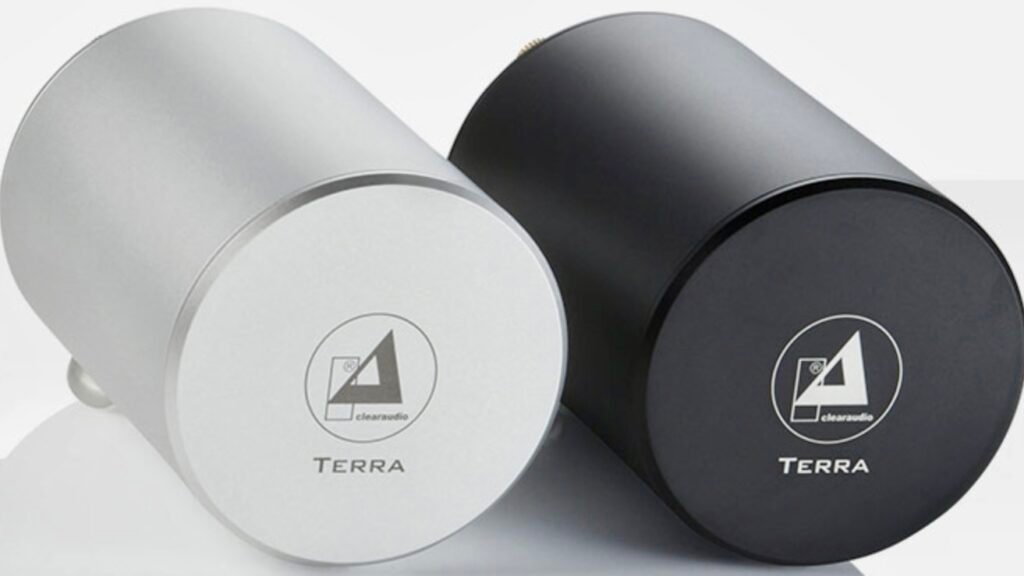
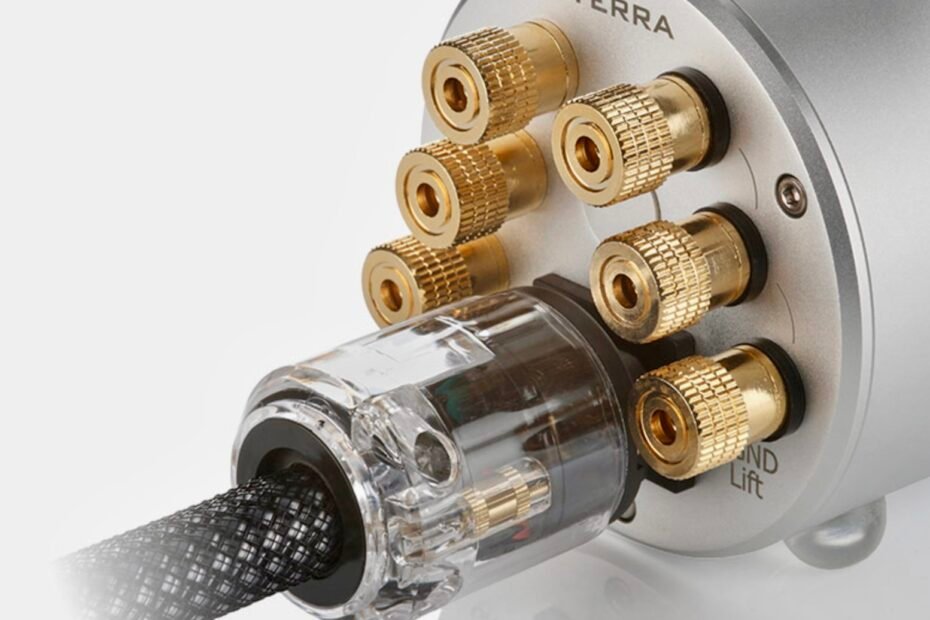
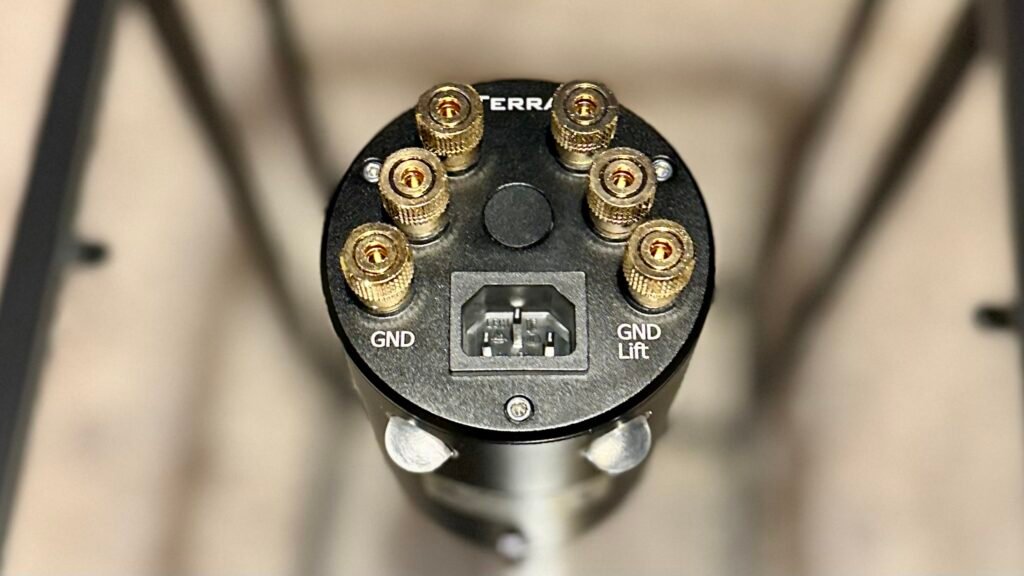
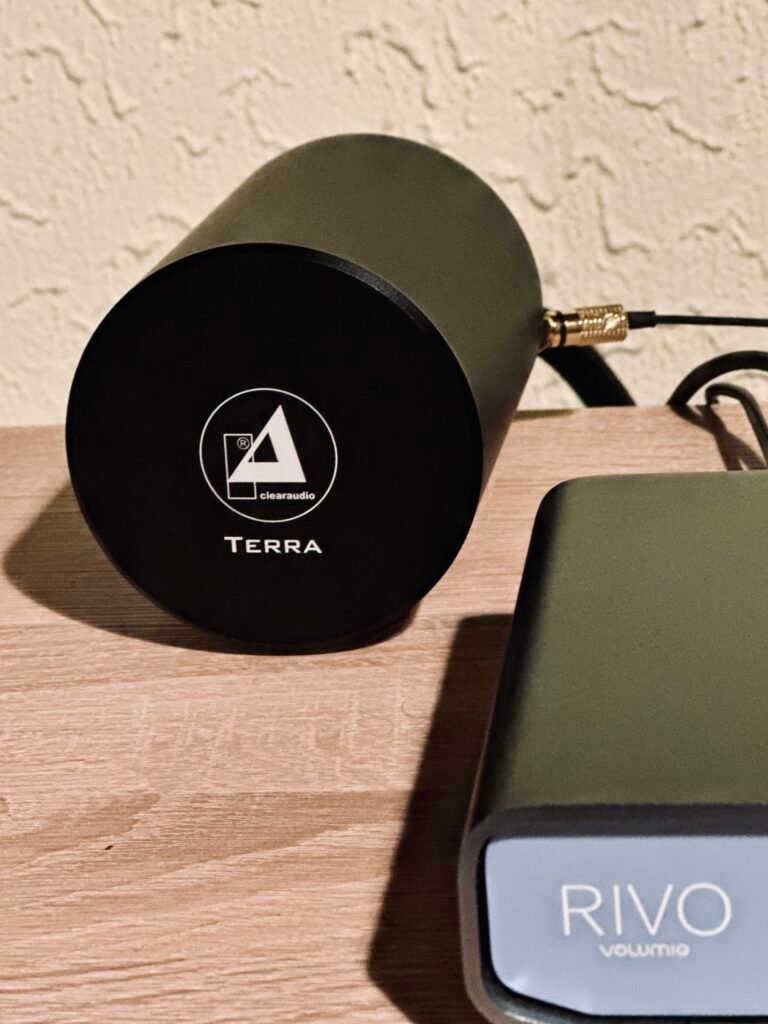
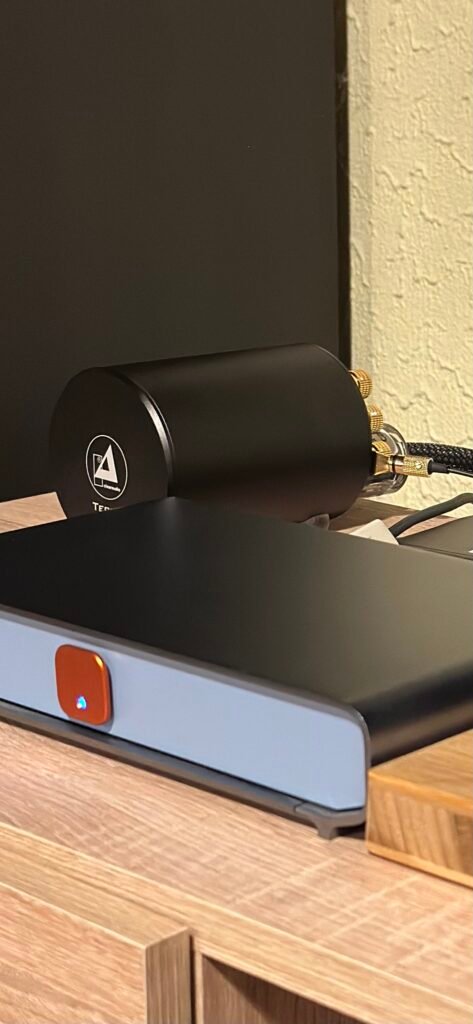
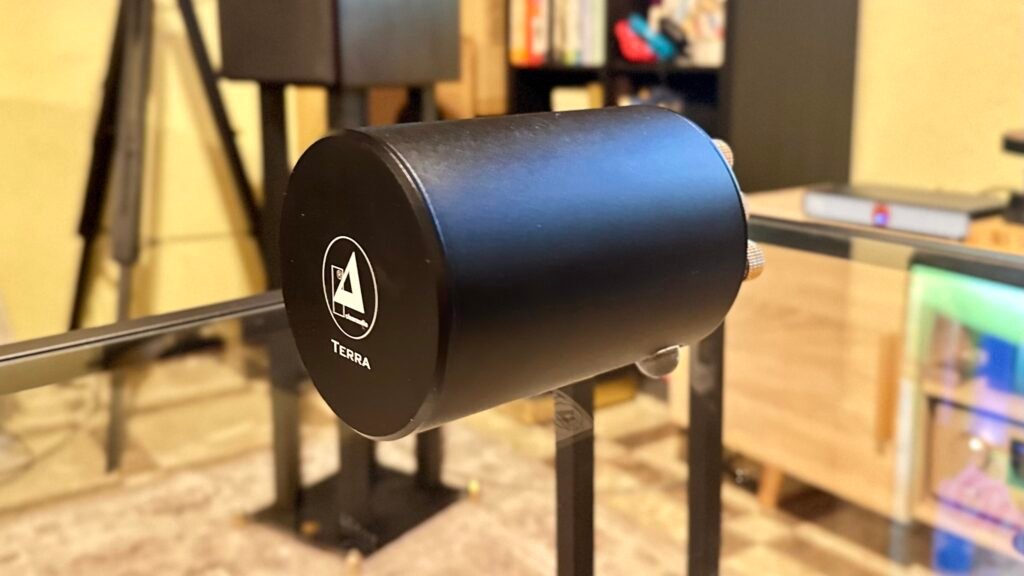
The Clearaudio Terra is the grounding optimisation solution from the German turntable manufacturer. It organises the electrical ground of a hi-fi system, with six connections on the rear — three direct ground, three in ground lift mode — an IEC socket connected only to the protective conductor, plastic binding posts to prevent any current from passing through, and a cylindrical aluminium enclosure filled internally with sand. Three connection cables are included.
Specifications and connections
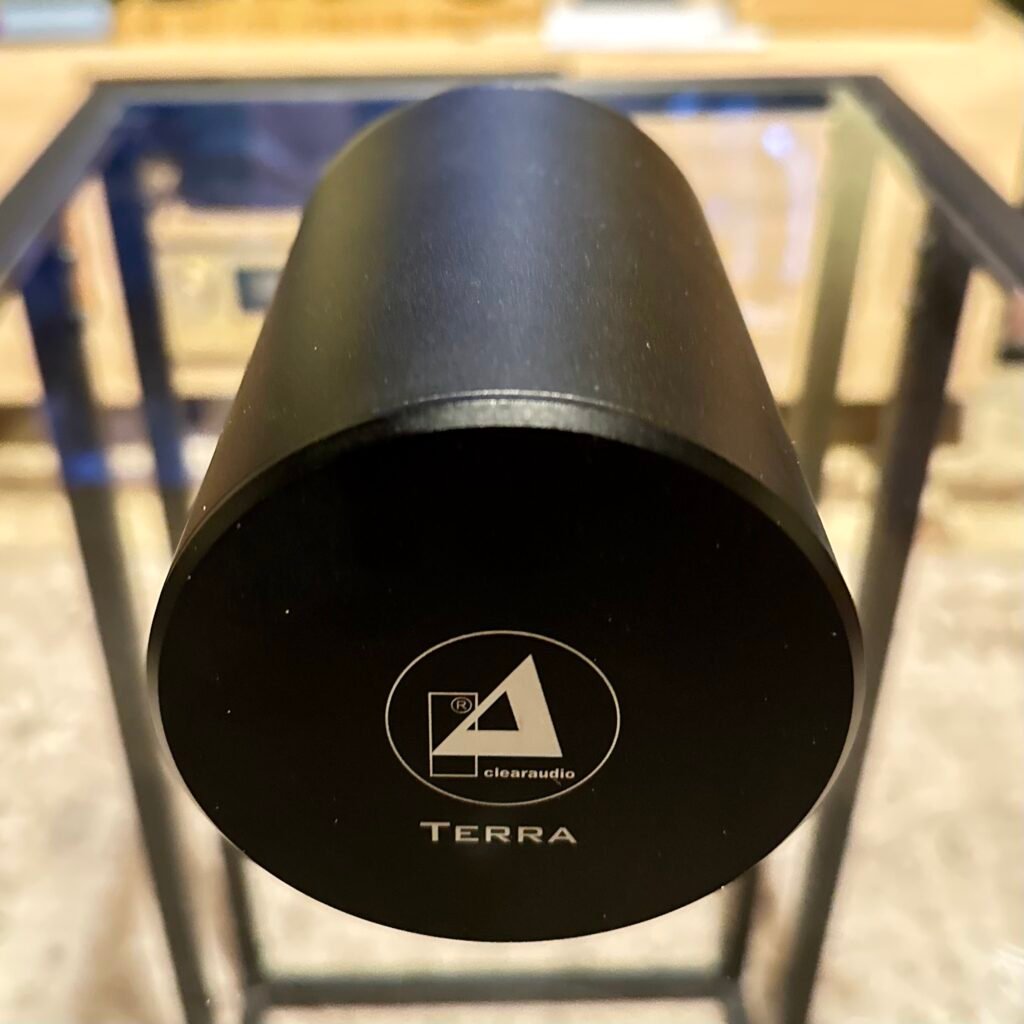
A black aluminium cylinder, 90mm in diameter, made in Germany. You can pay with a thousand euros and still get change — enough for a croissant and a juice, provided neither is consumed in a major European capital. The Clearaudio Terra sits in that curious category of accessories that can no longer be bought with coins found down the back of the sofa, but that won’t require selling a kidney. A Land Cruiser is expensive for some and indispensable for others. In audio, the story is exactly the same.
The system behind this review
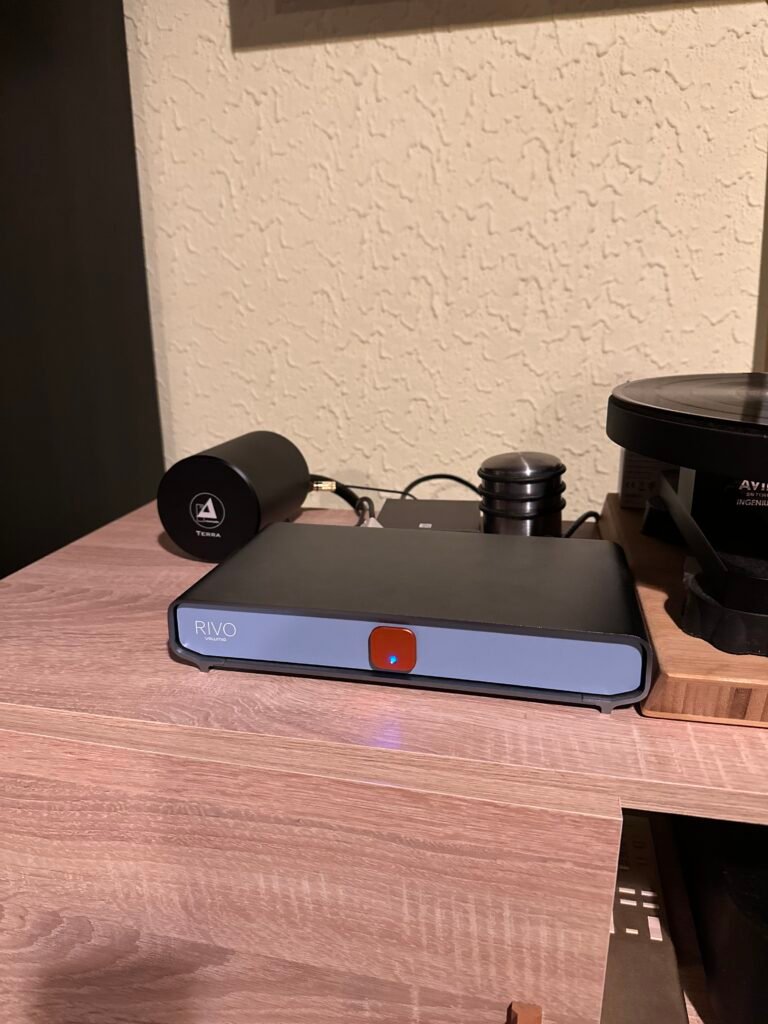
My turntable has no obvious hum — not the kind that makes a man rise from the sofa with the expression of someone who just smelled a gas leak. No evident ground loops. No drama, nothing screaming “problem!” So when I arranged with Francisco at Ultimate Audio to try the Clearaudio Terra, I was honest: “I’ll have this back to you in a week.”
Which, by MoustachesToys standards, is a serious crime deserving capital punishment. I don’t normally accept doing reviews that don’t involve at least four weekends of living with the equipment in question.
But a grounding box? At home, in a system I already considered quiet?
Right…
My reference system, familiar to most of you who follow along: Avid Ingenium turntable, Pellar phono stage from the same manufacturer, Volumio Rivo streamer paired with the Fezz Equinox DAC — the one cooked by LampizatOr — Accuphase E-280 integrated and Revival Audio Atalante 3 speakers. An urban apartment building. Thirteen families in the same concrete and brick block. Lifts, routers, refrigerators, chargers, televisions, LED lights, neighbours with lives of their own and, almost certainly, far too many electrical devices sharing the same grid.
Connected to the turntable — first impressions
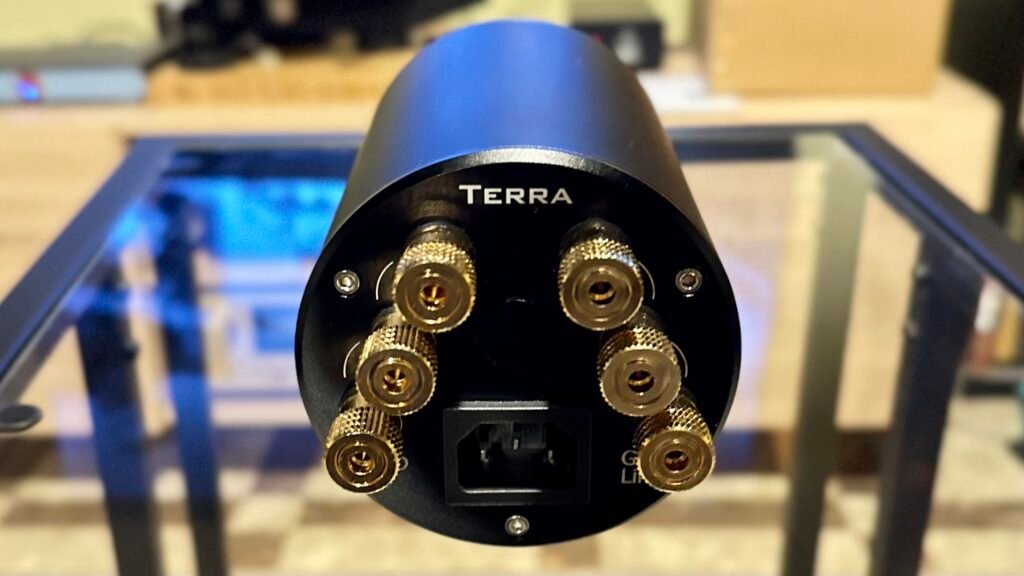
In the first approach, connected to the Avid Ingenium, the Clearaudio Terra produced no additional bass. The soundstage did not expand or deepen. The €200 cartridge did not wake up transformed into a five-thousand-euro one. The Accuphase did not begin delivering watts blessed by Tibetan monks. The Atalante 3s did not grow twenty centimetres overnight.
In my home. In my system. On my turntable. The nine hundred euros that Clearaudio asks for this Terra stayed in my wallet.
But the Clearaudio Terra stayed not just one day — it stayed a week. Time to try it on the other sources. The digital ones. The apparently less obvious ones.
What happened on digital sources
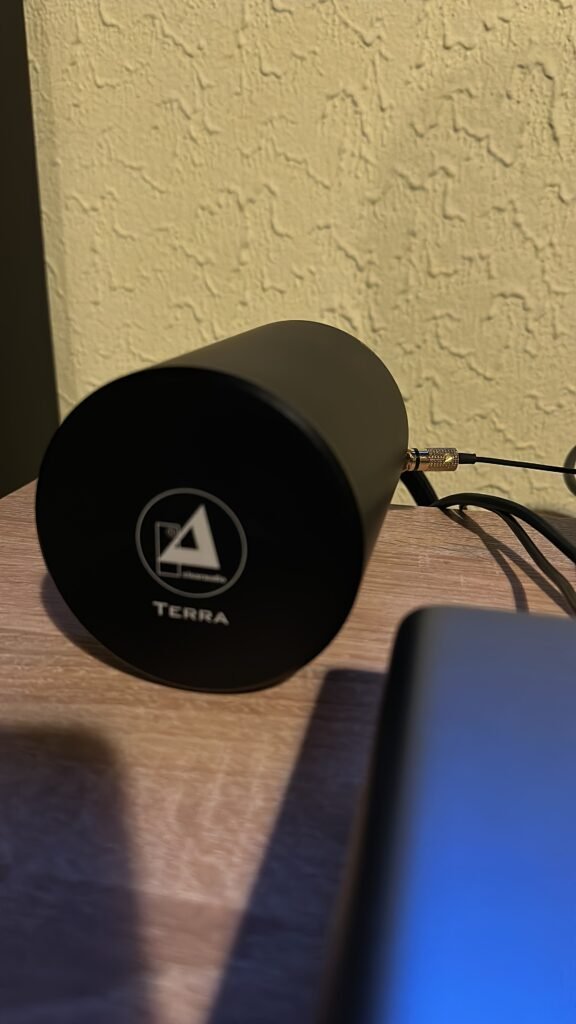
What happened during the rest of the Clearaudio cylinder’s stay was harder to describe. And perhaps for that reason, more interesting.
There was less of something.
Less background noise. Less instability. Less of the sensation that the music was competing with an electrical haze I had not, until then, identified — because until then I thought I had a reasonably quiet system. Removal is always harder to perceive than addition. When a component adds bass, it’s easy. When it opens the treble, likewise. When it projects and humanises the voice, the brain points and says: there it is. But when something disappears, first we find it strange. Then we adapt. Only later do we realise that what disappeared had been occupying space.
The Clearaudio Terra does not improve the sound in the traditional sense. It adds no sauce, no spice, no psychological volume to the experience. It removes. Removes: noise.
Less background noise translates into more contrast. Less interference translates into more focus. Less instability translates into more naturalness. Less noise — into more detail we didn’t know existed.
Want an example outside audio? Swap your combustion car for a battery electric one, and tell me about the difference between the music you were hearing and the music you now hear inside — and the conversations during driving, which go from being half-shouted to simply spoken. Details stop competing with an unstable background. The music doesn’t get bigger by magic. It gets more organised. Clearer. Easier to follow. The voice locks in with less effort. The soundstage feels less nervous. The silences between notes become deeper — not for drama, but because there is less movement where nothing should be moving.
Listening quietly is not listening small
There is something important here that matters greatly to me, and which I suspect matters to many like me: the ability to listen to music at low volumes without losing what music normally only reveals when you push the volume control further. And without reaching for headphones at forbidden hours, when neighbours are trying to sleep in the flat directly above.
It happened late. Just past midnight.
The city outside had found its quietness. But an apartment building with thirteen families never falls fully silent. There is always someone closing a door, a washing machine finishing a cycle, a lift stopping on some floor. That night, though, the building had finally settled.
I was listening to Sol Salutis, by Christian Jormin 3. A Swedish jazz trio — piano, double bass, drums — whose music lives precisely in the space between notes. Not an album designed to test a system. An album that tests whether a system can transmit something human.
Which made it, as it turned out, the perfect record for something I didn’t yet know I was trying to hear.
The E-280’s volume kept descending.
−75dB.
Then −80dB.
Then further still.
Normally, this is the point where music begins to shrink — like fingertips after too long in water. Still audible, but losing scale. Losing body. Losing the ability to fill the room.
But something unusual happened.
The piano kept its weight. The bass held its structure of wood and strings. The drum skins kept drawing textures across the space.
Nothing seemed to be fighting to survive.
At some point I realised I was not listening more carefully.
I was listening less carefully.
The music had stopped demanding effort.
I didn’t need to follow the bass line. I didn’t need to search for the contour of the notes. I didn’t need to mentally reconstruct the space between the musicians.
Everything was simply there.
That was the moment I understood what the Clearaudio Terra was actually doing.
It was not adding information.
It was removing what had been standing between me and the music.
There is a difference between listening quietly and listening small. Before the Clearaudio Terra, lowering the volume could mean losing contact with the music. It remained audible — and the Accuphase does an excellent work at low listening levels — but it becames less convincing. As if the image shrinks and the body of the music steps a few paces back.
With the grounding box in the system, low-volume listening became more complete. Less sound pressure, obviously. But not less coherent.
When the background clears, we don’t need to push the music forward so hard. When there is more contrast, the information arrives with less effort. When the soundstage stabilises, the brain works less to reconstruct what is happening. And when the brain works less, the music is what does the work — inside us.
With the E-280 dangerously close to absolute silence, everything was still there.
The scale did not disappear. The body did not evaporate. The detail did not hide behind a curtain. The music held its presence, focus and proportion — without me having to turn the room into an assault on my neighbours’ sleep.
For anyone living in an apartment, in a city, surrounded by other lives continuing beyond the walls, this is not a small thing.
It is freedom.
Who this makes sense for — and who it probably doesn’t
The Clearaudio Terra is not a universal product. It is important to say so before someone turns a concrete experience into a portable religion.
Urban environments and complex systems
It made sense in my system. Perhaps It will make sense in systems with multiple components, in urban environments, with real electrical noise and many devices sharing the same domestic grid. Perhaps for those who already have a resolved system and are looking for fine tuning — not revolution. No grounding box replaces a good match between components.
Who probably doesn’t need it? Perhaps simple systems with few components, electrically quiet environments, isolated homes — probably users expecting a water-into-wine transformation. If the question is “will I hear more bass?”, the honest answer is: no. But you will probably hear different bass.
You will come to understand that noise doesn’t always present itself as noise. More often it presents as slight tension, a less defined soundstage, the need to push the volume higher, less relaxed listening — a small fatigue we never blame on the system because we don’t know where to point the finger.
With the Clearaudio Terra, in my system, the finger finally found somewhere to rest
Conclusion
It was not an instant epiphany. It was an evidence that revealed itself gradually. One of those accessories that makes more sense when it leaves the system than when it arrives — because when it arrives, it removes; and when it leaves, it returns what we had already learned to ignore.
The Clearaudio Terra did not transform my system. It tuned it.
Transforming is easy to sell. Tuning is harder to explain. But when it happens in the right place, it can be more important — not because it changes the personality of the system, but because it allows the system to speak with less noise between the intention and the result.
It is not a product you buy on impulse. It is a product you try, and eventually comes to make sense. And once understood, it will be difficult to ignore.
In the end, it was hard not to have those nine hundred euros available at that moment. The Clearaudio Terra was returned after one week. As promised.
The Clearaudio Terra used in this review was temporarily loaned by Ultimate Audio.
Pingback: Com os pés bem assentes na Terra, A review da Grounding Box Clearaudio Terra - MoustachesToys | High-End Audio Reviews & Experiences