First things first.
Here, on MoustachesToys, an article only earns the word review when the equipment has spent at least a month in my listening room, integrated into my reference system, the Benchmark Stache.
That is my rule.
It is not particularly scientific, and it certainly isn’t the only way to review audio equipment. But it is the way I know how to separate the excitement of a first encounter from the much less glamorous business of actually living with a piece of audio equipment.
This was different.
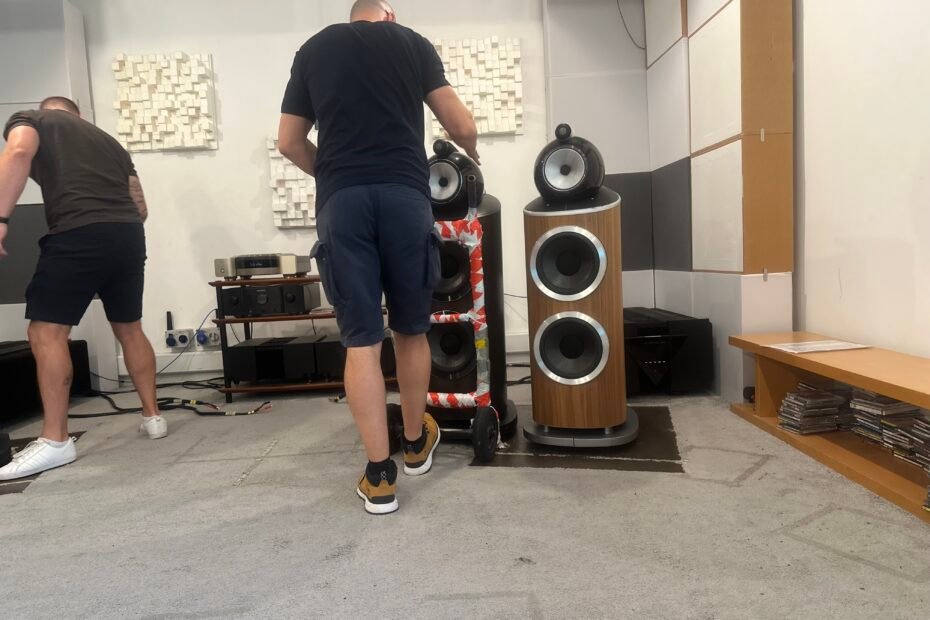
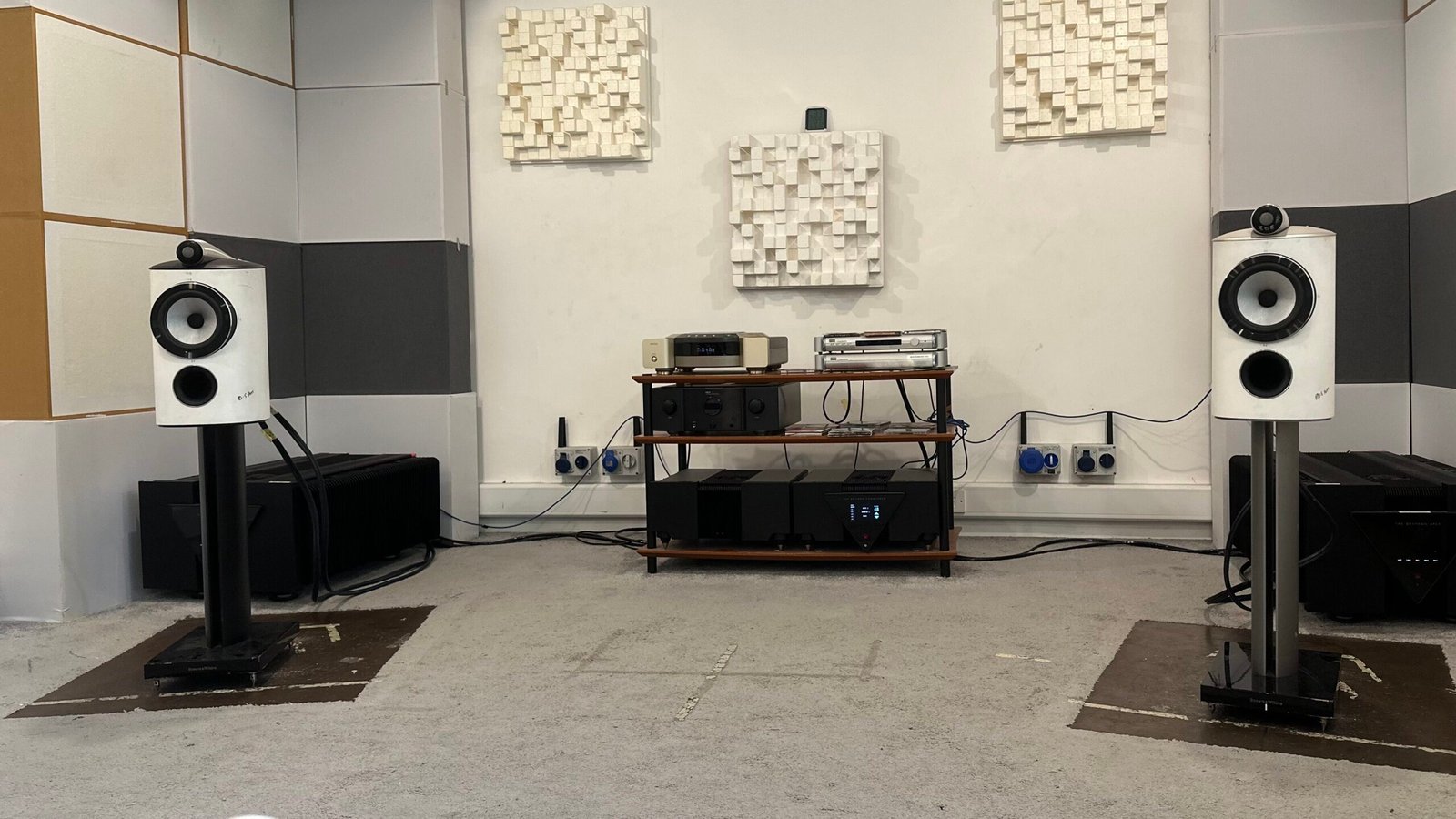
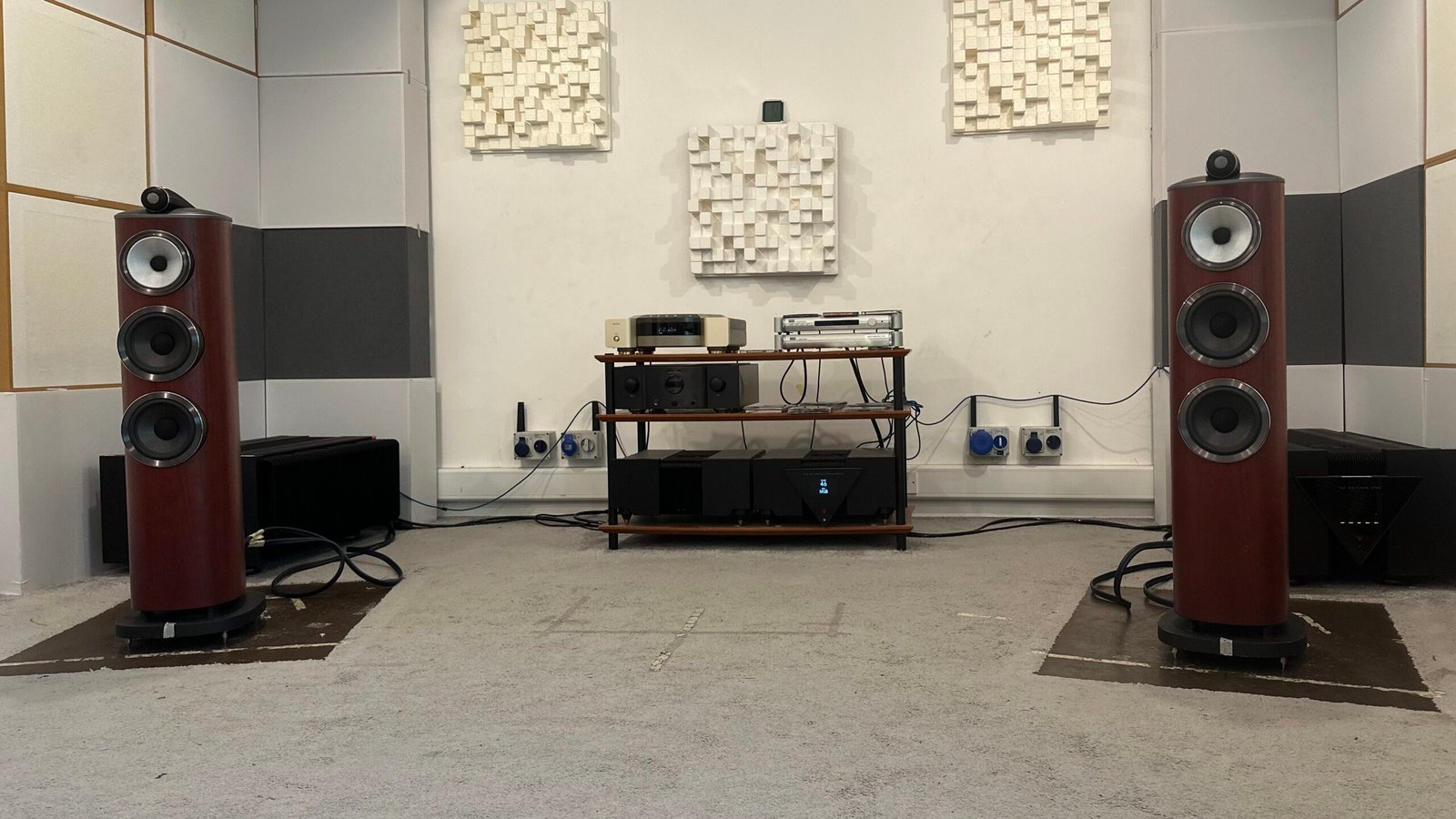
During my visit to Bowers & Wilkins‘ factory and development centre, I had the opportunity to listen to the new 800 Series D5 alongside the outgoing D4 generation.
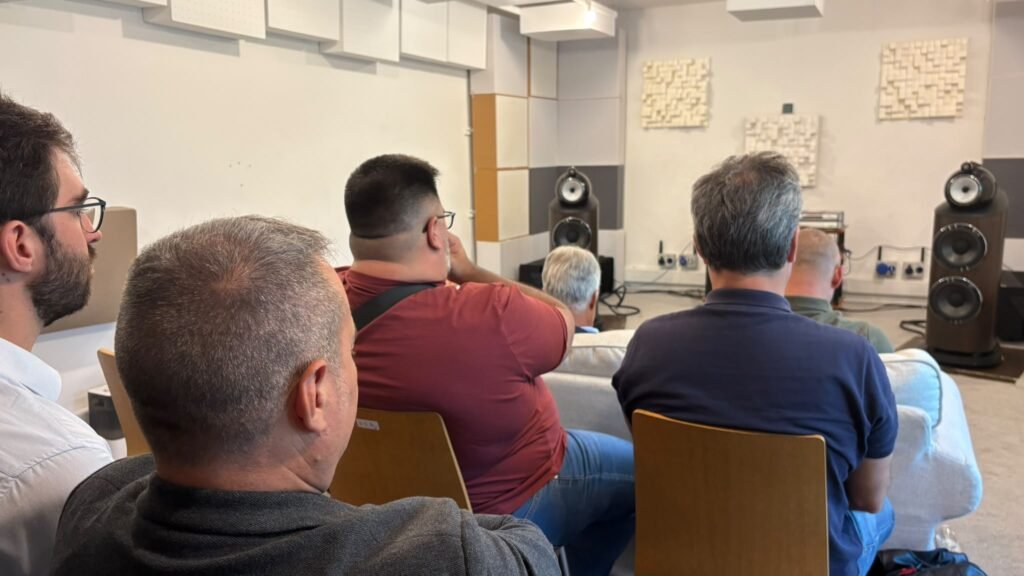
I sat in B&W’s replica of John Bowers‘ original listening room and listened to both generations, side by side. So no, this isn’t a review.
It is, instead, a head-to-head.
800 Series D5 vs. D4
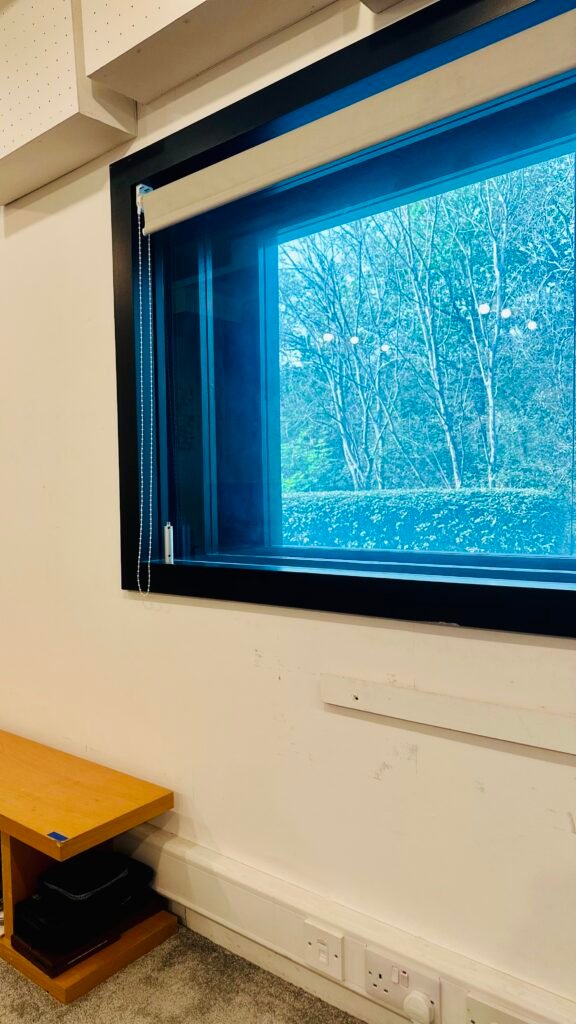
B&W’s replica of John Bowers’ listening room stands apart from the main building. The structure sits on its own concrete foundation, physically separated from the building, with three layers between the listening room and the outside world.
Looking through the window, you can actually see the layers.
It can seem like an almost excessive amount of engineering dedicated to achieving something remarkably difficult to achieve: silence.
Or, at least, as close to it as a listening room can get.
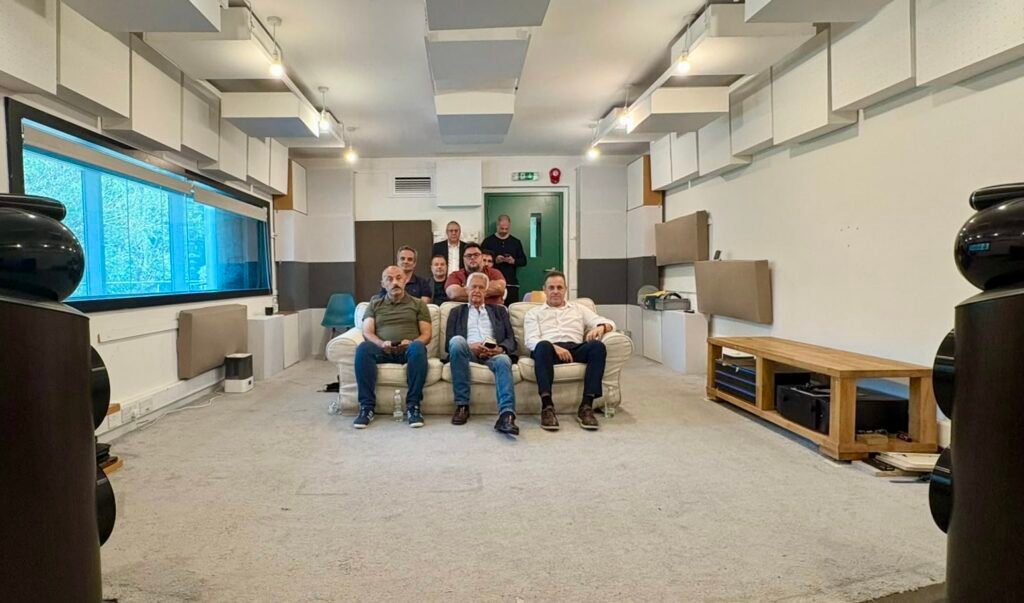
The room itself is a replica of John Bowers’ listening room from the company’s early years, complete with the BBC-style room treatment from back in the day. It is difficult not to feel that there is a little theatre involved in sitting there.
But perhaps that is precisely the point.
Once the music starts, the room stops being a museum piece and becomes an instrument. And I had brought a question with me:
What has actually changed?
The D4 is not an easy generation to improve upon. And, in my case, there was another issue. I have an issue with the tweeter. In fact, with all of B&W’s tweeters.
There. I’ve said it.
For all the things I admire about the 800 Series, there has always been something about the way B&W’s tweeter presents itself that occasionally gets between me and the music. Only one has ever made something inside me fizz — and in what a way!
The 801 D4 Signature.

I once heard it with some of the best equipment I can imagine putting behind a loudspeaker: the Ikeda Akiko cartridge, mounted on a Clearaudio Master Jubilee deck with their top-of-the-range tonearm, an Accuphase C-57 phono stage and Accuphase pre and power amplification. All that artillery tamed the Diamond Tweeter’s sound signature. It worked. At least for me, it did.
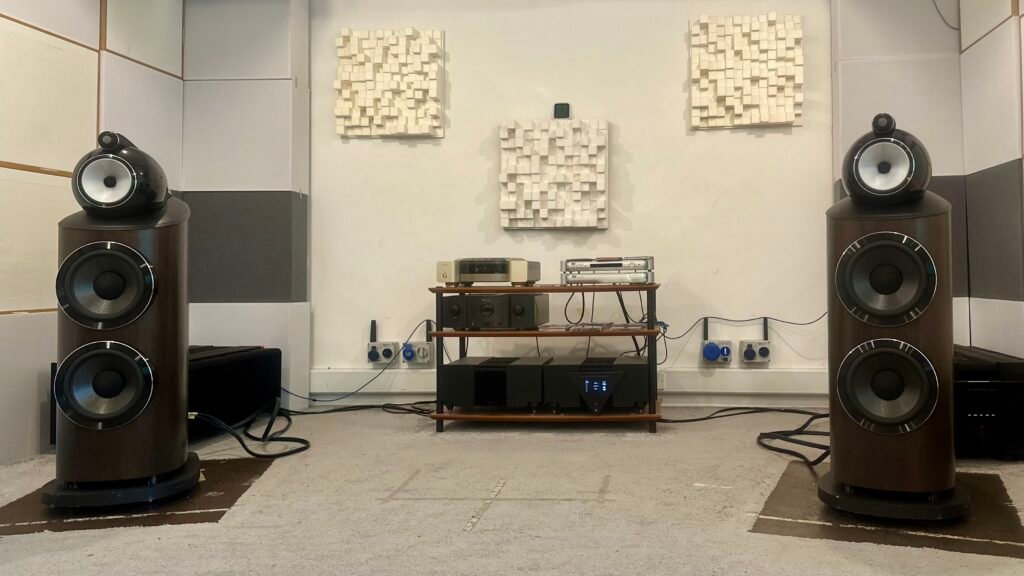
This time, the B&W 800 Series speakers were being fed by Gryphon Commander amplification and Apex monoblocks, with a Denon CD transport and a MSB DAC. A Considerably less forgiving combination, at least as far as my particular sensitivities are concerned. So, while sitting in John Bowers’ listening room, I was not wondering whether the D5 had more detail than the D4. I was wondering whether it had become easier to listen to.
And because I know you are probably not prepared to put up with me for too long, and I don’t want you turning to TikTok halfway through this article, I’ll spare you a compendium of every technical change between D4 and D5. Andy Kerr had already explained those changes to us, the group of journalists, the day before at the factory.
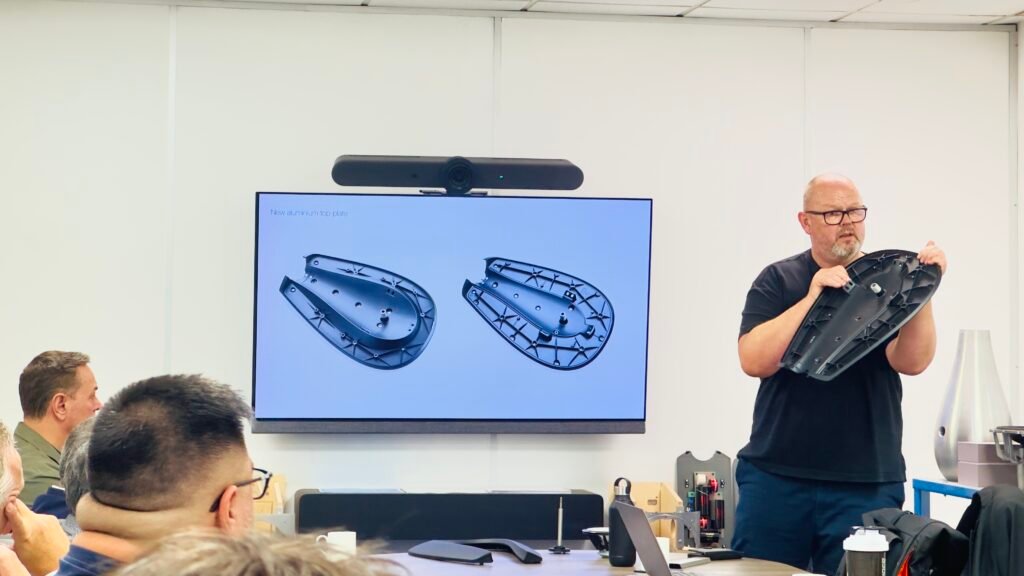
There were four of us from Portugal on this visit. There will be plenty of people writing about the technicalities, probably with much more talent for that than me. If you came here looking for the thickness of a particular damping layer, or how many millimetres something changed, I’m afraid that is not what I am about.
I want to know what came out of the loudspeakers. And, more importantly, how it made me feel listening to music. So the D5 arrived with a very particular test to pass.
More resolution would be nice. More extension, more control, more scale — all welcome. More everything.
But what exactly had changed?
That was the question I carried into the room. And one important detail before we get to the music: in each case, the D5 was compared directly with the D4 of the same model. So when I moved from the 805 to the 804, and then to the 802 and 801, I wasn’t simply comparing different loudspeakers. I was listening for what had changed between generations.
Harry Belafonte — A Fool for You
And then Harry Belafonte started singing…
It is difficult to think of a better place to start if you want to know what has happened to the way a loudspeaker reproduces a human voice.
With the 805, the standmount in the range, the first impression was immediately about texture.
The bass was more textured. The timbre of Belafonte’s voice was better defined. There was more definition down below, certainly, but what interested me more was that the voice itself seemed more believable.
Then came the smallest floorstander, the 804.
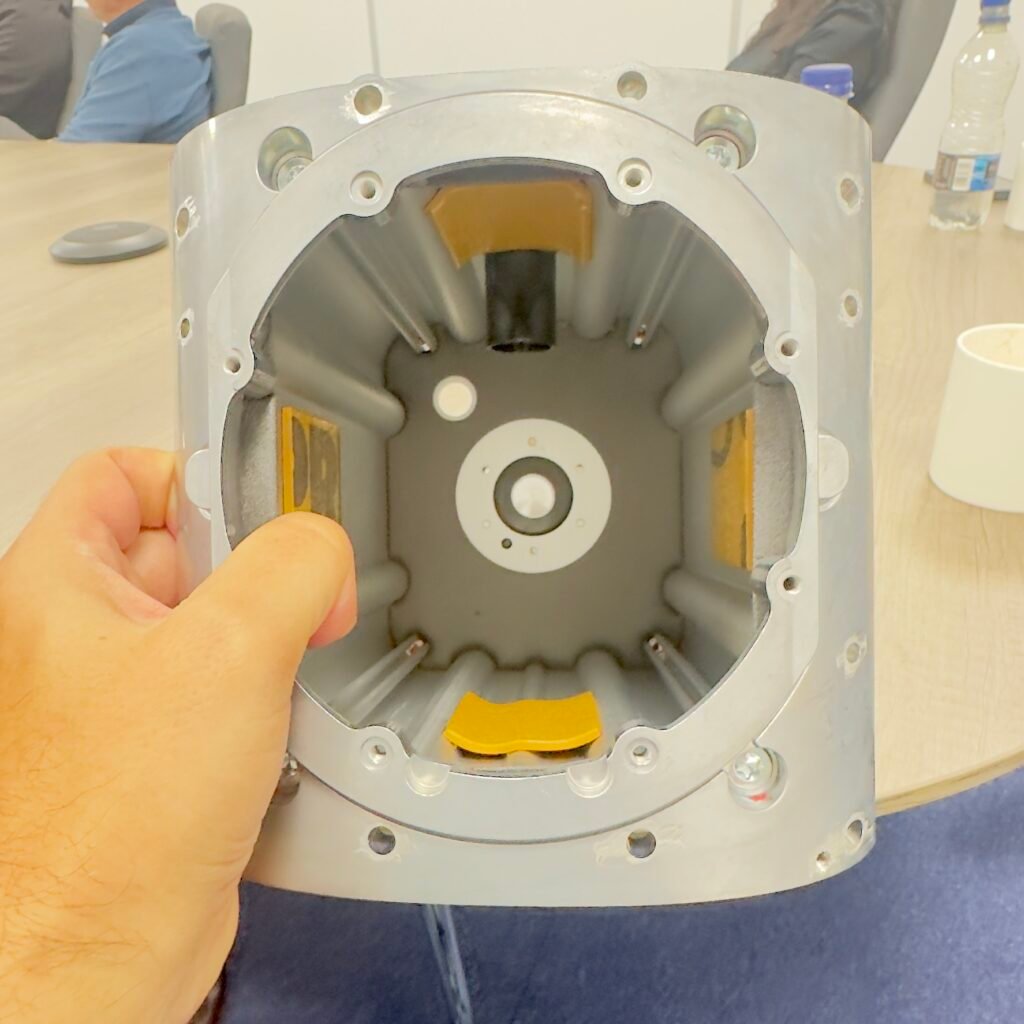
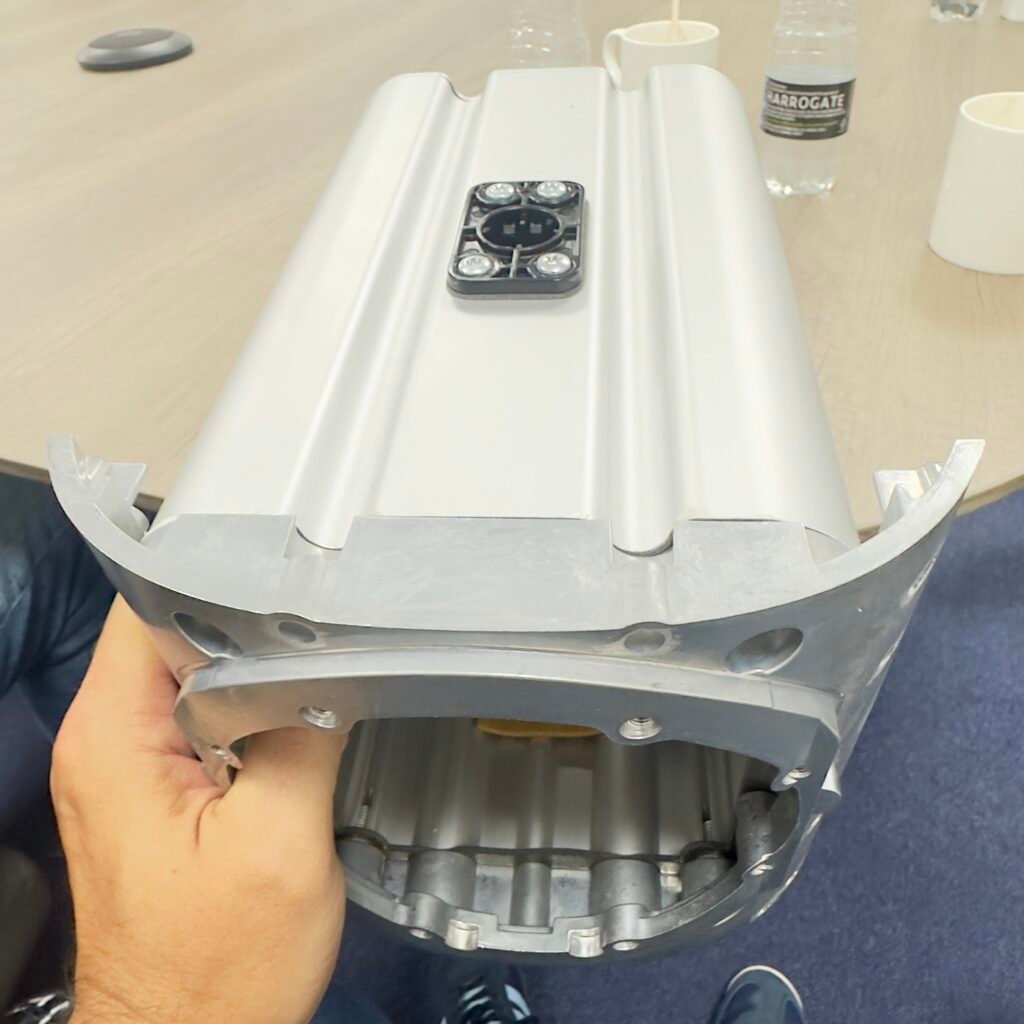
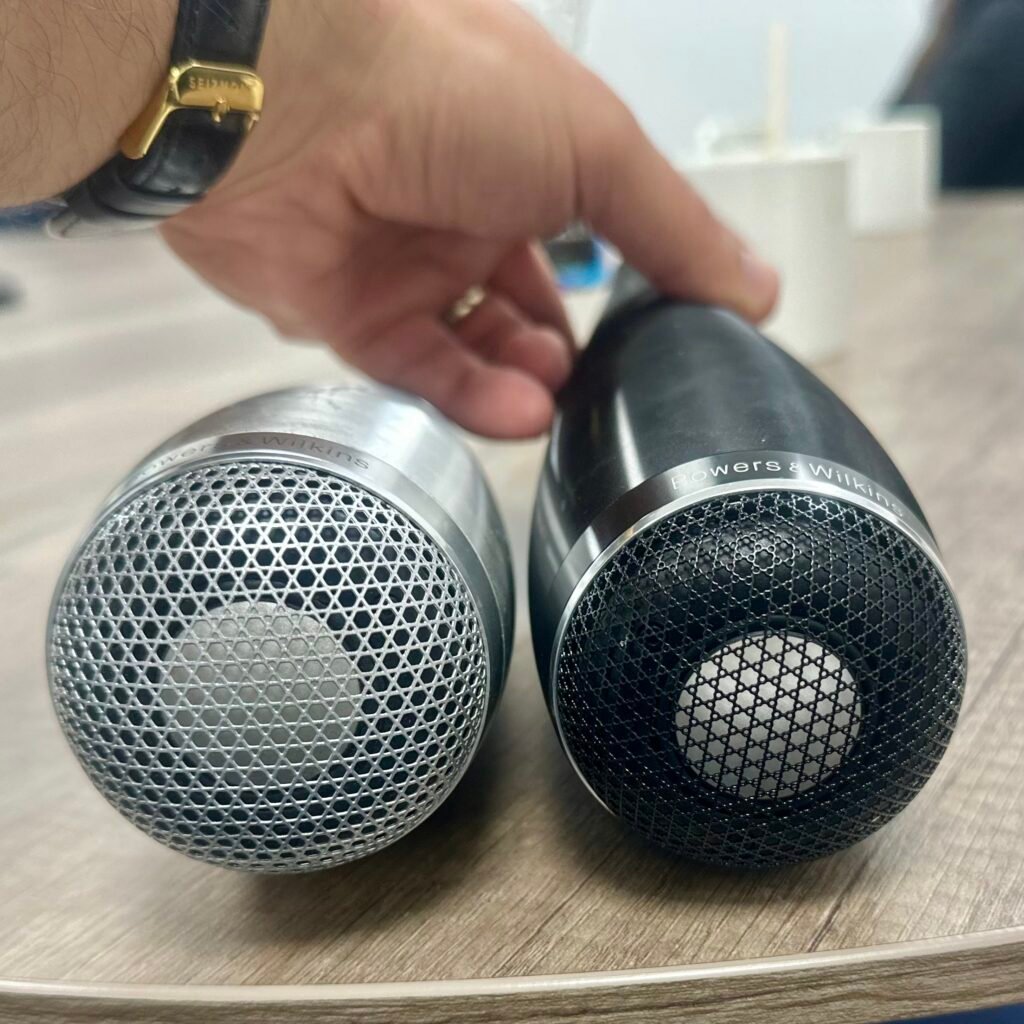
The 804 D5 has an aluminium chamber hidden inside the cabinet, intended to achieve a similar effect to the Turbine Head in the mids. Naturally, my ears went looking for what had come out of it. The difference wasn’t simply more. It was a gradual correction of the tonal impression I was getting from Belafonte’s voice. The presentation became more natural.
Then came the 802.
There is a point where describing the difference as an improvement in frequency response or resolution simply becomes, for me, inadequate. There was more immediate power. But, more importantly, there was naturalness. More flesh around the bone. And a sense of something more organic. That last expression may sound strange in a listening report, but it is exactly what I mean. The voice seemed less like a collection of reproduced frequencies and more like something attached to a person standing in front of me in the room.
Then came the 801.
And here, for me, the jump was brutal. The scale changed. But so did something else. The discomfort I have always associated with the tweeter simply disappeared. For a moment I had the inconvenient thought that perhaps B&W simply wants everyone to buy the 801. Or perhaps they have put all the effort into the top of the range and, as we move down the ladder, small compromises start appearing at every step. I genuinely don’t know.
Phoebe Bridgers — DVD Menu
This is a very different proposal.
The opening of the track is full of small events, overlapping sounds and subtle changes in density. It is the sort of recording that can easily become a mess if the system doesn’t keep everything under control.
With the 805, the D5 brought better inflections in Bridgers’ voice. More clarity. A better-defined soundstage. More focus.
With the 804, the improvement became less about the individual elements and more about their relationship to one another. There was better separation within the complex mixture of sounds. Things stopped getting in each other’s way quite so much.
Then came the 802.
The presentation became denser. More physical. More meat on the bone. This is where the comparison started becoming interesting. The D5 wasn’t simply revealing more detail. It was making the organisation of the recording easier to understand.
And when we reached the 801 D5, something clicked.
Finally, the beginning of this terribly complicated track made sense. The layers were more organised. The different sounds occupied their own spaces. And somehow, through all of that, Phoebe Bridgers’ voice remained the thing that mattered.
What a voice.
It was one of those moments when the technical jargon started to disappear from my mind. You stop listening to the loudspeaker. You listen to the music.
That is, ultimately, what I want a loudspeaker to do.
Agnes Obel — The Curse
If DVD Menu was about organisation, The Curse by Agnes Obel was about space.
With the 805, there was more precision and more focus. The high frequencies remained recognisably within the same tonal family, but the D5 seemed to draw the individual elements into sharper focus.
The 804 took another step.
There was considerably more resolution. More space between the layers. Or, perhaps more accurately, more silence between the layers. That little distinction matters. Resolution is easy to describe as “more detail”. But hearing more space between things is different. It changes the way the whole recording sounds. A good comparison might be an exploded technical drawing, where a complex object is taken apart and every component is laid out separately so you can understand how everything fits together. Now imagine doing that with sound. Not pulling the music apart. Just making the relationships between its individual elements easier to understand. Maybe the conclusion is that the noise floor had somehow dropped.
I don’t know. I only know that there seemed to be more room around the music.
The 802 added something else.
Faster transients. Longer decays. More weight. Again, more meat on the bone. The music had become more substantial without simply becoming louder or more aggressive.
And then came the 801 D5.
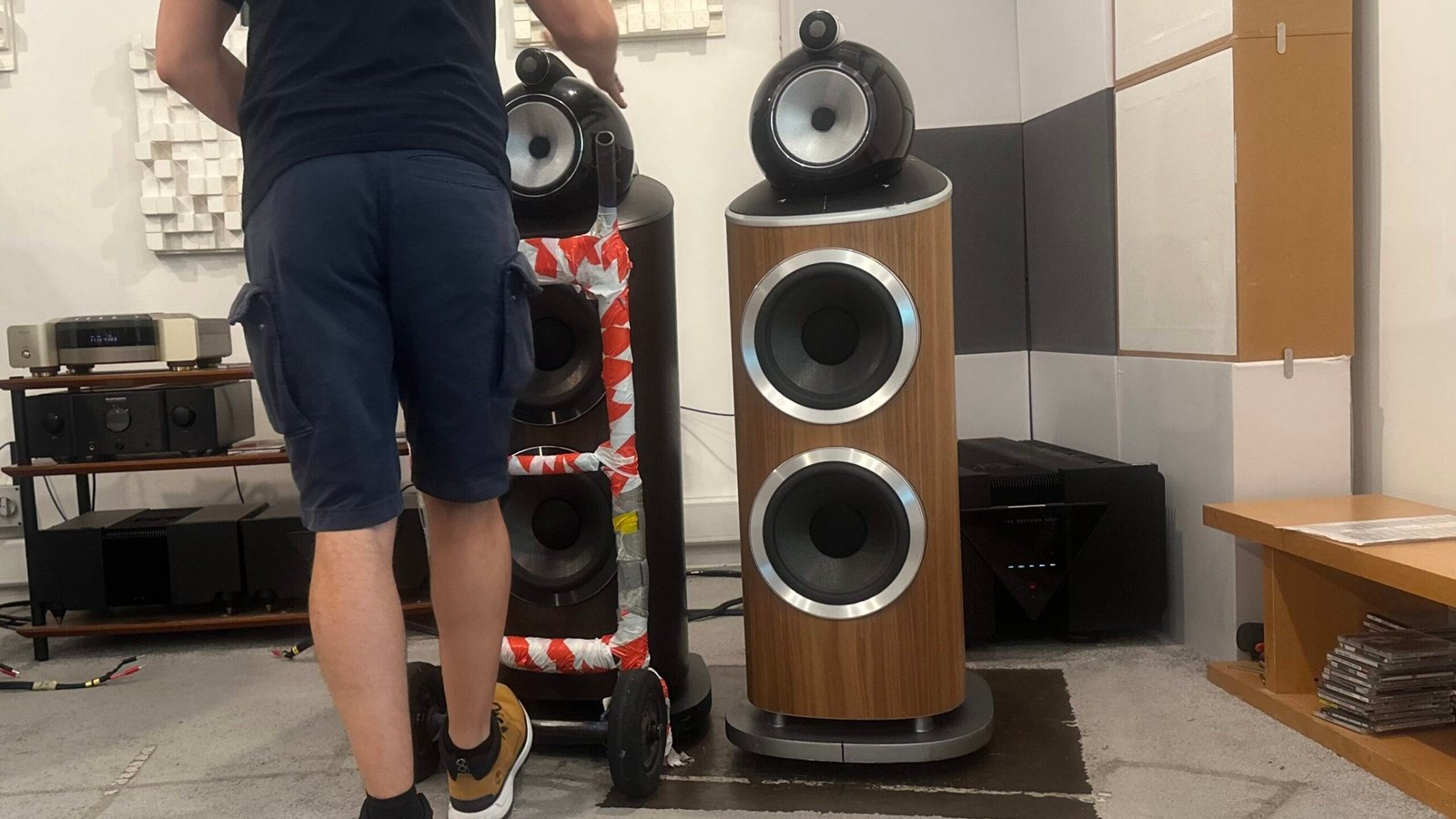
The scale was dramatically larger. Everything opened up. And then the word that came to mind was simple: visceral. More everything. Not simply more bass. Not simply more detail. More of an experience. At this point, the difference between D4 and D5 had become less interesting to me than the difference between the various models in the 800 Series.
The larger models were not merely producing more sound. They were changing the physical and emotional relationship between the music and the listener.
Then came the battle
The final track, exclusively on the 801 D5, was Dacoit Duel, by A.R. Rahman.
The first thing that struck me was the decay. Fabulous. If you know this track, and have had the opportunity to listen to it on an appropriate system, you know why that matters.
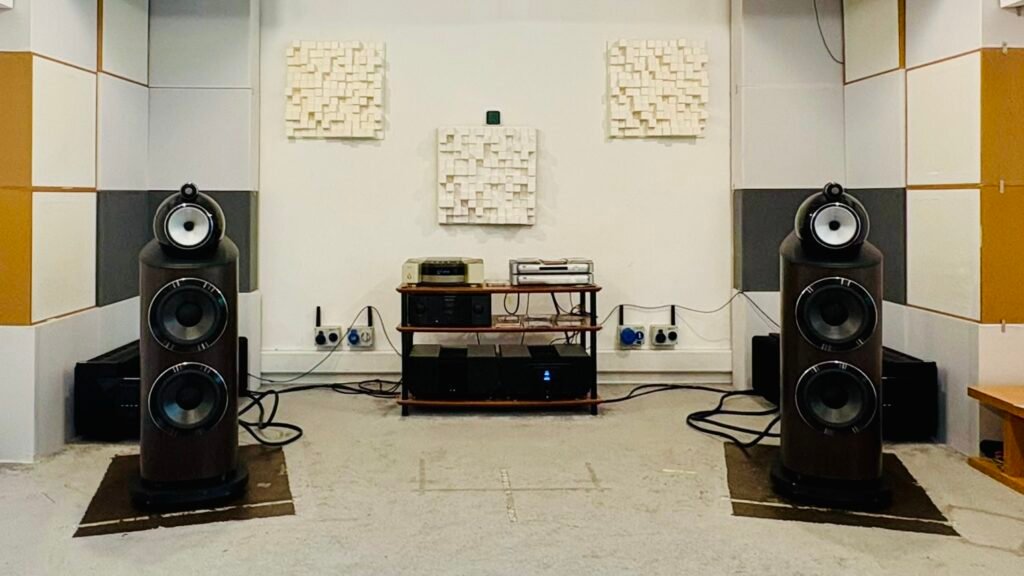
And the scale of the thing. The attack was brutal. Immediate. Cinematic. For a brief, slightly ridiculous moment, I felt like I wanted to pick up a spear and join the imaginary battle. That is probably not a sentence you’ll find in Bowers & Wilkins’ technical documentation. But it is what happened. And honestly, I’d rather tell you that than write another paragraph about transient response.
So, what changed?
This is where things become complicated.
There is no question in my mind that the new D5 represents a meaningful evolution. The differences are not confined to a change in specification or a few carefully selected numbers on a product sheet. Across the tracks I heard greater precision, better focus, more convincing tonal information and, as the models increased in size, progressively greater scale and physical involvement. At times, interestingly, I felt I was hearing less detail. Or perhaps less of the kind of detail that one can think of as “showroom detail”. And that may actually be part of the point.
The 801 D5 in particular was an extraordinary experience.
But.
There is always a but.
The tweeter.
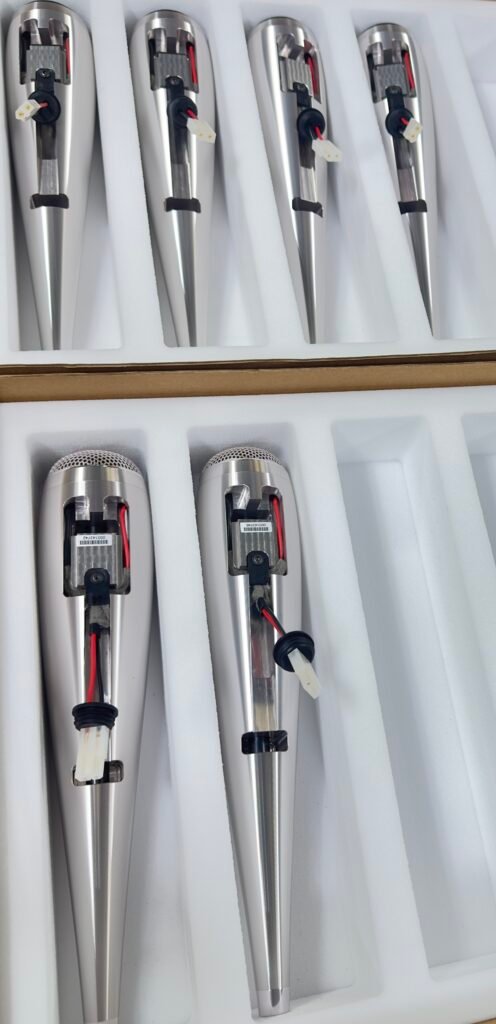
Those of you who have been reading me for a while already know that I have a particular sensitivity to pronounced treble. Some loudspeakers feel to me like someone is fiddling with a tiny screwdriver inside my ears. Personally, that is a problem. And this problem with B&W speakers is still there. At least at this kind of sound pressure.
But not with the 801 D5, at least not in this session. But with the other models? Yes. The 801 D5 was the only one that, for me, completely avoided that effect, just as the 801 D4 Signature had done before it. And again, I cannot help wondering whether that was because the 801 simply has everything working in its favour, or whether B&W has found something at the top of the range that becomes increasingly compromised as we move down through the family. I don’t know. And I don’t want to pretend that I do.
That is why this wasn’t a review.
If I had arrived in that room determined to tell you that the D5 was better, I could easily have found enough evidence to support that conclusion. And there was plenty. But a head-to-head is useful precisely because it can also expose the thing that hasn’t changed.
Which leaves me in a rather interesting position. I left B&W’s listening room generally impressed by the D5 generation. But I also left wanting more. More from the experiment. Because I now want to hear one of the D5s in a system I know intimately. In a room whose behaviour I know. With electronics I know. With records I know. I am genuinely looking forward to that.
The 801 D5 has already shown me that it can produce this sense of scale, organisation, texture and physical, therefore emotional, involvement in a room designed decades ago around John Bowers’ idea of what a listening room should be. Now I want to know what happens when I bring a pair of 800s, at whatever level makes sense, into my own world. That will be a different experiment.
And perhaps, finally…
Who knows.
A review.
Pingback: B&W Série 800 D5: Isto não é uma review - MoustachesToys | High-End Audio Reviews & Experiences