
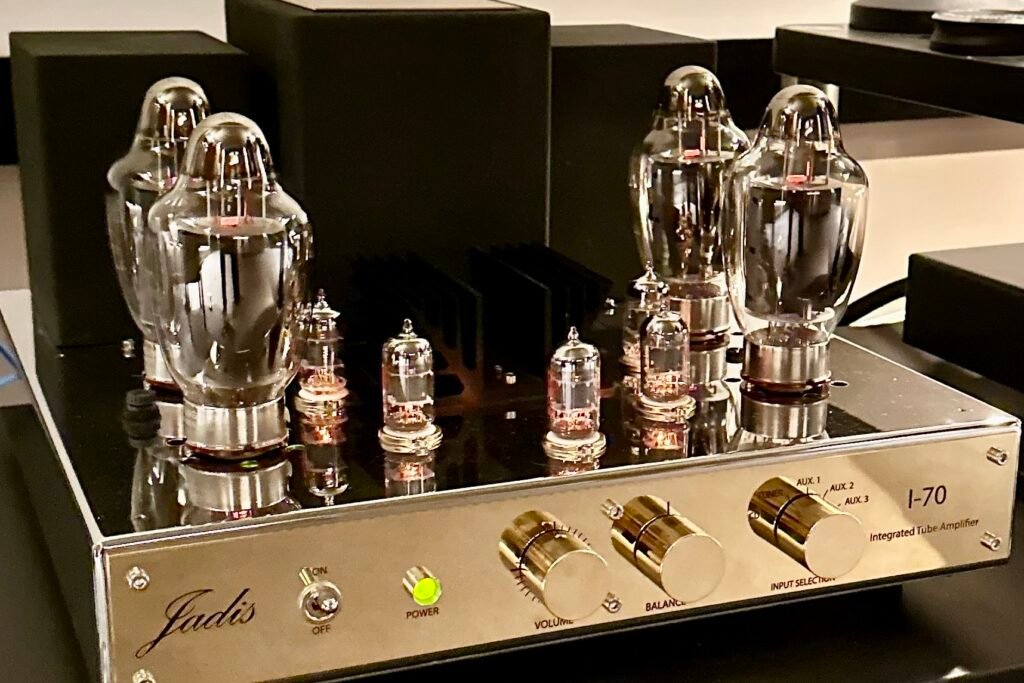
I’ll start this review with a statement: for reasons I find difficult to explain, this amplifier brought me closer to the people behind the recordings.
I had the Jadis I-70 at home during July and August, and the heat of those months (we’ll get to that later) became part of the story too.
What follows is an attempt to explain, perhaps more to myself than to you, the reader, something that may not be entirely explainable.
The Context
We can discuss tonal balance, frequency extension, distortion, resolution, transparency, transient response and all the other familiar audiophile parameters. We can even measure what we hear. But every now and then, we enter a different territory.
Those of us who write about the equipment we are loaned to review often resort to expressions such as “a voice that makes us forget we are listening to a recording” or “the artists sounded as if they were right there in the room with me”. We know these are clichés. And yet, every so often, we encounter equipment that genuinely lives up to those expressions, without requiring them to be used as figures of speech.
My first encounter with the KT170 valves did not happen with this Jadis. I had already experienced them in the Lyric Ti100 MkII, a single-ended Class A amplifier, on two occasions: first, while reviewing the Duevel Bella Luna speakers, and later in an article about my first tube-rolling experience, switching between KT170, KT150 and KT120. So I was already familiar with some of their characteristics.
After hearing an Octave amplification system driving the Revival Atalante Grande Réserve speakers at the last Estoril Hi-Fi Show, I became curious about how this German brand’s valve amplification would perform with my own Atalante 3, in a more controlled environment that I know much better: my listening room, with my system.
Grande Réserve is an Atalante 5 taken to a more refined level, and the Atalante 5 is essentially an Atalante 3 on steroids. Somehow, all of this added up in my head.
I approached Ultimate Audio, Octave’s Portuguese distributor, and asked for an integrated amplifier to review. They agreed. In the meantime, I visited their Porto showroom, coincidentally just after they had taken over the Jadis representation. In the smaller listening room, they had the I-70 set up with the same Grande Réserve speakers.
This combo immediately impressed me. I reconsidered my original request and changed direction. Four KT170 valves, in an integrated amplifier designed around them. I wanted to hear this.
Jadis I-70 arrived towards the end of July and stayed for a month. Long enough to get to know its personality.
My reference system during this review consisted of Revival Atalante 3 speakers; The analogue source was the Avid Ingenium turntable, fitted with the Audiomods Classic Six tonearm and, at the time, an Audio-Technica AT-VM520EB cartridge. Digital playback was handled by the Volumio Rivo Plus, powered by Volumio Lineo5 linear power supply and connected to the Fezz Equinox DAC. My usual amplifier is the Accuphase E-280, which naturally became my reference point for comparison.
The Atalante Grande Réserve had already demonstrated an excellent synergy with the Jadis in the showroom. My experience with the Atalante 3 at home confirmed that the affinity I had heard between these two brands was no coincidence.
The People
That was the journey Jadis I-70 took before reaching MoustachesTower.
But what you’re really looking for when you open a MoustachesToys review isn’t all this. You want to know what a particular piece of equipment made me feel when I played a particular piece of music. Right?
So, let’s get to it.
In Fado Português, by Sara Correia, her voice acquired an almost physical dimension. Its density and intensity kept me firmly in my listening chair. The phrasing, the inflections and the sheer emotional energy of her performance were extraordinary. The Portuguese guitar, with its intricate playing and equally infectious energy, gained an astonishing sense of presence.
Sara’s voice has the power to make any thinking living creature tremble from within. Reproduced at this level, I was immediately won over, if any doubts remained about whether the experience I had enjoyed in the showroom might be compromised by my room or by the naturally more modest capabilities of my speakers compared with the brand’s flagship model.
I also remember thinking that the recording team had probably favoured a perspective that places us in front of a studio recording rather than inside a traditional fado house. These are the sorts of thoughts that cross your mind when listening at this level.
That observation made me think. Excellent reproduction makes the decisions made during recording more apparent. We can be deeply moved by the intensity of a performance while simultaneously questioning the sonic perspective chosen by the producer.
Funny how an amplifier that drew me so deeply into the music could also make me think so analytically about it.
In Com Que Voz, by Camané and Mário Laginha, something different happened. I felt no need to analyse the voice, the piano or the relationship between them. I simply stopped thinking about the equipment.
There is no greater compliment I can pay an amplifier than to say it allowed me to listen to the music and forget that I was sitting in front of wooden and metal boxes containing electronics.
In Strong, by London Grammar, Hannah Reid’s voice revealed textures and inflections I hadn’t quite recognised before. Hello, KT170!
The Jadis has a very particular way of reproducing voices. Beyond their body and warmth, it preserves articulation, expressiveness and those tiny variations in intensity that make a performance sound unmistakably human.
Transparency is there, but without turning music into an exercise in dissection. What really stands out is the density with which the I-70 delivers the midrange (and bass).
This is also where its speed challenges one of the enduring prejudices about valve amplifiers. Here, tonal richness comes with agility. Vocal inflections emerge naturally, attacks are precise, and dynamic changes happen without apparent effort.
These voices had people inside.
Music Is an Explosion
It would be a mistake to imagine that the Jadis is an amplifier exclusively suited for delicate, female vocals or small acoustic ensembles.
The KT170 valves went to the gym.
In Fanfare for the Common Man, performed by Minnesota Orchestra under Eiji Oue, the opening bass drum strikes are a physical experience.
Duality comes into play again. Despite their physical weight and density, those opening drum strokes have the richness of dark chocolate filled with liqueur, while the brass section explodes with the freshness of mint in the mouth.
It’s difficult to find conventional audiophile terminology that conveys the combination of sonic mass, attack, texture and impact I experienced in that moment.
And speaking of explosions…
The opening of The Rite of Spring, by Columbia Symphony Orchestra’s interpretation, can make a 50-something man weighing 95 kg jump out of his chair.
I know. I was that man.
The KT170s doesn’t ask for permission.
These moments force us to reconsider another prejudice: that 50 Watts might be a limitation when reproducing large orchestral works. Not even with the Atalante 3s, rated at 87 dB sensitivity, in a listening room measuring less than 25 square metres.
An amplifier’s rated power doesn’t tell the whole story. Its ability to deliver current, control the speakers and preserve articulation during complex passages matters just as much. The Jadis feels perfectly at home in this territory.
Dynamics are also revealed in the smallest changes of intensity, in the attacks of individual instruments and in the way everything flows between the successive musical events. This combination of macro and microdynamics makes presentation more convincing than is often the case.
In Geyser, the opening low notes of the organ arrive with an overwhelming sense of weight, filling every cubic millimetre of my listening room with sound. Then Mitski’s calm voice emerges, its expressiveness contrasting beautifully with the sheer force of the opening scene.
With Laurie Anderson’s Beautiful Pea Green Boat, we enter in a completely different territory. Cabaret! And LSD.
One of the I-70’s strengths is its ability to follow these changes of mood without imposing an excessively strong personality of its own. There is density and texture, but also room for strangeness, theatricality and interpretative freedom.
In Mar D’Outubro, by Sétima Legião, I returned to a piece I have known since I was young. This song is an experience in itself. Even through a battery-powered radio. But then there are transcendental experiences. The Jadis and Revival combination took me on a drone flight over the mountains of northern and central Portugal, in a showcase of scale and immersion. The music seemed to claim territory throughout my listening room, while the speakers ceased to feel like the source of the sound. They became just furniture, serving an entirely different purpose.
There is width, depth and a convincing organisation of the different sonic planes. Instruments maintain their spatial relationships, helping to build a coherent picture of the entire performance.
In Bob Dylan’s False Prophet, the Jadis seems to relish the rhythm and abrasive texture of his voice and the accompanying instruments.
It is with Be Mine, by Alabama Shakes, that I find my biggest reservation about this amplifier.
My personal taste calls for a little more edge in guitars processed through distortion pedals. If the Jadis enjoys Bob Dylan’s raspy voice, it showed rather less enthusiasm for some of the rock-oriented tracks, at least with my Atalante 3s and in my listening room.
The same observation came up again with Metallica’s Enter Sandman. I was left wanting a little more bite, a sharper edge to the sound.
The amplifier’s rather bling appearance really seems to match the exuberance of the sound it delivers. It has energy, speed and considerable dynamic ability, but its personality favours tonal richness, density and fluidity over some of the incisiveness in more aggressive electric guitars.
It’s a subtle but important distinction. Attack is there. So is energy. What may be missing, for some listeners, is that extra bite that makes a distorted guitar particularly cutting.
It’s a matter of personal preference and synergy between the amplifier, the speaker and the music.
In The Homeless Wanderer, by Emahoy Tsege Mariam Gebru, we return to the Jadis’s comfort zone, this time with a recording that doesn’t always fits my ears. This track can sometimes be rather unforgiving with my sensitivity in the middle to treble region.
The delicacy of the performance and the piano’s harmonic richness find an amplifier capable of preserving intimacy without sacrificing definition. A fine showcase of what the I-70 does best.
In Familiar, by Agnes Obel, the music allows us to explore once again the relationship between texture, space and delicacy. This is not a presentation that tries to impress through detail, although details are served on a silver platter. Instead, it lets me follow each musical event with whatever degree of attention I happen to feel like giving it.
And then comes Tom Jones.
24 Hours. This track works well with my system, but whenever I had the opportunity to play it during demos, or on equipment that comes through my listening room for review, I find that very few do it proper justice.
Jones’s voice descends from the mountains and hits the valley with impact.
The density and body the I-70 brings to this recording deserves particular attention. There is substance, there is body, and there is a sense of sonic mass that gives voices and instruments credibility and presence, without the sluggishness or confusion that can sometimes accompany such density.
Articulation remains intact, bass is controlled, and information comes wrapped in an additional layer of tonal warmth.
Behind the Scenes
What a system allows us to discover behind the scenes of a recording says as much about its personality as what it serves up on a silver platter.
With All My Love, by Melanie De Biasio, was one of those moments.
The Jadis knows how to respect the silences in this music, revealing the subtle nuances unfolding in the background while allowing Melanie’s voice to draw us in.
I could have listened to this one track alone, and discovered the character of the amplifier.
The succession of small details never forced me to divert my attention from the music. Everything became part of the performance. The silences had meaning, the smallest variations gained expression, and the voice remained at the centre of everything.
The micro-information was all there, but it served the natural flow of the music.
Beiral da Porta, by Julie Wein. Being placed immediately after De Biasio in my playlist was hardly an easy task for the Brazilian singer/researcher. But Julie left her own fragrance behind.
And then Tom Waits.
Blue Valentines. I swear I had never heard Waits sigh in this song before!
This is what I mean when I talk about transparency. Discovering something that was always there in the recording but, for whatever reason, had never quite made it through my system.
The Jadis manages to preserve the humanity of Waits’s voice and its unmistakable texture without turning the reproduction into a catalogue of details.
In Dvořák’s Symphony No. 9 in E Minor, Op. 95 – From the New World: II. Largo, conducted by Herbert von Karajan, I experienced one of the closest approximations I have encountered between domestic reproduction and the experience of attending a live concert.
I genuinely felt transported to a seat in front of the Berlin Philharmonic.
This was probably one of the most rewarding experiences of the Jadis’s entire stay with me.
There was a remarkably convincing combination of width, depth, height and instrumental positioning. The separation between orchestral sections allowed me to appreciate the scale of the ensemble without fragmenting the music.
It was a fine demonstration of the amplifier’s ability to reproduce the scale of an orchestra, which this time was not confined to a more or less flat space between the speakers.
And when it was time for Mahler’s Symphony No. 5, performed by the Tonhalle-Orchester Zürich under Paavo Järvi, the listening session took on a different dimension.
Thank you, Jadis, for this Sehr langsam moment.
The Machine Behind the People
After so many references to voices, performances and musical experiences, perhaps it is time to look at the equipment responsible for all of this.
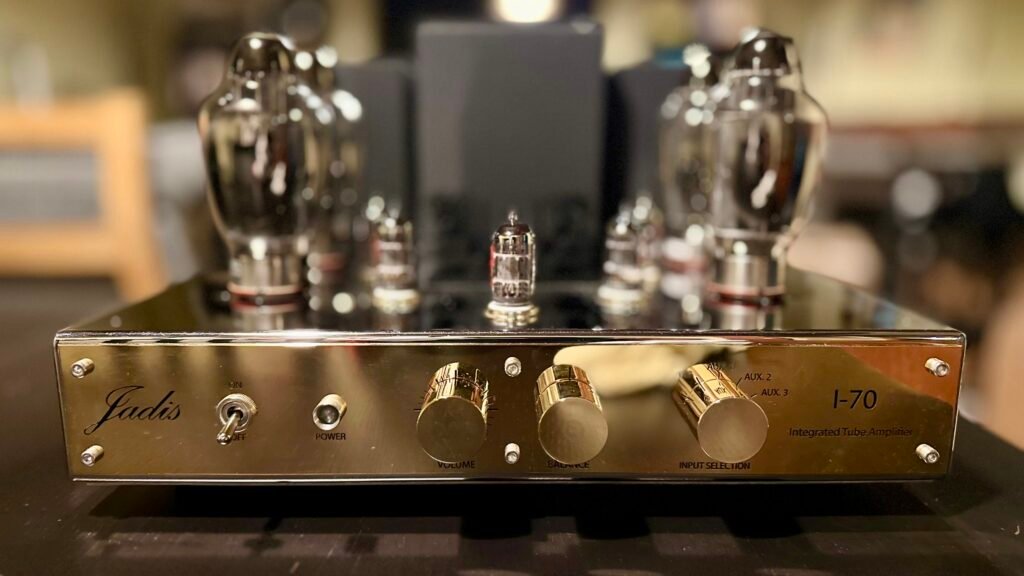
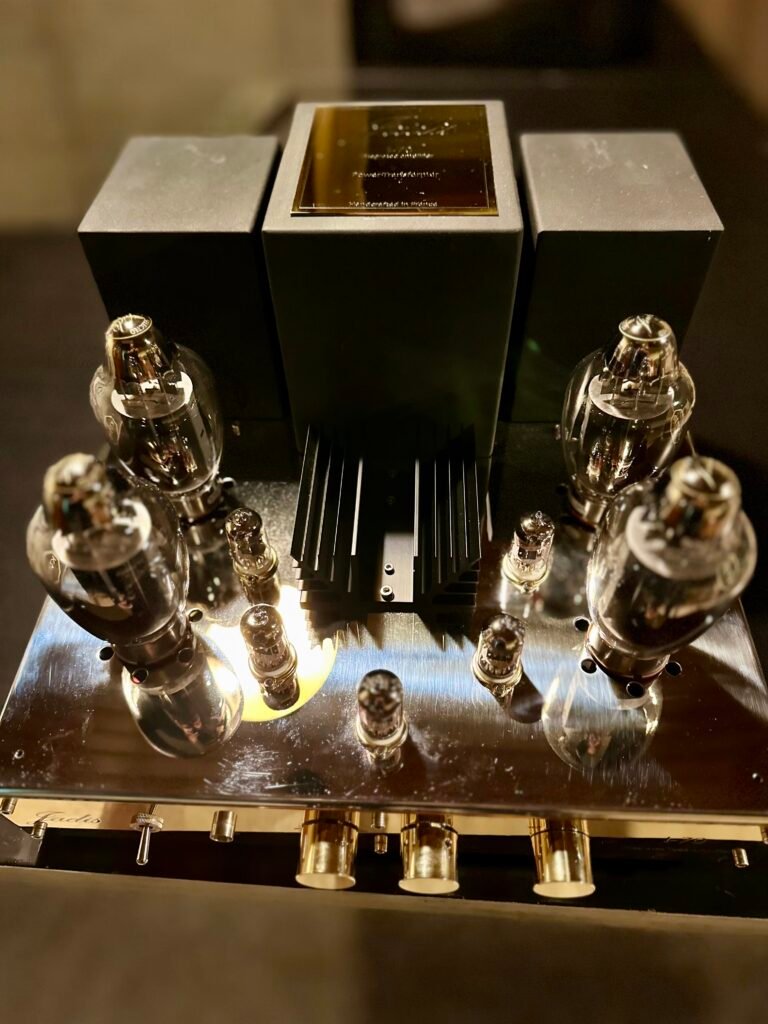
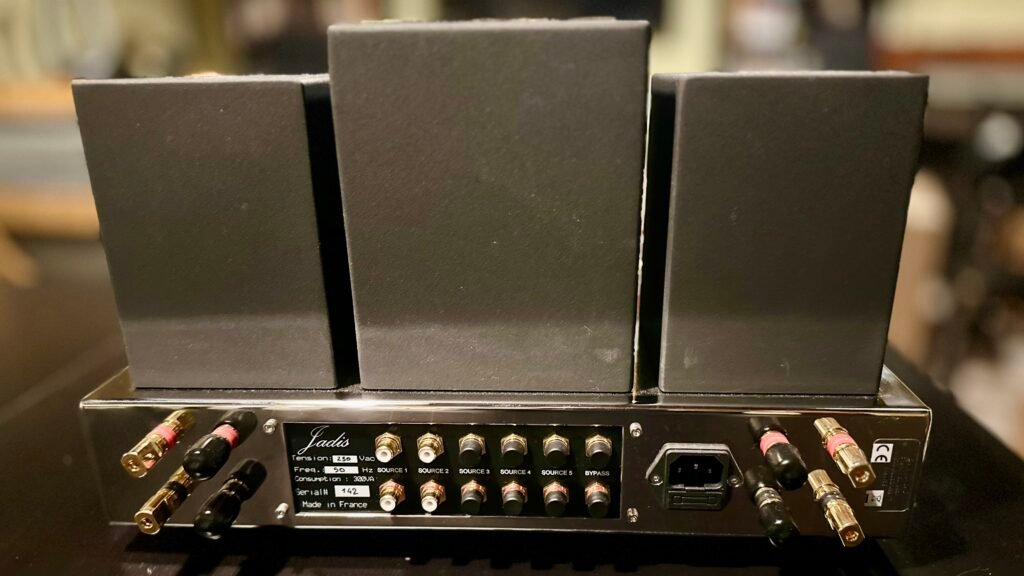
The Jadis I-70 is an integrated valve amplifier with a rated output of 50 watts and four KT170 output valves operating in a push-pull configuration.
Jadis developed its own architecture around these valves, seeking to combine power, control and speed with what, after a month of listening, I can confidently describe as HUMANITY.
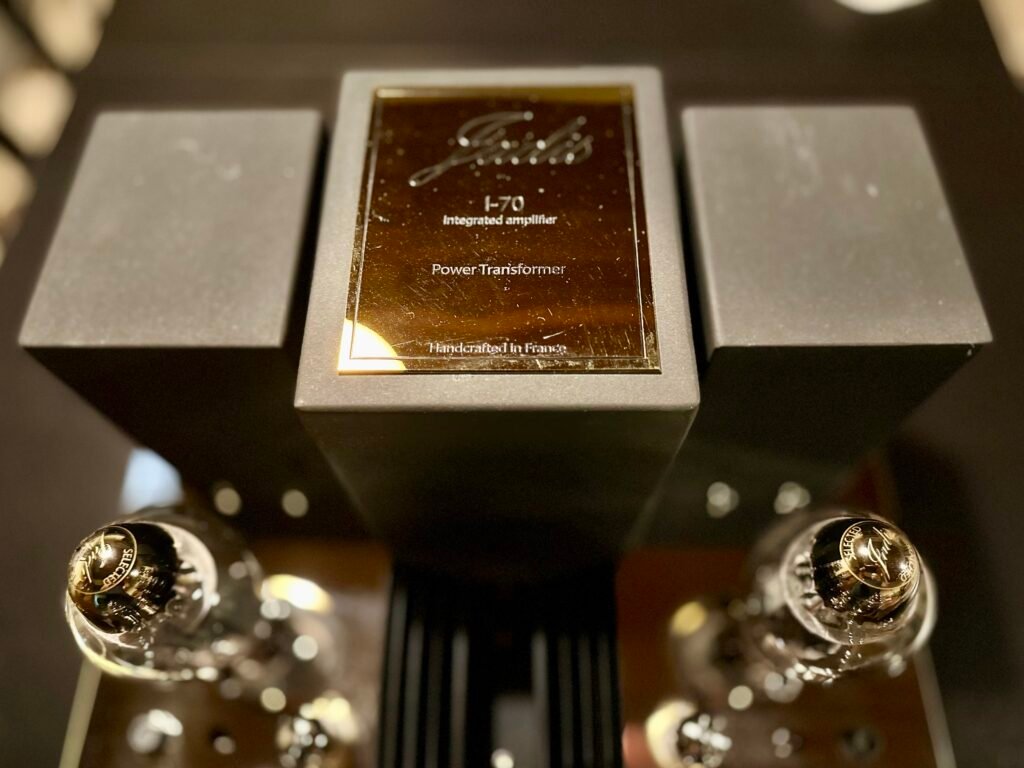
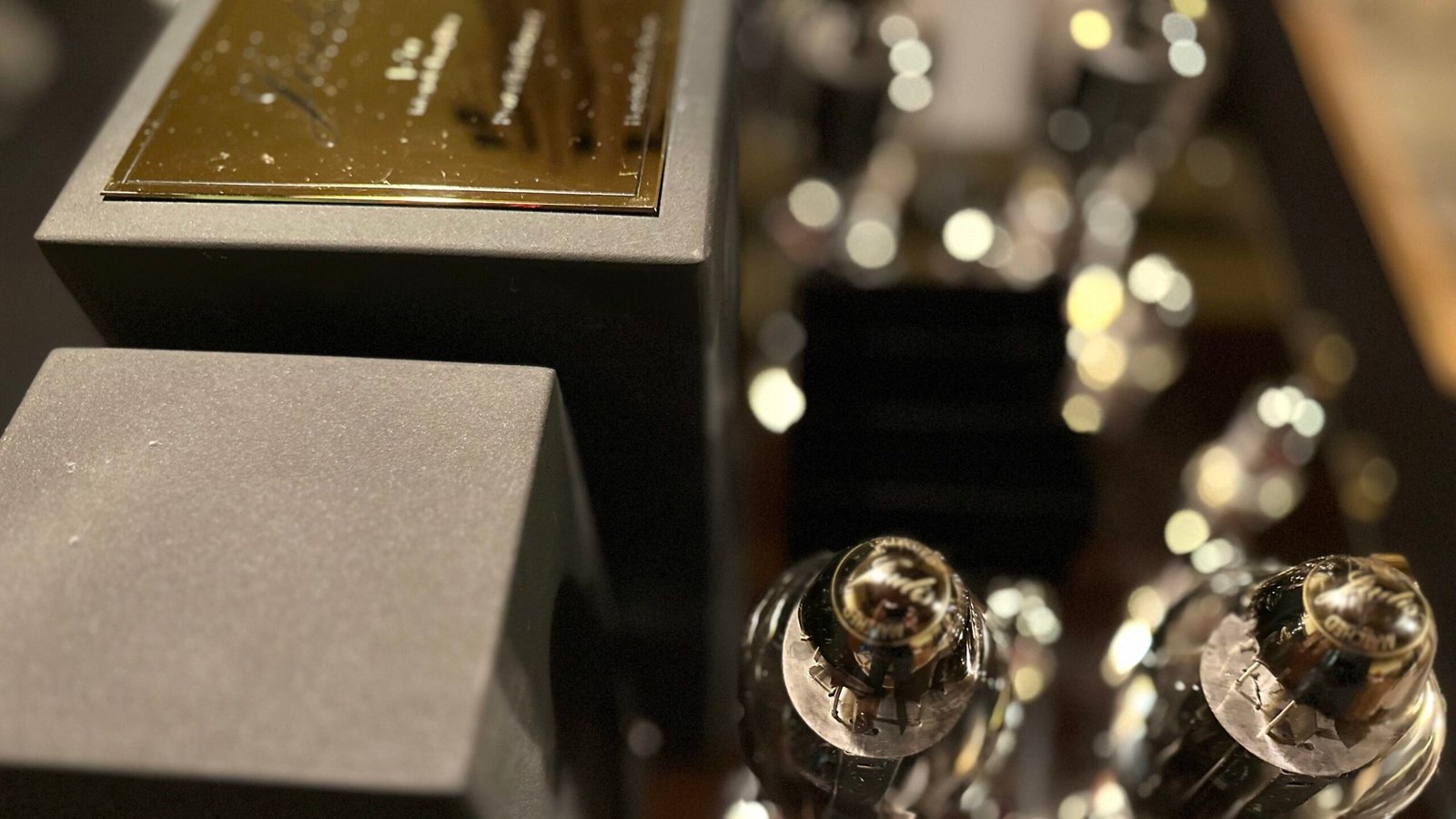
The I-70’s architecture, its massive output transformers (who nearly broke my back!) and its handcrafted point-to-point wiring are all fundamental elements in understanding its behaviour.
There is no need to turn this review into an electronics lecture to appreciate the importance of these design choices. Its ability to reproduce large dynamic contrasts, maintain a stable soundstage, deliver rich and substantial midrange frequencies and respond quickly to musical events tells us far more about its personality than a succession of specification numbers ever could.
August was not necessarily the best time of year to welcome an amplifier of this nature into my house.
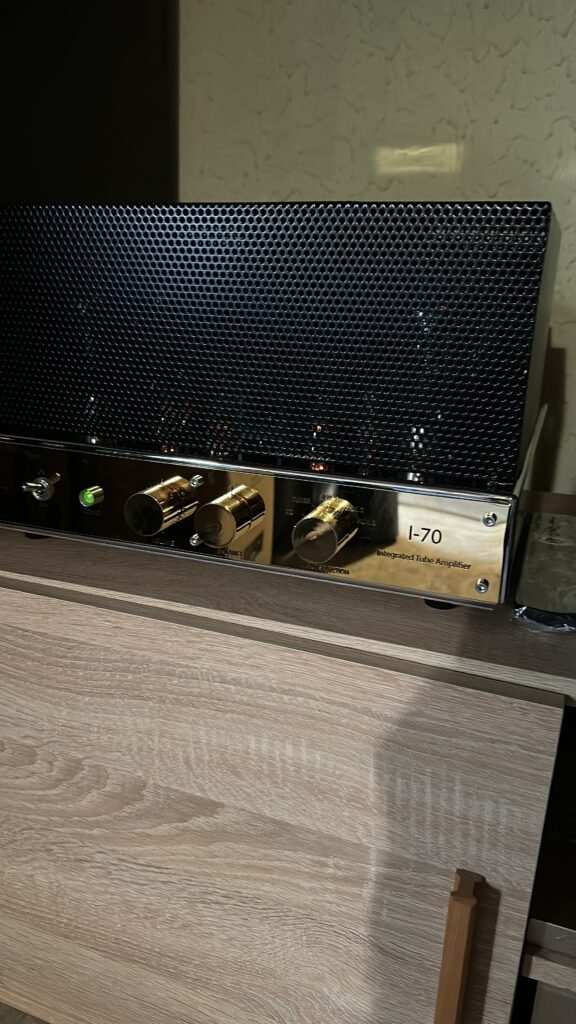
The four KT170 valves, operating in Class A, dissipate a considerable amount of heat. In an amplifier of this kind, in a room measuring less than 25 square metres, and particularly during August, this was impossible to ignore.
It is something worth considering if you’re planning to install the I-70 in a small or poorly ventilated space. Placement, airflow and adequate distance from other equipment all deserve attention.
The contrast with the Lyric Ti100 MkII, which had been in my house during the winter, was inevitable. But there is a difference between listening to a valve amplifier on a cold winter afternoon and living with it throughout August.
Construction quality and longevity also deserve attention. Anyone familiar with valve equipment knows exactly what I mean. The Jadis I-70 comes with a ten-year warranty, which should provide some peace of mind to anyone considering purchasing one. It is also a statement of confidence from the manufacturer in its construction and product.
What Remains After August
For a month, the Jadis I-70 became part of my everyday musical life.
I listened to recordings I knew well, revisited old favourites and discovered details that had previously escaped me. There were moments of sheer physical impact, others of quiet contemplation, and several occasions when I simply forgot I was supposed to be evaluating a piece of equipment.
The I-70 thrives on valve warmth, bass exuberance, soundstage scale and beauty of the voices. But what distinguishes it is its ability to bring all these qualities together without making one seem to come at the expense of another.
It is fast and substantial. Transparent without being analytical. Its dynamic capabilities are surprising for its rated power, and it achieves this without sacrificing delicacy. It can reproduce an orchestra with scale and authority and, moments later, reveal a singer’s previously unnoticed sigh.
My issue is with the somewhat less incisive presentation in certain distorted guitars remains. Those looking for a cutting, aggressive sound may find other amplifier better suited to their preferences, or discover a more satisfactory combination with speaker that have a more forward character.
And the heat generated by the I-70 calls for some attention when choosing where to install it, particularly during the warmer months.
But none of these considerations changes what remains most deeply associated with my experience with the Jadis.
The I-70 made me pay attention to people and their humanity. To the people who sing, breathe, play, interpret and leave a little bit of themselves inside a recording. And to those who, despite not being physically present in the room, manage to keep us company for hours on end.
Magical voices, full of people inside.
Perhaps that is the best way I can describe what happened during that month.
The Jadis I-70 is an amplifier with people inside.
Technical Specifications
This one goes straight to the Best Toys list!
The Jadis I-70 used in this review was temporarily loaned by Ultimate Audio