
What happens when you replace a tonearm with one that offers greater adjustment flexibility? Do you hear more music, or do you simply hear more sounds?
If you read my previous article about the early development of my analogue system, you’ll know that its first addition was a record-cleaning machine. The idea was simple: remove as much dirt as possible and find out what remained once surface noise was no longer getting in the way of the listening experience. Record cleaning raised another question. How much more information might still be hiding in the grooves?
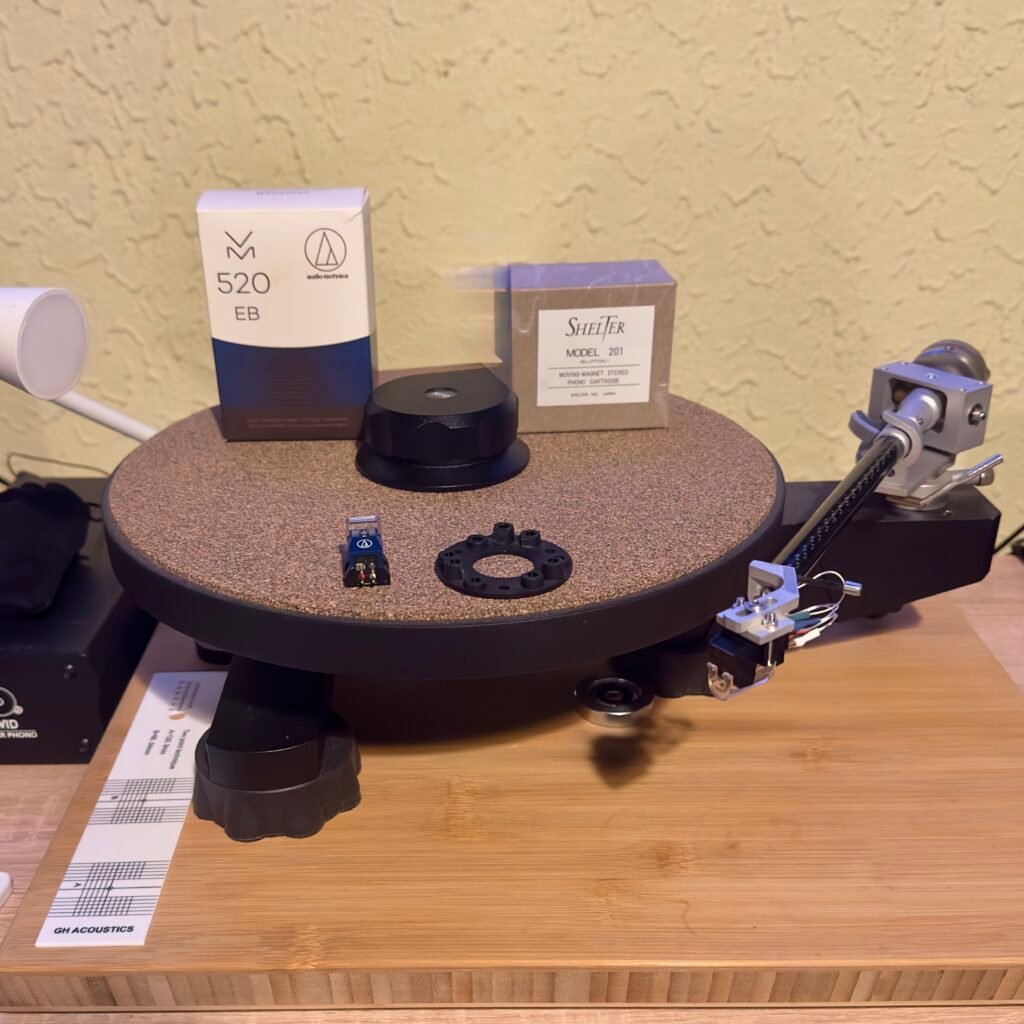
The turntable I chose for my reference system, the Avid Ingenium Plug & Play, had already impressed me with its potential when it came through for review. Even then, it was clear that the supplied cartridge wasn’t quite up to the rest. When I decided to make this turntable part of my reference system, I ordered it with the original cartridge replaced by a Shelter 201 MM cartridge.
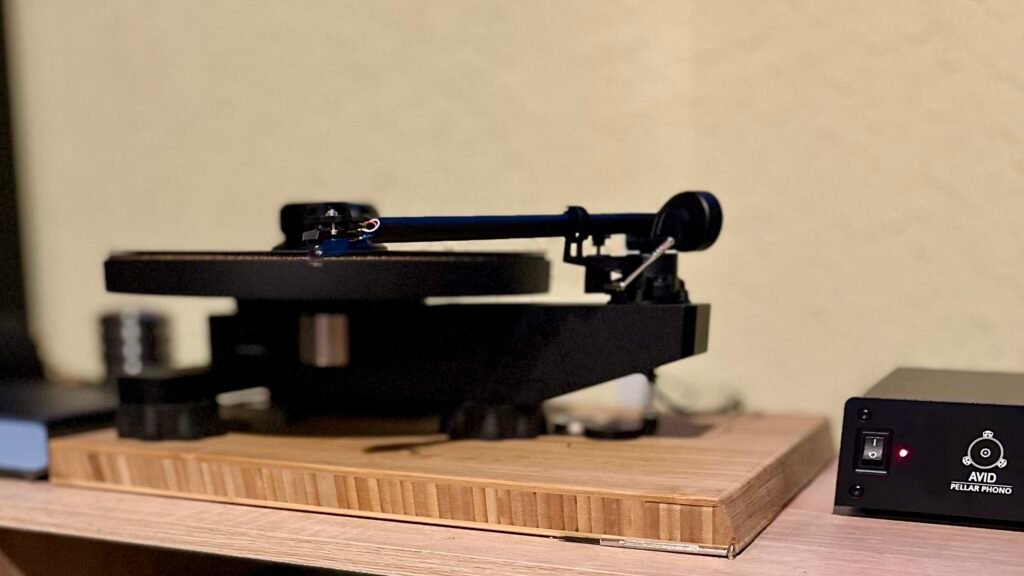
The choice seemed to make sense, but it brought a few problems I hadn’t anticipated. This cartridge has a considerably taller body than the original one, and the Ingenium Plug & Play’s factory-fitted tonearm, the Rega-derived AVID TA-1, doesn’t allow VTA adjustment. The solution was to fit a shim: a spacer, available in several thicknesses, to raise the tonearm base to compensate for differences in cartridge height.
Sounds simple enough. Let’s see if it really is.
The height problem
When the shim was fitted, João Pina, who runs the shop where I ordered the turntable, discovered that the three screws securing the tonearm were now too short. Surely all It was needed was a set of longer screws, right? Wrong.
After buying longer screws, he found that the threads in the turntable’s mounting holes weren’t the metric ones we’re used to. At least in Continental Europe. They were imperial. That very British attachment to imperial measurements meant João, had to hunt down screws with the right thread.
With that problem solved, the tonearm was finally installed, with the shim between the tonearm base and the turntable, allowing the Shelter cartridge to sit at the intended height.
Or so I thought.
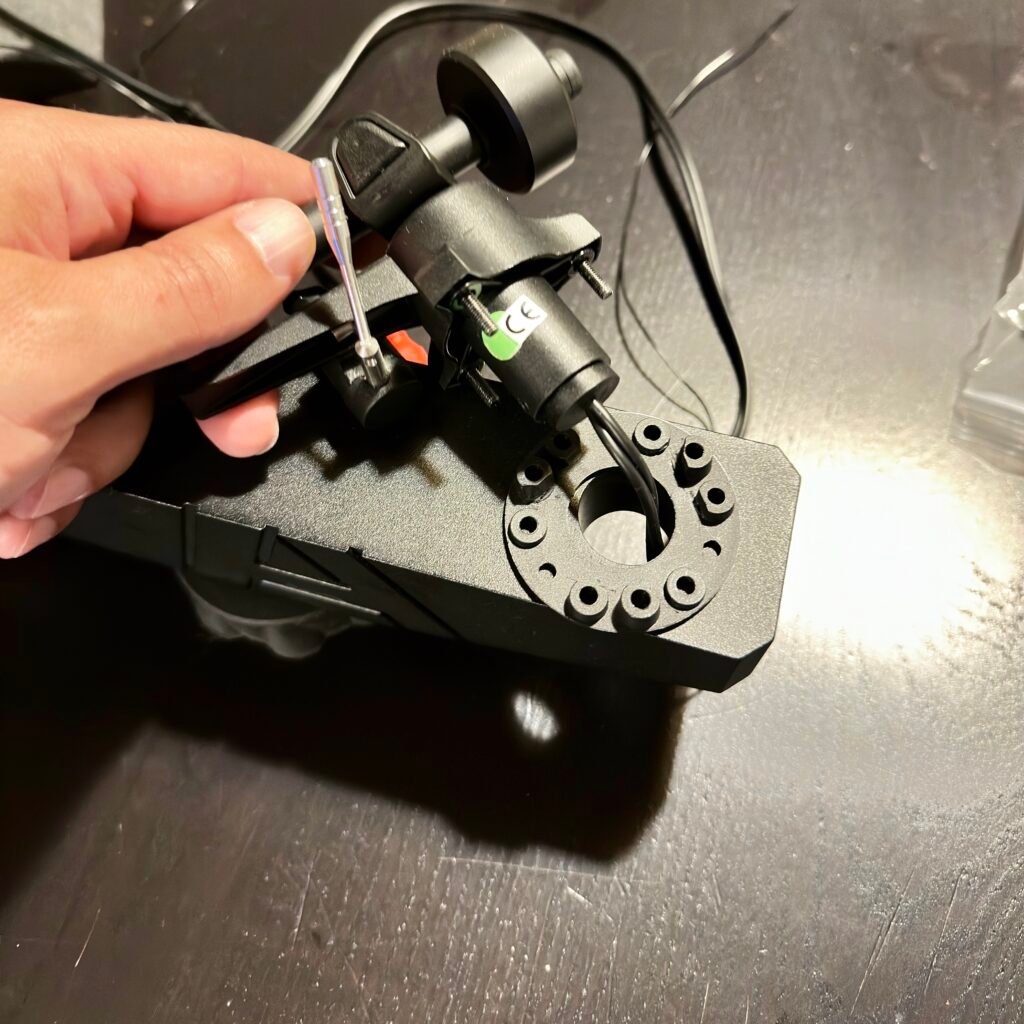
I have nothing against the original arm supplied with the Ingenium Plug & Play. It is part of a solution designed to offer a straightforward and affordable experience, particularly with the original cartridge. The problem was the specific combination I had on my hands. The anti-skating on this arm proved unsatisfactory, and the polymer-made shim introduced a coloration I didn’t want in my system.
More importantly, I was missing something essential when using this equipment as reference for my reviews: confidence in the consistency of the results.
I didn’t want a setup that sounded right one day and left me wondering whether it would sound the same the next. I wanted to be able to adjust, listen, go back and understand exactly what had changed.
There were two possible ways forward: find a cartridge closer in height to the original, avoiding the need for a shim, or replace the tonearm with one offering greater adjustment flexibility.
Let’s start with the first option, as it was simpler and cheaper.
Audio-Technica: the first attempt
The Audio-Technica AT-VM520EB was the chosen one, a relatively affordable cartridge which cost me around €180 at the time. Its presentation struck me as balanced, and the Rega Carbon, rebranded as Avid CA-1 for the Ingenium, has its roots in an Audio-Technica design, so I felt I was on familiar ground. The VM520EB’s body is also close in height to the original, making it easier to achieve the geometry I was after.
I initially fitted it with the shim, so that the tonearm would sit perfectly parallel to the record. But I still couldn’t achieve a setup that felt entirely satisfactory and consistent for me. I removed the shim, leaving the cartridge working at a slight angle: far from ideal.
The VM520EB proved competent, but changing cartridges hadn’t solved the underlying problem. With the tonearm still operating in a configuration I considered unsatisfactory, I couldn’t shake the feeling that the turntable wasn’t revealing everything it was capable of. The solution would have to be a different tonearm.
The first one I considered was the Jelco 750. There was, however, a problem: the company behind it closed during the pandemic.
Vítor, don’t worry. You can always have a second-hand one
a friend suggested
Yes, but did I really want a second-hand tonearm?
My equipment is here for me to enjoy music, but it is also part of the reference system I use here at MoustachesToys. I needed to trust the condition and performance of the arm I was using, not simply find something that would physically fit the turntable.
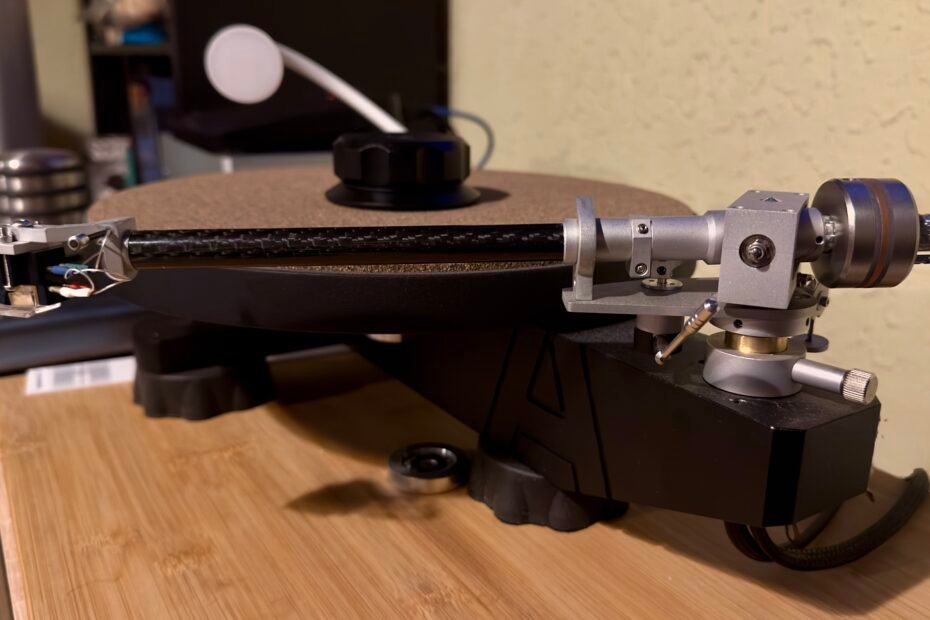
I went back to the drawing board, looking for a tonearm compatible with the Ingenium’s Rega geometry. That’s how I came across Audiomods and the Classic Six.
My first conversation with Jeff Spall, the man behind the brand, was specifically to establish whether the Classic Six could be fitted to my Ingenium. There was some uncertainty about the available space to mount the tonearm, but after I sent him further information about the recessed area on the underside of the turntable, Jeff confirmed that the installation was possible. We then arranged for a unit to be sent for review. The relationship got off to a good start: Jeff explained that he had a particularly full order book and that I would have to wait a few weeks. He made no unrealistic promises about delivery dates. Instead, he gave me clear information and made sure compatibility was confirmed before proceeding.
The Classic Six didn’t arrive quite as I expected
The tonearm I’d found during my research was compatible with the geometry I needed, but Jeff sent me a unit incorporating the latest revisions to this model: a redesigned arm tube, with a slightly larger diameter and additional internal layers, changes to the bearing system, and cryogenically treated silver Litz wiring. The signal path is continuous from the cartridge pins to the RCA connectors. The counterweight shaft has also been revised.
There was another potentially important change: the unit I received already included the same anti-skating mechanism as the micrometer-equipped version, an option Audiomods began offering on the Classic Six following requests from customers. The advertised price is £925, before shipping and import charges.
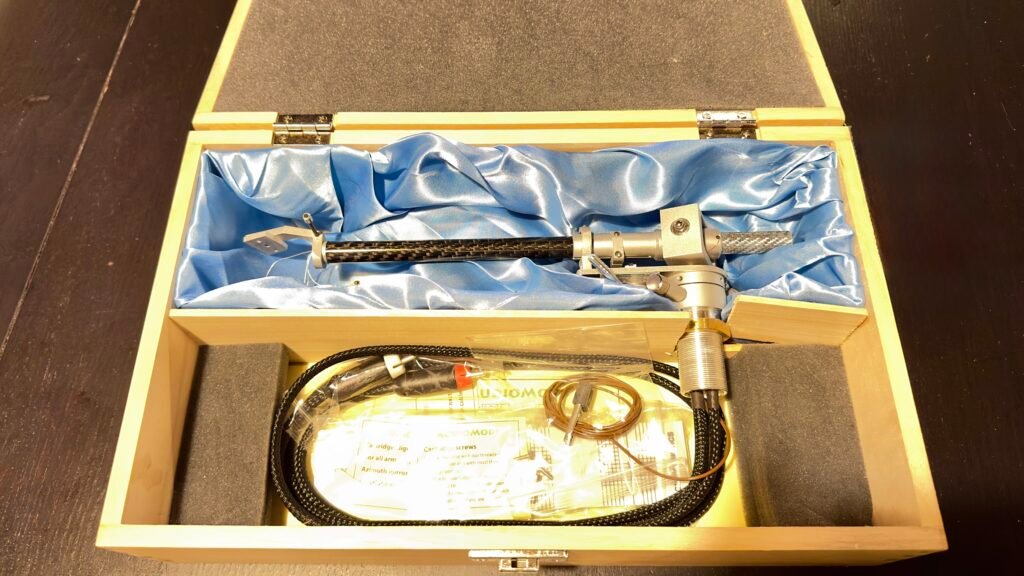
There’s an important difference with the Ingenium’s original tonearm. Instead of being limited to the latter’s anti-skating arrangement, I now had a mechanism that allowed me to adjust this parameter in fine increments.
Jeff explained that some of the changes introduced in this version stemmed from the development work carried out on Audiomods’ 12-inch model. According to him, that work had helped shape the evolution of the Classic Six now sitting in front of me.
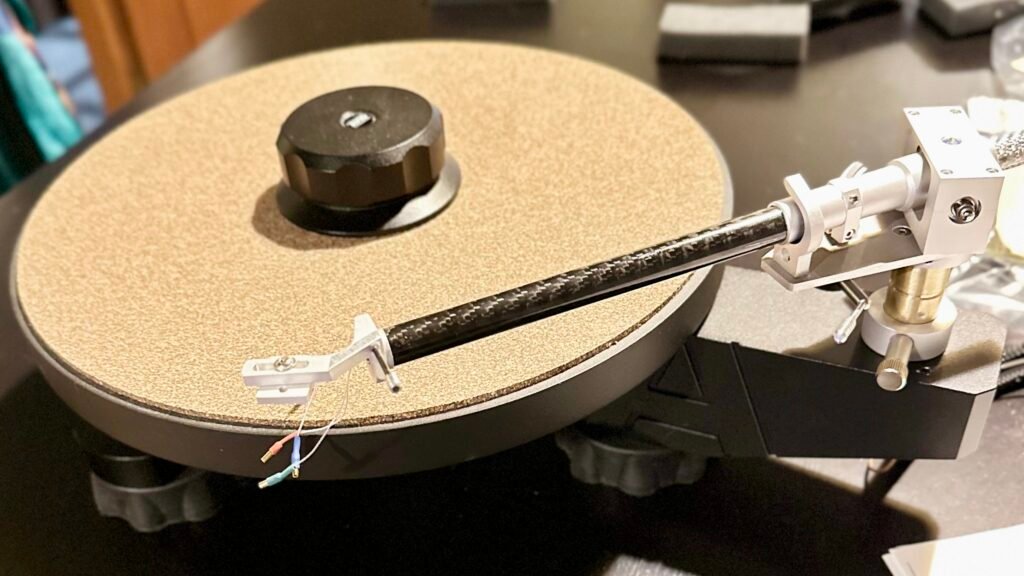
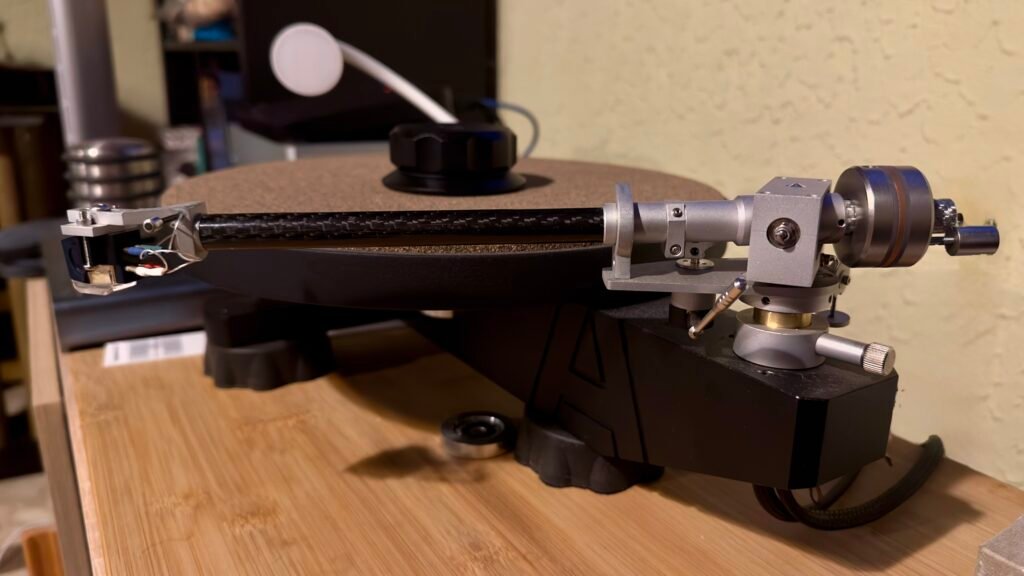
Installation on the Ingenium proved very straightforward. The VM520EB was the first cartridge to be fitted in the new tonearm, precisely because I wanted to avoid introducing too many variables at once.
But there was more to discover than the construction changes. One of the features that interested me most was the ability to adapt the tonearm to cartridges with different mechanical characteristics. Its effective mass is approximately 10 g in the basic configuration, but this can be increased by using heavier cartridge mounting plates (head-shell if you prefer). The counterweight can also be adapted, using an additional ring plus a fine-adjustment element.
These options interest me because they allow different cartridges to be accommodated and the right mechanical match to be found. That matters to me, particularly as I intend to bring you more cartridge reviews.
Above all, the Classic Six allows fine adjustments that the original tonearm didn’t offer to the same extent: VTA, overhang, azimuth, tracking force and anti-skating. These are tools for adjusting the relationship between cartridge and groove, not magic numbers, and they help bring the setup closer to the sound I’m after.
Jeff took the same approach when I asked him for advice on anti-skating. Rather than giving me a supposedly infallible setting, he recommended starting with a low setting, observing the tonearm’s behaviour and adjusting accordingly. He was keen to point out that so many variables are involved that it might never be possible to find an absolutely perfect setting. The relationship with the manufacturer doesn’t end when the parcel leaves the workshop. I like that approach. Adjustment tools are important, but they don’t replace listening or remove the need for a little experimentation.
All of this interested me, but the real question couldn’t be answered by specifications or by a list of improvements. For that, we need music! And that’s exactly what I did.
The tonearm between me and the record
The first stage of the test had to be as straightforward as possible: the same turntable, the same cartridge and the same phono stage, the Avid Pellar. I played records I already knew well from listening with the original tonearm, using the same VM520EB, both with and without the shim. What follows is based on four months of living with the Classic Six.
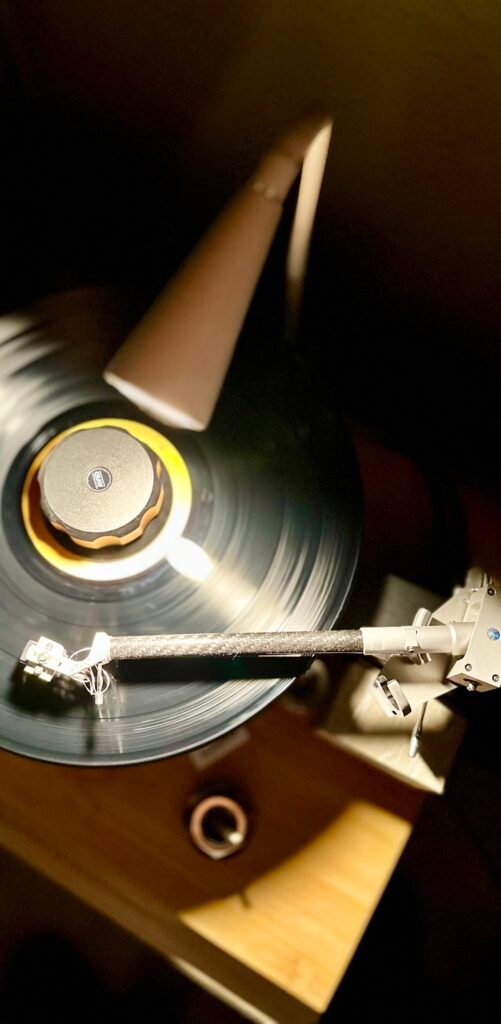
For now, the VM520EB is my reference, allowing me to understand what the Classic Six brings to the system before trying the Shelter 201 again.
Naturally, I had to remount and realign the cartridge on the new tonearm. This wasn’t a comparison between two setups optimised under rigorously identical conditions: the original tonearm offered considerably less scope for adjustment, while the Classic Six allowed me to change several parameters that I hadn’t been able to control in the same way before.
I wanted to find out two things. How much could the Classic Six change the performance of the system while keeping the VM520EB unchanged? And, if the difference proved significant, how much of what I had previously been missing was down to the limitations of the tonearm, and how much was inherent to the cartridge itself?
Meanwhile, and coincidentally, Avid launches the Ingenium SE, an evolution of the Plug & Play, with revised motor and tonearm, available in three configurations. The entry-level version now costs €3,595. Twice what I paid.
Well done! For once, I got the timing right!
What really mattered was finding out what would happen when I lowered the stylus onto the record. I wasn’t expecting the change to be marginal. But, honestly, I wasn’t expecting it to be quite so striking either.
First, the soundstage. It became more focused and, above all, considerably deeper. Instruments occupied more clearly defined positions. On more complex recordings, it became easier to identify where each instrument was and follow what was happening across the different layers of the recording. A voice that had previously occupied a more generic position between the speakers was now much more clearly anchored in the
centre. I began to understand the relationships between the musical elements more clearly.
More information doesn’t necessarily mean more music
It would be easy to turn this review into a list of adjectives: more detail, more resolution, more microdynamics, more focus.
All of that is true, but it isn’t enough. What interests me isn’t simply whether the Classic Six, in this revised version, allows me to hear more and better. I want to understand what happens to the music when those differences become audible.
One of the most noticeable changes was in microdynamics. Small variations in intensity became easier to perceive. Attack, decay and subtle changes within a musical phrase gained greater definition. It’s about being able to hear more clearly what happens within a note, between two notes, or over the course of a musical phrase.
This was also where record cleaning began to make even more sense.
After putting all my records through an ultrasonic cleaning machine, surface noise was reduced and the silence between musical events became more apparent. The Classic Six gave me better conditions in which to hear what happens after that silence. I don’t want to credit the tonearm with what resulted from cleaning, or vice versa. That wouldn’t be fair. But I also don’t want to ignore the way these two changes, made almost simultaneously, complemented each other. First, I removed some of the noise that interfered with listening. Then I changed the tonearm and gained a more focused, stable and informative reading of the groove.
The two changes didn’t produce exactly the same effect, but they proved complementary. Cleaning made it easier to hear what was recorded; the new tonearm made it easier to perceive the relationships between the musical elements.
The bass became more natural, and tighter
With the Classic Six, the bass sounded more controlled and less bloated. There was greater definition between the attack of a note, its body and its decay. For me, that is worth more than simply claiming there is “more detail in the bass”. Bass can impress through impact and weight. Controlled bass is something else altogether.
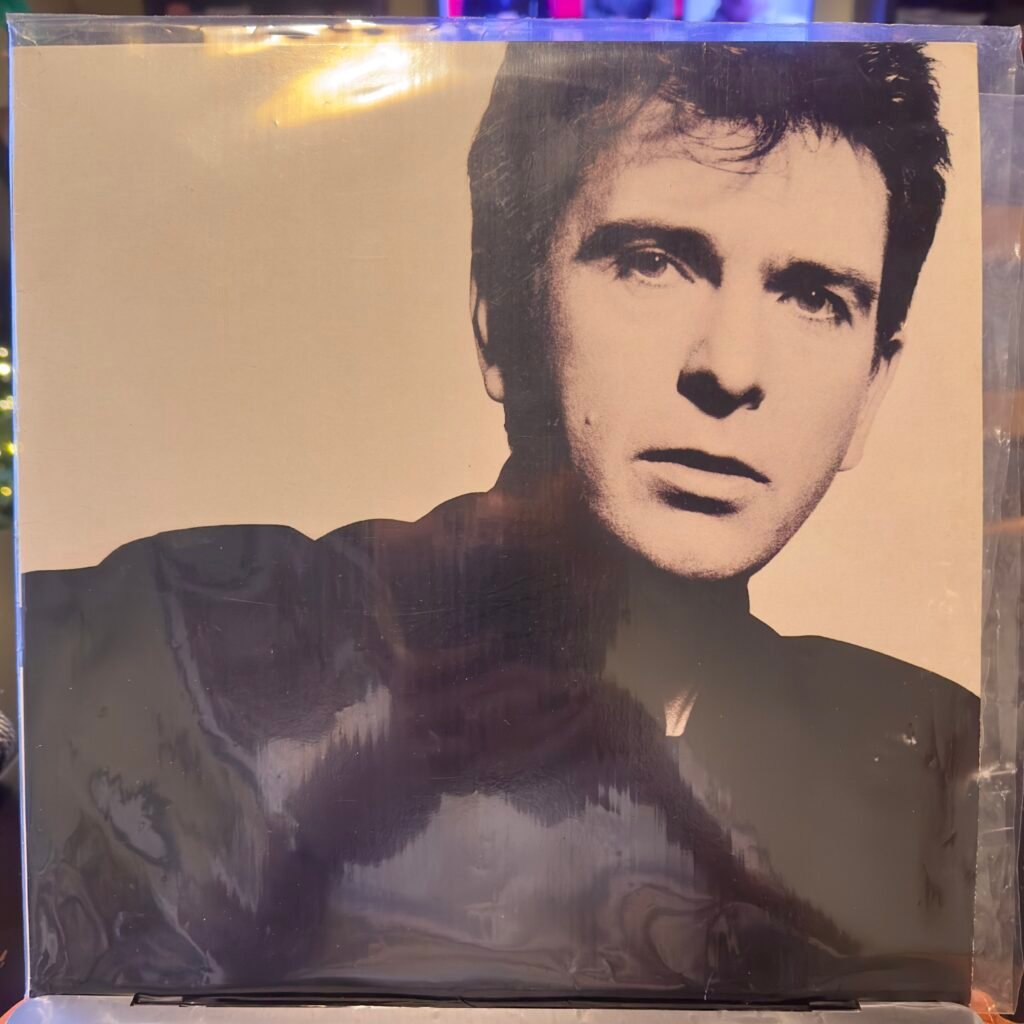
On Peter Gabriel’s So, starting with “Red Rain”, I noticed greater control. The different elements seemed better organised, without the bass overshadowing the rest of the music. What struck me about “Sledgehammer” was the increase in impact and energy. The music gained strength and vitality, without this seeming to result from a boost in the bass. This is an important distinction: greater control didn’t take away energy. On the contrary, “Sledgehammer” came across with even more force. On “In Your Eyes”, it was the depth and the placement of the elements within the soundstage that impressed me most. The different musical events occupied more clearly defined positions, contributing to a presentation with greater depth.

With Tom Waits’ Swordfishtrombones, it was the rhythm that caught my attention. On “16 Shells from a Thirty-Ought-Six”, it was the pace, rhythm and timing (PRaT) that came to the fore, to use the expression so often heard in audio circles. What stood out was the rhythmic involvement. The track moves: the pulse, the attacks and the tempo lock together, and the music never lets up. The result is a livelier presentation, with a greater sense of drive and continuity. It makes you want to join in with whatever pots and pans you can find in the kitchen!
These are different but complementary experiences. On So, I found both greater control and greater energy, depending on what the music demanded. On “16 Shells”, the difference was primarily in the ability to follow the pulse and movement of the performance.
When music grows, organisation has to keep up
This became particularly apparent with more complex and densely layered recordings. Instead of hearing a relatively undifferentiated mass of sound, I could easily follow the different instruments and sections.

Ravel’s Boléro and Carl Orff’s Carmina Burana are good examples of this change. This are very different works, but both pose a particular challenge to an audio system: how do you maintain definition and organisation as the music grows and the overall sound gains scale?
On Boléro, the difference became particularly apparent as the orchestra moved through its crescendo. The sound grew in scale and power, yet I could also better distinguish the different instruments and sections contributing to the gradual build-up. What I found most interesting was that power doesn’t necessarily come at the expense of definition. The orchestra sounded increasingly powerful, without its individual elements losing their identity. Even at the final climax, each section remained identifiable. There was greater force and scale, but no indistinct wall of sound.

With Carmina Burana, it was above all the greater scale and power of the presentation that impressed me. Throughout I felt a greater sense of amplitude, with the major climaxes carrying a particularly strong impact. Dynamic contrasts became more pronounced, adding to the work’s sense of scale and drama.
These two pieces helped me understand something important: when reproducing large-scale orchestral passages, the system has to preserve the music’s organisation as its scale and intensity increase. It was precisely this coexistence of power and definition that impressed me most.
And then came Pink Floyd
There are records we know so well that they end up working as measuring instruments. The Dark Side of the Moon is one of them. The Final Cut is another. And Roger Waters’ The Pros and Cons of Hitch Hiking proved particularly revealing. On these records, small details seemed to leap out at me, or, more precisely, into my ears. I wasn’t discovering hidden effects; I was simply hearing more clearly where everything was.
On “Time”, the difference was apparent from the opening moments. The clocks and sound effects occupied more clearly defined positions in space, almost as if I were once again watching the projections on the circular screen Pink Floyd used at their concerts. When the drums came in, they brought greater impact and definition without overpowering other elements. But it was above all the depth and the separation between the instruments that impressed me. The transition from the instrumental introduction to the arrival of the vocals also gained clarity.

On “The Great Gig in the Sky”, the difference was most apparent in Clare Torry’s voice. Her breaths, attacks and variations in intensity and texture became easier to hear. I could follow more closely the way she builds the performance, moving from quieter, more restrained moments to extraordinary intensity passages. Her voice gained expressiveness and emotional power. And although it clearly occupied centre stage, I never felt that the piano lost its presence. It remained well defined, accompanying the voice without competing with it.
On “Money”, the difference was most noticeable in the impact and vitality of the music. The sound effects introducing the track gained rhythmic coherence. For a moment, it reminded me hearing this track on CD. The effects no longer seemed like a simple succession of sounds; they became a more integrated part of the musical structure. When the bass and drums come in, it makes you want to jump out of your chair. They gained impact and rhythmic weight, giving the track a more energetic and involving pulse. Later on, Dick Parry’s saxophone appeared perfectly placed in the soundstage, and with greater depth.
On The Final Cut, it was above all the way Classic Six reproduced dynamic transitions that caught my attention. On “The Gunner’s Dream”, the more intimate, restrained moments contrasted clearly with the more intense passages. The music seemed to gain expressive range, making these changes more apparent and giving the album’s narrative greater impact.
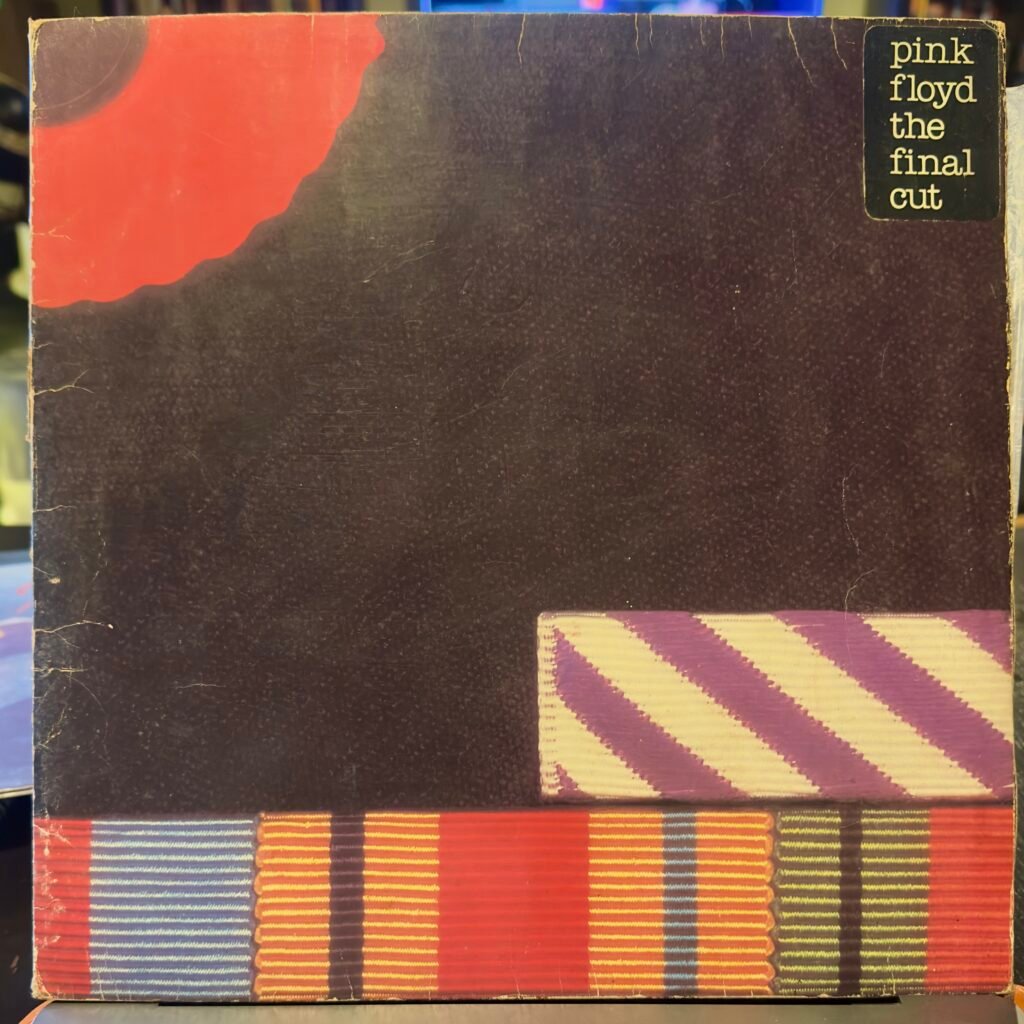
On “The Fletcher Memorial Home”, what stood out was the way the tension builds. The progression felt clearer and more convincing, with each moment contributing to a growing sense of anticipation. The Classic Six helped me follow the development of that tension more clearly as the track unfolded.
On the title track, Roger Waters’ voice sounded particularly vulnerable. There is a distinctive emotional exposure here. The tension’s gradual build-up became more apparent, making the climax arrival all the more powerful.

On The Pros and Cons of Hitch Hiking, it was the spatial presentation that caught my attention the most. Across several tracks, sound effects occupied different planes, extending beyond the space between the speakers. The recordings’ three-dimensional soundstage created a particularly enveloping sense of space.
The VM520EB was showing more of what is in the groove
I wouldn’t describe the VM520EB as warm, but neither is it cold. To my ears, it is balanced and fluid, although it tilts towards the lean side. It’s as if the music had been put on a strict diet and served up with nothing but skin, fibre and bone. The change of tonearm didn’t erase the Audio-Technica’s character. On the contrary, it brought that character into sharper focus, including the qualities I like as well as those I like less.
When treble enters a crisis
Crises, by Mike Oldfield, was particularly revealing.
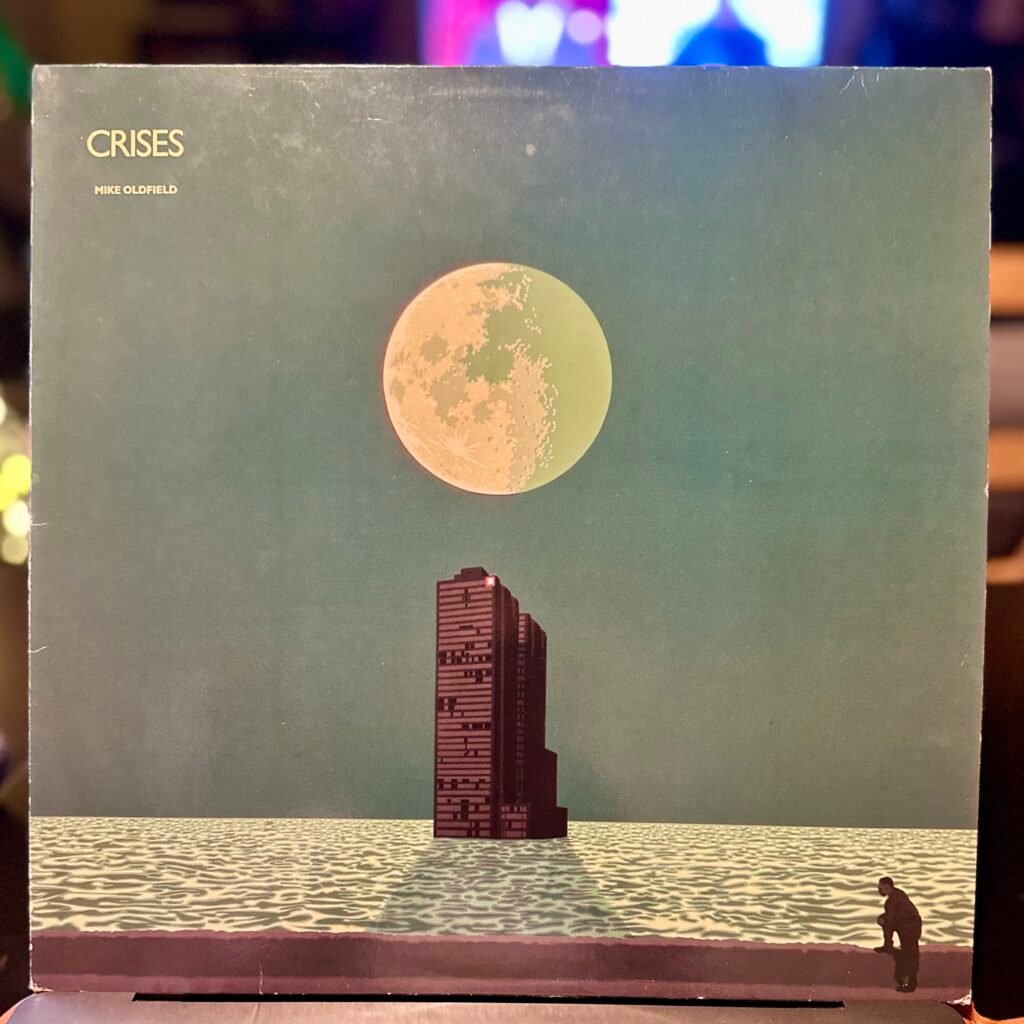
During extended listening sessions, I began to feel some fatigue from the VM520EB’s treble. It wasn’t a characteristic that made itself apparent in the first few minutes, but it became more noticeable as the listening session went on. Some recordings can make the treble tiring, particularly when we play one record after another. I can’t attribute that fatigue exclusively to the cartridge. The recording itself also plays a part. Even so, the impression persisted not only with my home system (Accuphase E-280 and Revival Atalante 3 speakers) but also when I switched the Accuphase with the Jadis I-70, which was here for review. Changing the amplification wasn’t enough to make it go away. This is a characteristic of the VM520EB’s presentation that certain recordings make more apparent.
Was the VM520EB being held back by the original tonearm?
My answer, in my system, is yes.
The move to the Classic Six represented an unequivocal leap forward. What impressed me the most was the way the music began to present itself as a collection of distinct entities, yet with clear relationships between them. Perhaps that’s why I prefer a good Trás-os-Montes soup, the hearty northern Portuguese kind where you can recognise the ingredients, textures and flavours, to a puréed vegetable soup in which everything is just one homogeneous blend.
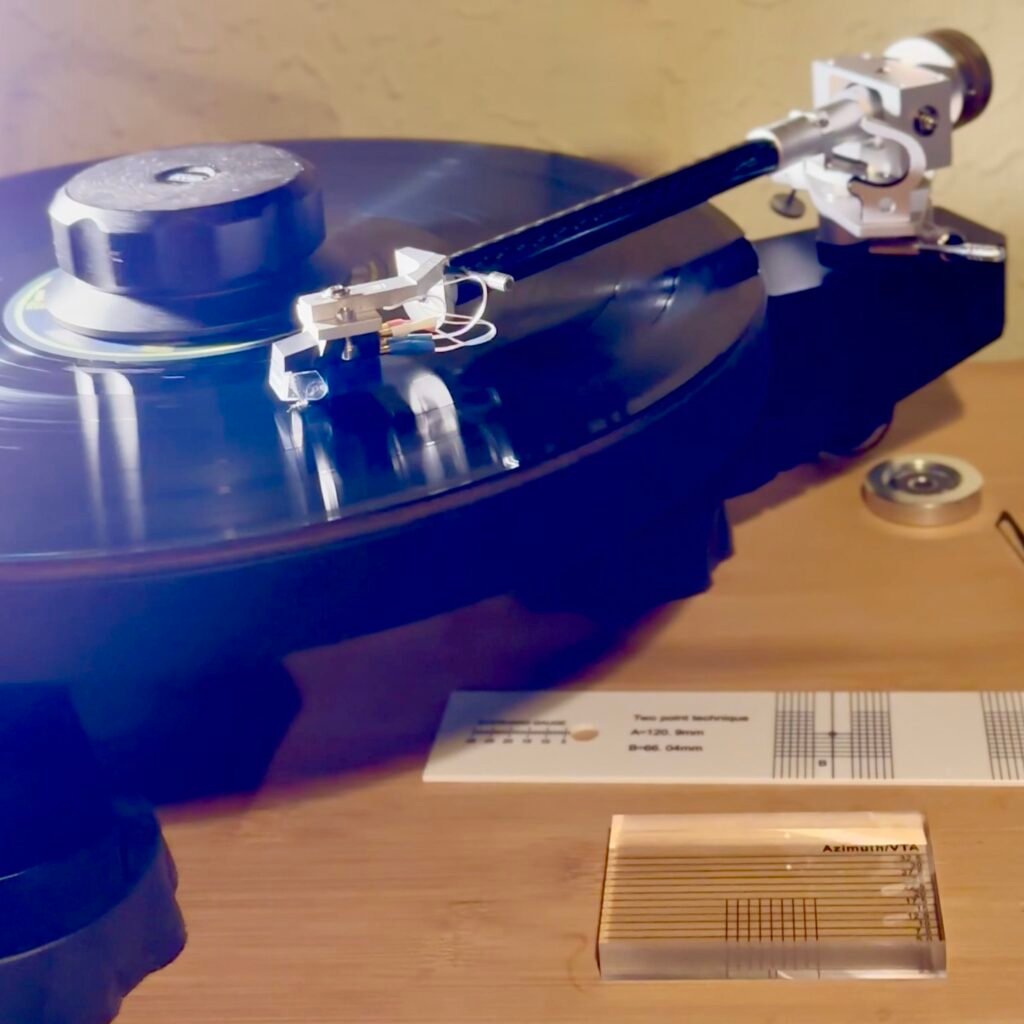
The original tonearm isn’t bad. It allowed Avid to offer a complete, straightforward and relatively affordable turntable. It simply didn’t give me the adjustment flexibility I wanted. The Classic Six gave me greater freedom to fine-tune the setup, not only through its greater control over the stylus as it tracks the groove, but also through the ability to adjust and fine-tune the cartridge. This margin for adjustment, combined with the differences I heard, made changing the tonearm a significant event for my system.
I’m not describing a laboratory test; I’m describing a real listening experience.
And here’s the irony: I started by asking myself whether a relatively affordable cartridge such as the VM520EB was good enough to justify changing the tonearm. I ended up asking the opposite question. Is the VM520EB good enough to reveal everything the Classic Six is capable of?
A question remains
AT-VM520EB is a relatively affordable and capable cartridge (at the time of writing, it is available for around €130). With the Classic Six, it was able to produce a convincing soundstage, separate the elements of a recording and reveal musical information that, in my system, I hadn’t been able to hear with the same clarity before the change of tonearm.
It also continued to show its limitations. Its slightly lean presentation and treble that can become fatiguing with certain records and extended listening sessions are still there.
The Audiomods Classic Six doesn’t need a top-flight cartridge to demonstrate what it can bring to the table. The VM520EB was enough to make significant differences apparent and allowed me to more fully explore my system’s capabilities.
Let’s return to the question I started with: did I hear more music, or simply more sounds? I found myself more often wanting to put on one more records. More music, then.
But that answer comes with an expiry date. It was reached using a relatively affordable cartridge,
and an affordable cartridge isn’t enough to explore the limits of a tonearm like this. In my system, the original tonearm wasn’t allowing me to hear everything the VM520EB had to offer. Now I need to find out how far the Classic Six can go. To do that, I’ll keep the turntable, tonearm, records and the rest of the system unchanged, and swap the cartridge. Next up is the Shelter 201, followed by another, and another… Along the way, the phono stage will also get its turn, since it has a say in the symbiosis with the cartridge.
Next stop in The Moustache’s Adventures on Analogue: the Shelter 201. This time, no shim.
Translation note: This article was originally written in Portuguese. AI tools assisted with its adaptation into English. The final text was reviewed and edited by the team. I remain fully responsible for its content and opinions.
The Tonearm used in this review was kindly lended by Audiomods
Pingback: Review Braço Audiomods Classic Six, 1ª parte: com a Audio-Technica AT-VM520EB - MoustachesToys | High-End Audio Reviews & Experiences