
This is one of the first articles in a series that, by now, is already guilty of running late.
The series was originally called Moustache’s Adventures on Analogue. I loved the turntable that debuted the series the very first time I heard it. It had a number of features that elevated its performance to a level far beyond what a casual observer might expect. When I compared it side by side with my current reference, the weakness they both shared became evident.
The concept: plug and play. The turntable arrives at home. You open the box. You set it up. It usually doesn’t require much tuning, and it’s ready to provide hours and hours of enjoyment.
Don’t get me wrong. For the vast majority, any one of them would more than satisfy its happy owner. However, there is a certain type of person who, when it comes to sound, is never satisfied with what they have — and who, because they are constantly searching for that 15, 10, 5, or even 1 percent improvement — whether in soundstage width and depth, in detail, texture — in short, in the perceived reality that their system is capable of delivering — we are willing to cross the Strait of Thermopylae and battle the 300 Spartans to achieve it.
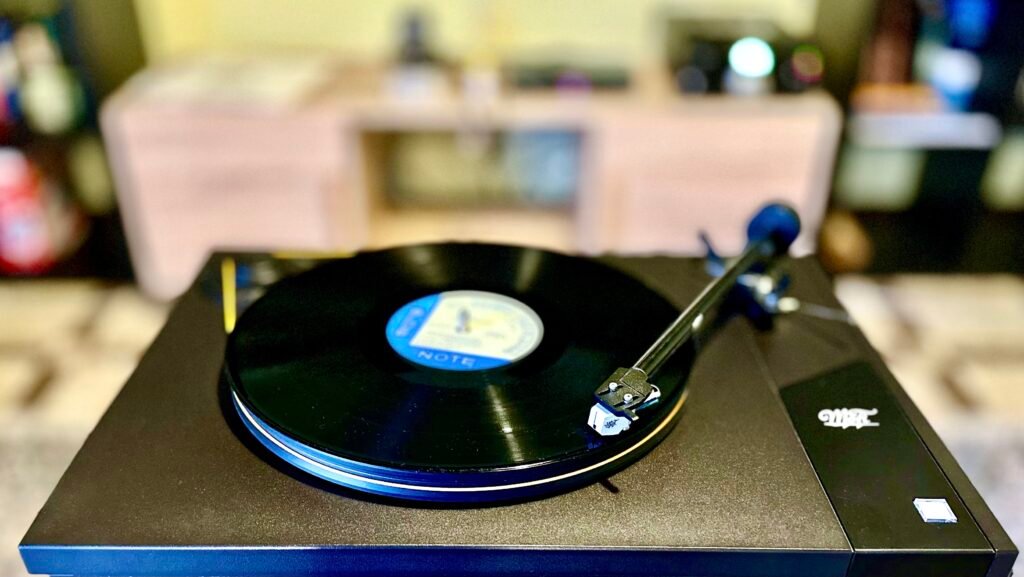
The first one, MoFi StudioPlayer, had one area for improvement: the cartridge. Avid Ingenium, the turntable that followed and which is currently the centerpiece of my analogue system (and a more modular architecture than it appears to be), actually demonstrated that the MoFi’s cartridge was far superior. In addition to the one that came standard — with its Avid reference, but which was nothing more than a Rega Carbon, which in turn is nothing more than an AT3600L with very minor modifications — the unit I have at home also came with a Rega-made tonearm, the RB110, to which Avid also assigns its own reference. This cartridge and tonearm were the Achilles’ heel of this setup.

I said ‘were’, because the next articles in this series will describe some possible upgrades for the Ingenium. The brand itself has already acknowledged this by launching the SE variant, with a new tonearm and motor (now charging double what they were asking when mine first arrived at Moustache’s Tower — which says a lot about the quality of this chassis).
However, this article isn’t (yet) intended to tell you about that part of my adventures in the analogue world. After all, a house starts with its foundations, and those foundations are the basis – the Ingenium. Right. In my case, as with so many others, I mainly buy my records second-hand. Some of those records have had needles spinning in their grooves since before I was born, and have also had dust and who knows what else accumulating in those grooves ever since. They were well and truly due a bit of TLC, weren’t they? After all, between the needle and the information residing there, there was much standing between me and the entirety of my music.
I’d already tried everything, from rubbing them along the grooves with various types of cloths soaked in water and alcohol, to other things I dare not describe here.
The Setup
OK. I’ll admit it. When I asked for a record washer to review, I had a particular motive behind it (my smart ass Portuguese DNA at work). Little did I know that this story would turn into something a bit more complex than the maximum 5,000 to 6,000 characters I’d planned for this article.
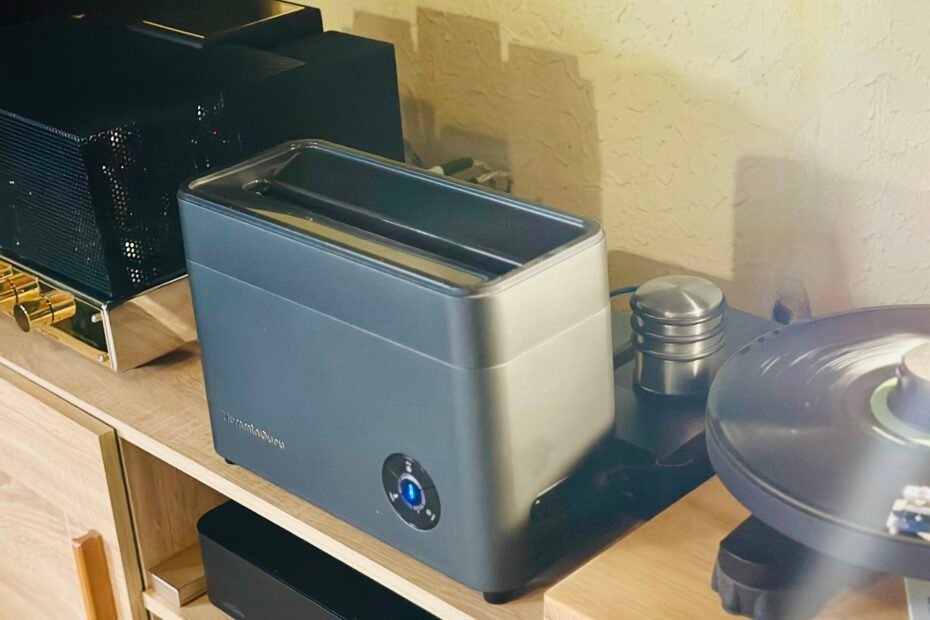
Ajasom, which distributes HumminGuru in Portugal, sent a manual machine and an ultrasonic one. When they arrived, the automatic liquid dispenser for the ultrasonic machine was included as well. We’ll get to that.
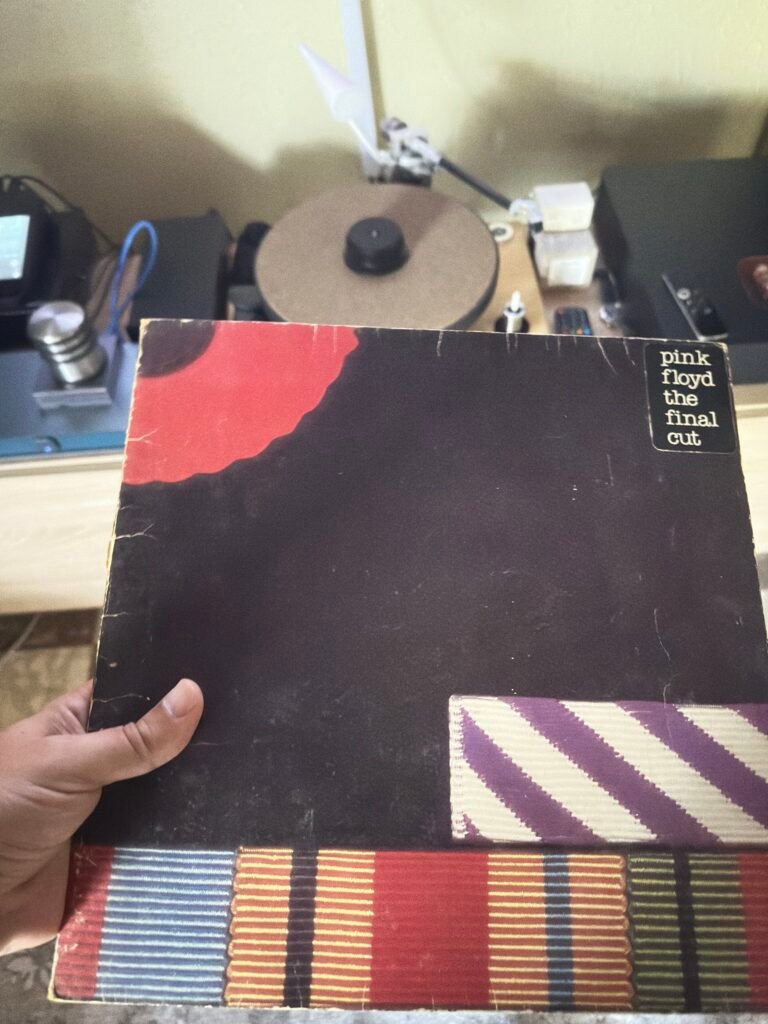
The first record I can call my own has been with me practically ever since my dad bought me my first hi-fi system. It came into my possession when I was 16, second-hand. The Final Cut, that album by Roger Waters, but credited to Pink Floyd. Ever since it arrived, this record had what I thought was a scratch, which caused it to skip right at the start of the first track. Right after “Tell me true, tell me why, was Jesus cruci…”. This was a real downer for me, and until a few days ago, has put me off listening to Side A ever since.
Precisely thirty-five years later, the EZ Vinyl Record Washer — HumminGuru’s manual record cleaner makes its debut with me. It is simply a vertical reservoir of cleaning fluid, into which the central spindle with a hand crank fits; you insert the records through the central hole and spin them manually through the fluid, where two goat-hair brushes sit opposite each other, with the record spinning in the centre. Goat hair is cited by leading experts as the ideal material for penetrating the groove of the record. Another feature is that, if you leave the cleaning fluid in the machine, it will look as though someone has left a piece of chèvre cheese uncovered. Here’s my advice: wash as many records as you can in one go. Then, depending on the condition of the liquid, either throw it away or, if it comes out clean, store it well away from the machine’s brushes…
As it turned out, my Final Cut wasn’t scratched. It just needed a proper clean. Disc saved!
For those who, like me, buy almost exclusively second-hand records, this could well be a must-have. So the time has come to put my entire small collection through the manual record washer. No sooner said than done.
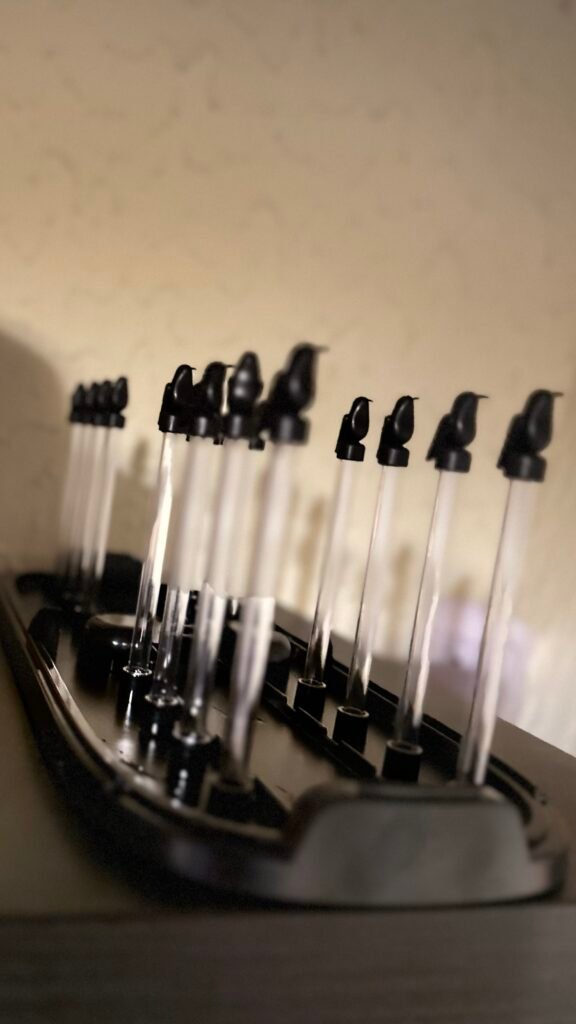
First impressions? After giving all the records in my collection a first spin in the EZ Washer, the fryer that seemed to be living behind the turntable hasn’t been permanently fixed – that’s a fact – but it appears to have moved much further away. That problem has been mostly sorted. But the surprises didn’t end there: the few 7-inch records I have work just the same. The base of the machine is detachable and houses the supports for the eight-record tray, with some really cool rubber ‘Humming Birds’ on the top to ensure our precious records aren’t damaged in any way.
The sight of the discs drying, in a house with a tumble dryer, reminded me of the time I stayed at a rural guesthouse in the Douro Region, where they hung the bed linen out on ropes stretched between stone posts, in the open, the old-fashioned way, with the linen smelling of Offenbach soap bar. Note: the records didn’t end up smelling of wet goat’s fur! The experience is memorable not only for the bed linen hanging out to dry and the scent of the soap, but above all because it took place against the backdrop of a 17th-century granite manor house, amidst fruit trees, on a escarpment overlooking the River Varosa. Connoisseurs will get it.
For anyone who cherishes their record collection, a record washer is the bare minimum required to get the very best out of them. And indeed, it makes all the difference — more than I might initially have realised, mainly because there’s probably no point in buying a better cartridge if the dirt trapped in the grooves prevents it from picking up the music recorded there.
On to the Ultrasonic Machine
I made a mistake here. Normally, you start with the minimum expected impact and work your way up through the next stages, so as not to take a step backwards. Well, my expectations got the better of me, and I tried out the ultrasound machine with the water dispenser already fitted, and only then did I take a step backwards.
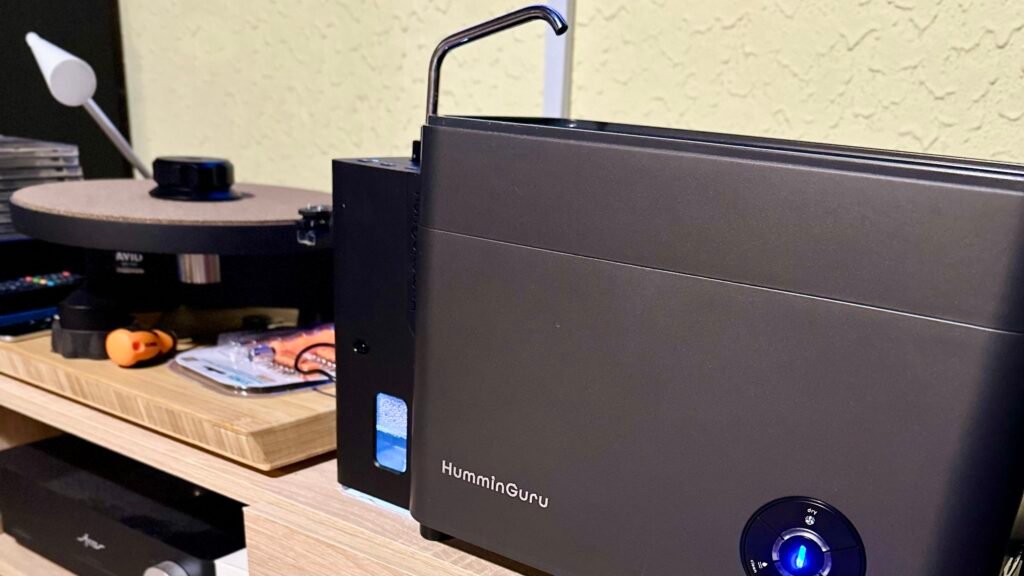
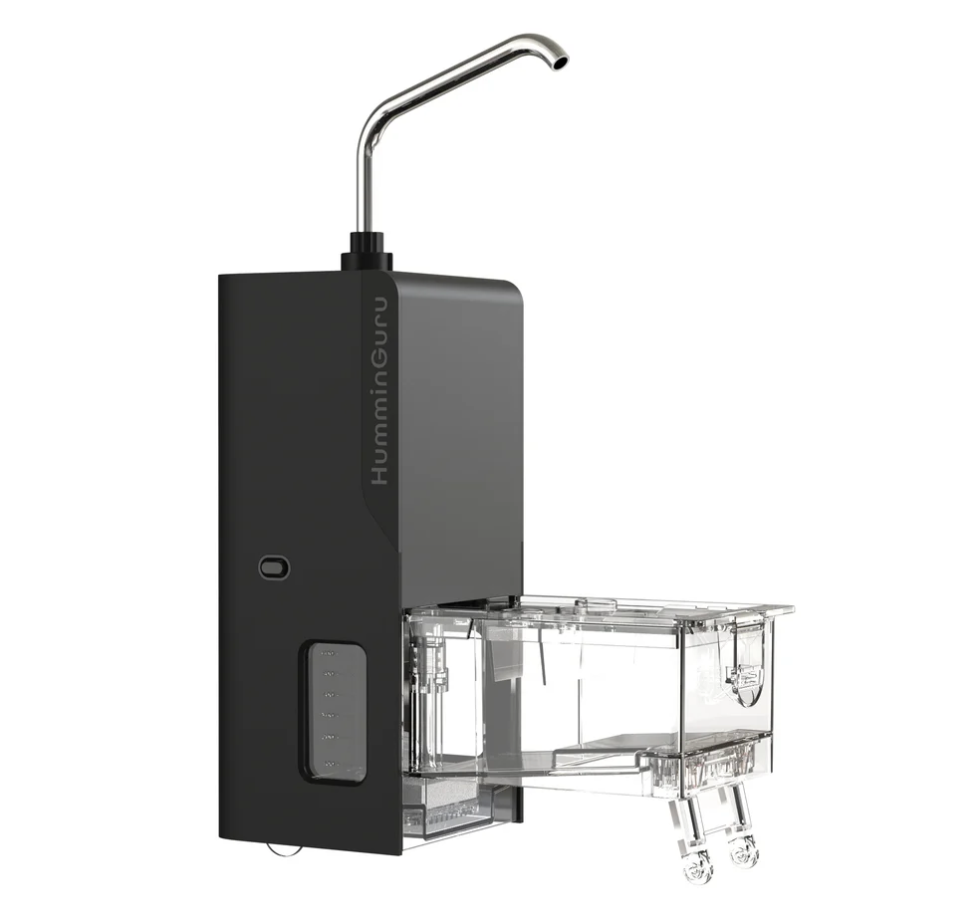
The ultrasound machine kit with the liquid dispenser is perfect for lazy people like me. The dispenser, as the name suggests, fills the machine with 400 ml of cleaning fluid (a solution of distilled water with two or three drops of cleaning fluid). When you select the automatic programme, the machine washes the disc on either the quick or long cycle, depending on your choice, and then automatically drains the solution back into the reservoir, which is then ready – at the touch of a button – to wash another disc without any manual intervention. The drying cycle also starts automatically if you wish. Simply remove the disc and load the machine with the next one, and so on. Without the dispenser, the process is very similar; you just have to forgo your laziness and manually transfer the solution from the reservoir to the machine again before the next wash. Simple, but less suited to these times when everything is just a click away.
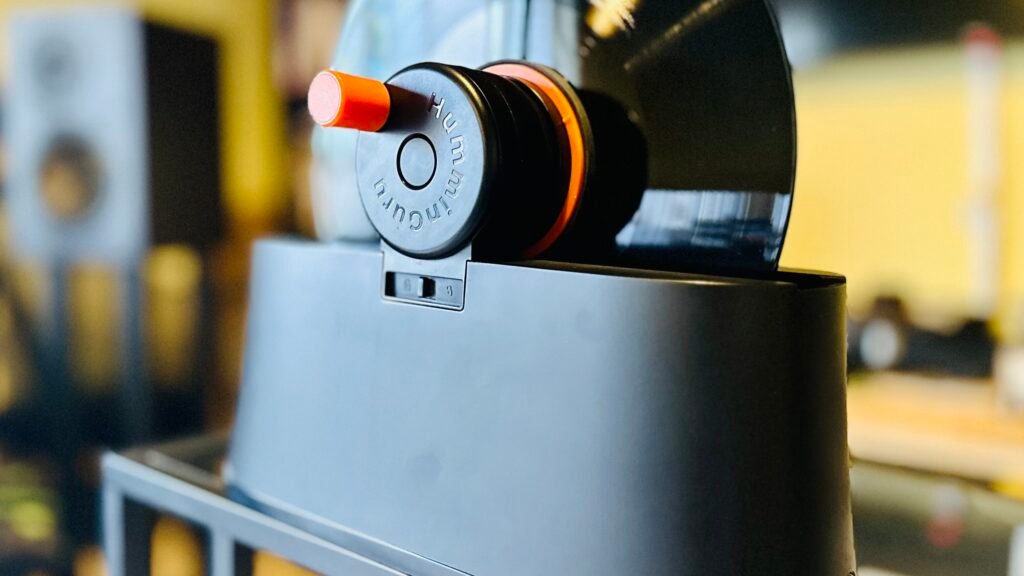
And what about the difference between the machines? The manual machine is the excavator that prepares the ground for the foundations of the musical building. The ultrasound machine, on the other hand, is capable of cleaning the walls so that we can hang the musical Picassos and Dalis. That was the major difference I was fortunate enough to experience, thanks to the coincidence that the machines arrived first, followed shortly afterwards by a new tonearm – also for review – which allowed me to test the two cartridges I’d had available up to the moment I’m writing these lines, by which time my ear had become more attuned to noticing the differences.
Analogue playback is essentially mechanical, and this upgrade process I’ve been going through over the last few months is proof of just that. Playing ‘cleaned’ records is simply another step along this path. If there is little or nothing between the stylus and the message engraved in the groove, isn’t this one of the most important steps towards a reproduction that more closely reflects the artists’ original intention?
It is worth noting here, for the sake of accuracy: as the arrival of the machines and the fitting of the new tonearm took place at virtually the same time, not everything I noticed that was different can automatically be attributed solely to the cleaning. However, there are specific examples that I confidently attribute to the records being cleaned.
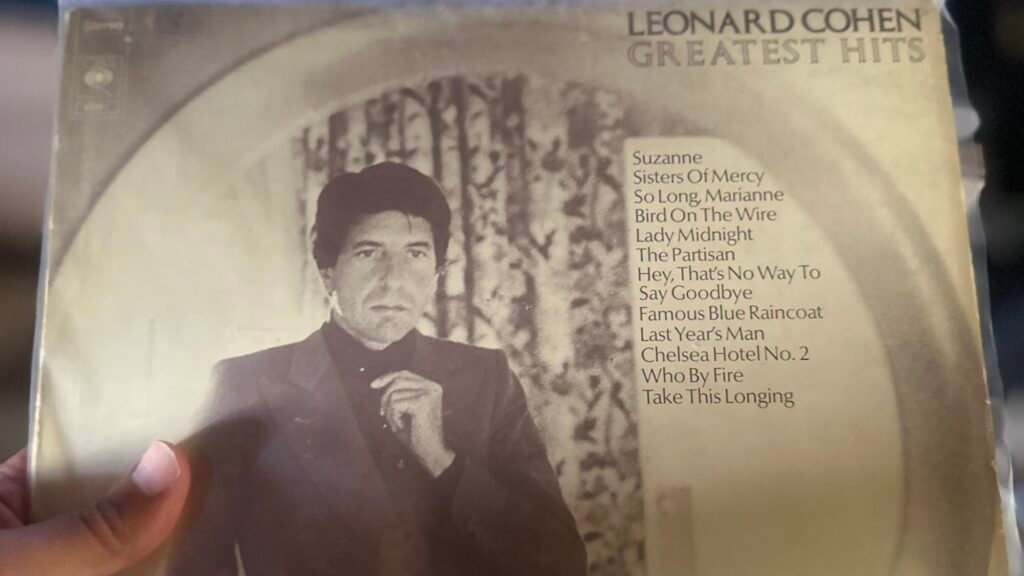
Leonard Cohen’s ‘Best of’ is an album that also thrives on silences — hitherto unfulfilled — which serve to bind Cohen’s words together. It has gained so much from this clarity. Could this be the missing step that was still preventing analogue from taking precedence over the convenience of streaming? Physical formats, in my opinion, were preferable until now, if only to support the artist’s work. Orff’s Carmina Burana has become an album that can be enjoyed from start to finish, O Fortuna — ‘enjoyable’ is too small a word for this brilliant work, now fully accessible from beginning to end. Kate Bush’s voice has finally gained the dignity it deserves on Don’t Give Up, from Peter Gabriel’s So, where there used to be graininess. And the crescendo of Ravel’s Bolero, which was hard to bear in the opening minutes due to the noise competing with the music for my attention.

These are just a few examples of records that have now become part of my regular listening routine, whereas before they were records I avoided playing because of the years of grime that had built up in the grooves. Anyone who owns records will know what I mean. Years, even decades, of accumulated dirt prevent the needle from making full contact with the message the artist left for us there on the record.
Did the sound come out crystal clear, just like in digital? Hell no! Vinyl without crackling isn’t vinyl — even my new records gain some crackling. It would actually sound strange to the ear. Washing the record doesn’t sterilise it. It simply removes most of the dirt that was stopping me from hearing the music as it really is.
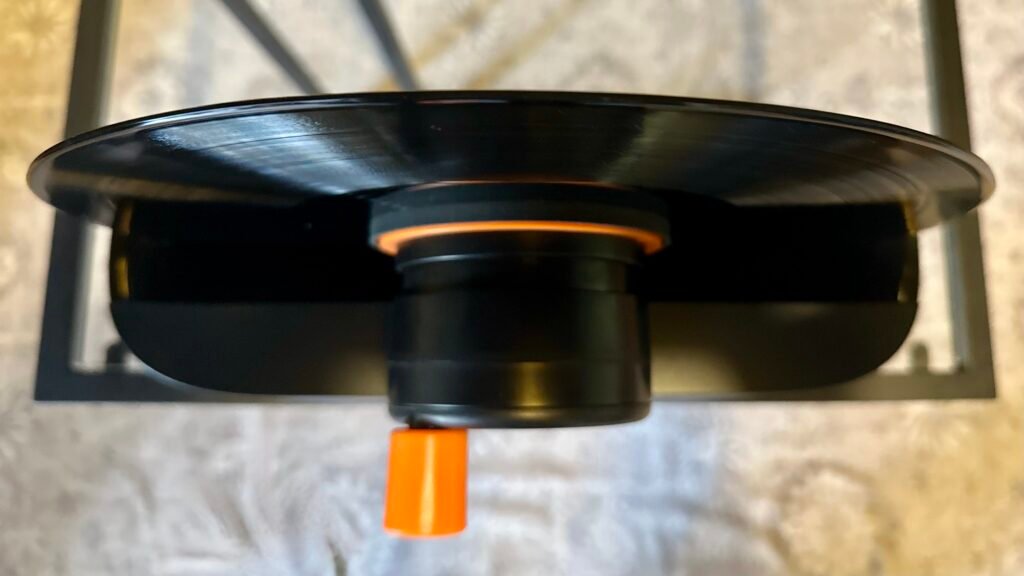
A manual record cleaning machine is undeniably good value for anyone who frequently buys second-hand records, at a price of €76/$87. As for the ultrasonic cleaner, the manufacturer is asking almost five times as much.
Can you already guess how this story ends? Well, yes. But only the manual machine found its way back. The ultrasound machine isn’t going anywhere now! As for the dispenser… this time laziness didn’t get the better of me. It was returned as well.
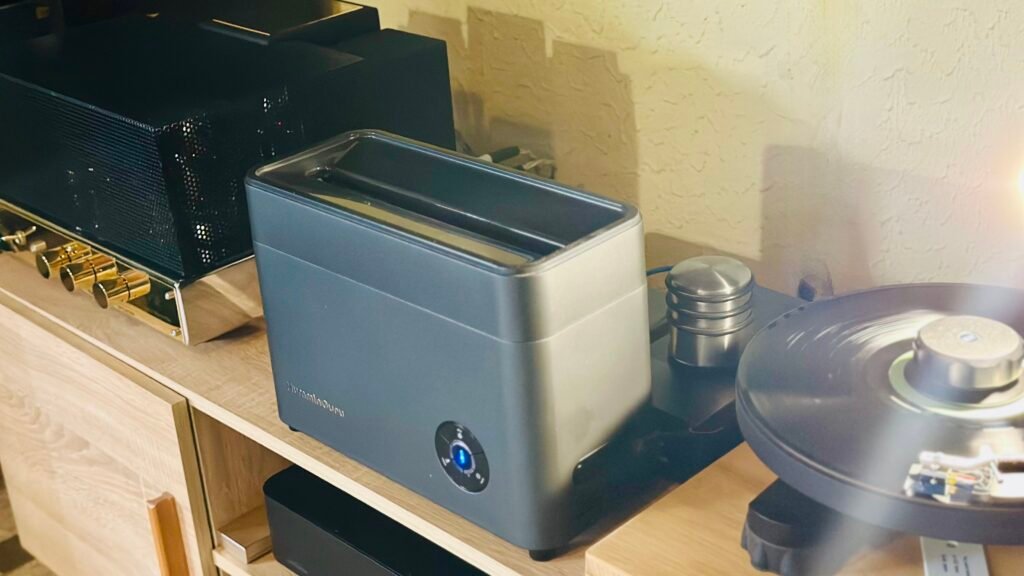
A battle won, but not the war. Not yet. The 300 Spartans are still awaiting the next instalments in this series. The foundations have been laid. The house, however, is yet to be completed.
The two record cleaning machines, as well as the cleaning fluid dispenser, used in this review were kindly provided for review by Ajasom. The ultrasonic cleaner has now become part of the reference system used for all reviews published here on MoustachesToys.
Pingback: As Minhas Aventuras no Analógico: Review Máquinas de Lavar Discos HumminGuru - MoustachesToys | High-End Audio Reviews & Experiences