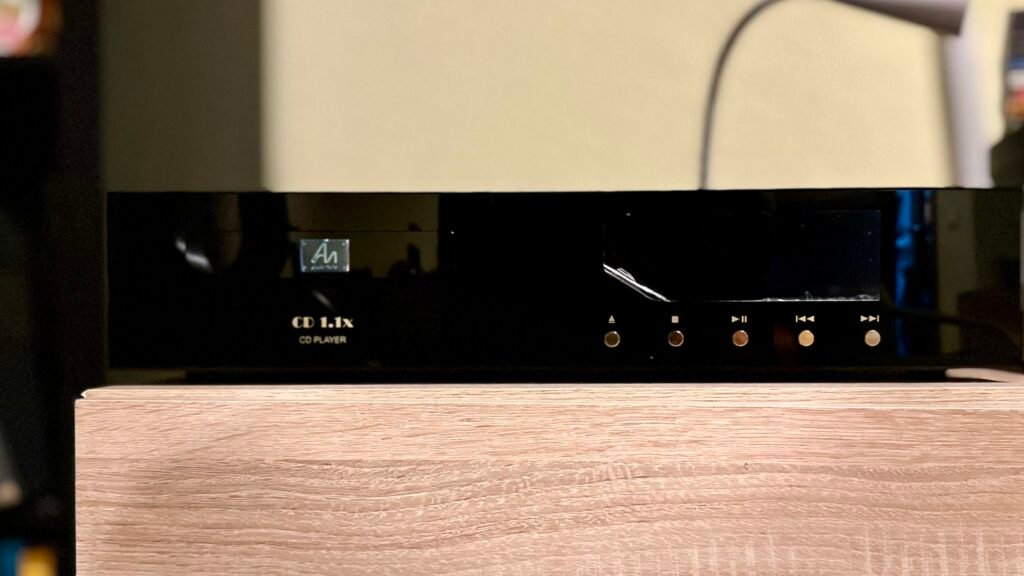
I have a certain suspicion of equipment that people claim brings digital playback closer to analogue. The word analogue, when applied to digital, has been used to describe so many things: warmer sound, sharpness treble, fuller bass, less incisive attack. Round off the edges and, hey presto, the Holy Grail of music has been discovered!
There is a problem with preconceptions: they are assumptions we take for granted, and they need to be tested against reality.
That is exactly what happened when the Audio Note CD 1.1x arrived my listening room. And no, I did not find it a dark-sounding CD player. The story is a little more complicated than that.
Rage Against the Machine: the torn shirt
Let’s start with my reference system, because context matters. The Accuphase E-280 integrated amplifier and Revival Audio Atalante 3 loudspeakers form a combination with sound that has body, texture and a very organic presentation. They do not need much help to make music sound fluid and enjoyable, even during extended listening sessions.
This was the system into which I introduced the CD 1.1x.
My first impression was good. Very good, in fact. There is substance in the midrange and bass, voices have a convincing physical presence, and the treble is extended and sweet. Cymbals have a delicious shimmer and retain their decay in a way I do not often encounter at this price level. And no, I never felt as though someone had drawn the curtains to make the sound more comfortable.
Then I pressed play on the first Rage Against the Machine album.
This is music that should feel as though it is trying to rip my shirt off with sheer anger. I want the tension, the attack, the fury. Listening to this record should make me feel as though tyres are burning and shopfronts are being smashed outside.
With the CD 1.1x feeding the Accuphase and Atalante 3, Zack de la Rocha seemed more polite. The anger was still there, but someone had apparently asked him to lower his voice while sitting at the dinner table.
This was not a lack of detail, quite the opposite. It was the way the music was presented. Tom Morello’s guitar did not tear into the notes with quite the abrasive edge I expected. Brad Wilk’s drums were still kicking me in the chest, but the impact felt more cushioned. The music had lost some of the tension I associate with this recording.
The Accuphase has its own particular way of integrating musical events. The Atalante 3 add body, texture and fluidity. The Audio Note brought more of the same to the mix. Put simply, they all round off the sharp edges. My native language is Portuguese, and there is an English expression that describes this perfectly: too much of a good thing.
The soundstage did not become narrower or flatter. Quite the opposite. But instead of musicians drawn in precise Indian ink, the picture seemed to have been painted in watercolour. Everyone was still in the right place; the outlines had simply lost some of their definition.
Do Sia and Sophie Barker are flesh and bone?
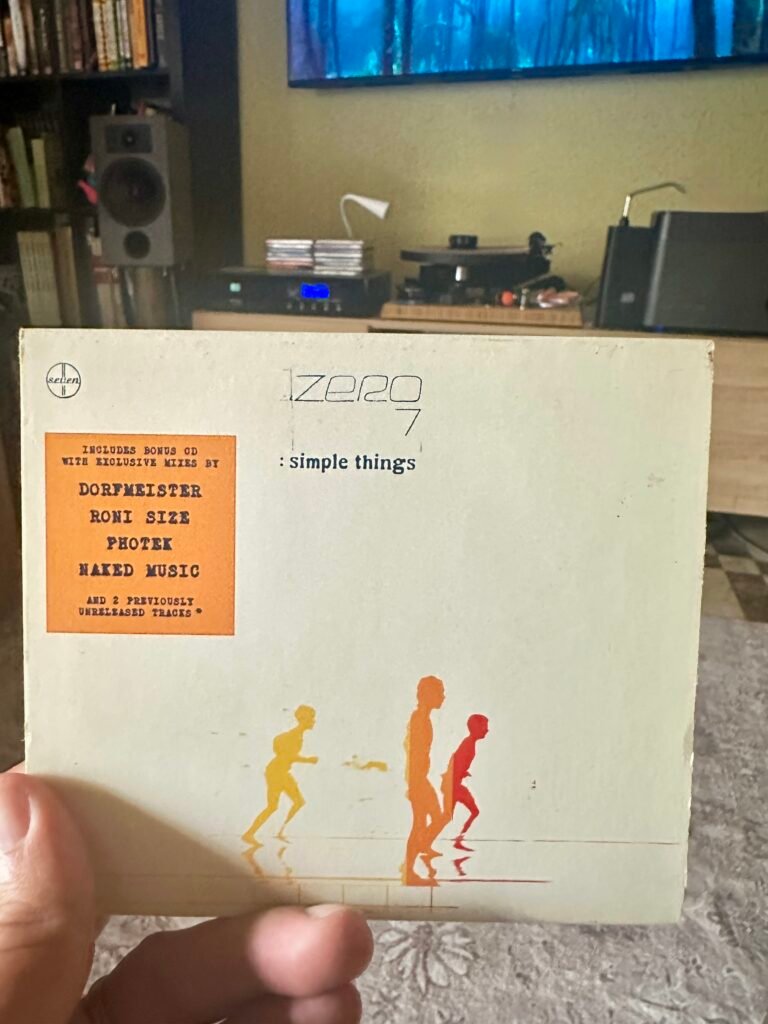
Let’s change records. Simple Things, by Zero 7, with, at times, the voices of Sia and Sophie Barker.
This is one of those recordings that allows me to tell straight away whether a system gives voices genuine body. There is an organic quality, a physical presence that goes beyond the articulation of words. It is what I tend to call flesh on the bone.
The Audio Note does this exceptionally well. The voices are not excessively illuminated. The information is all there, but there is no apparent desire to shine a spotlight on the equipment’s ability to reproduce it. The voices are simply there, with texture, density and a naturalness that makes you want to keep listening. And then play another record.
The strings of acoustic guitars have that initial snap that makes us recognise the instrument, without becoming metallic or aggressive.
And the cymbals? A delight. They have shimmer, plenty of extension and a natural decay that can be followed until it fades away. They are not muffled, but neither do they sparkle endlessly.
This is precisely why I would not accuse the CD 1.1x of sounding dark. The information is there. What changes is the way it is presented.
There is light in the treble, but it is LED rather than xenon. A light that seems to wrap around objects rather than emphasise their outlines. With the Audio Note, notes flow naturally into one another, instruments seem to share the same space, and voices acquire a density I find very appealing.
But on some records, I miss a little more contrast. Music should be organic, of course. But it also needs tension. This may sound like I’m hair-splitting, but it matters when a particular strength stops being an advantage and starts becoming a bit excessive.
A drumstick wrapped in fur
The CD 1.1x’s bass deserves a conversation of its own.
Some equipment presents bass drum as a dry, precise, almost geometric thump. The Audio Note prefers to give us the sensation that there is something physical behind the impact. We do not simply hear the strike: we sense the drum skin, the volume of the shell, the displaced air and the sustain that follows.
The best way I have found to describe this: imagine a drumstick wrapped in fur, rather than bare wood striking the drum skin. The impact is still there, but it lacks the hardness of the bare stick. There is an extra layer of material that makes it rounder, fuller, almost tangible. A little like the difference between hearing a door slam and feeling the weight of a solid wooden heavy door closing.
The midrange follows the same philosophy. Keith Jarrett’s piano has harmonic weight. Nick Cave’s voice acquires Arnold Schwarzenegger’s ribcage.
With the CD 1.1x, instruments seem made of wood, skin, strings and physical substance. It is a presentation that makes me think about the materials from which instruments are made, not merely the notes they produce.
In my system, however, this richness came at a price. The music gained mass and texture, but I felt it lost some of the subjective speed and contrast that allow me to follow musical events with greater precision. I gained fluidity and density, but did not always find the nerve I look for.
The devil in the detail?
It would be easy to write that the CD 1.1x trades detail for musicality. But that is not what I heard.
During its stay, there were microdetails that the player revealed and that I do not perceive in quite the same way with my Volumio Rivo + (the link is for the Volumio Rivo review I had earlier, not the Rivo +, the present reference in my system) and Fezz Equinox combination. The Audio Note does not conceal information. It simply does not ask for a medal every time it reveals something.
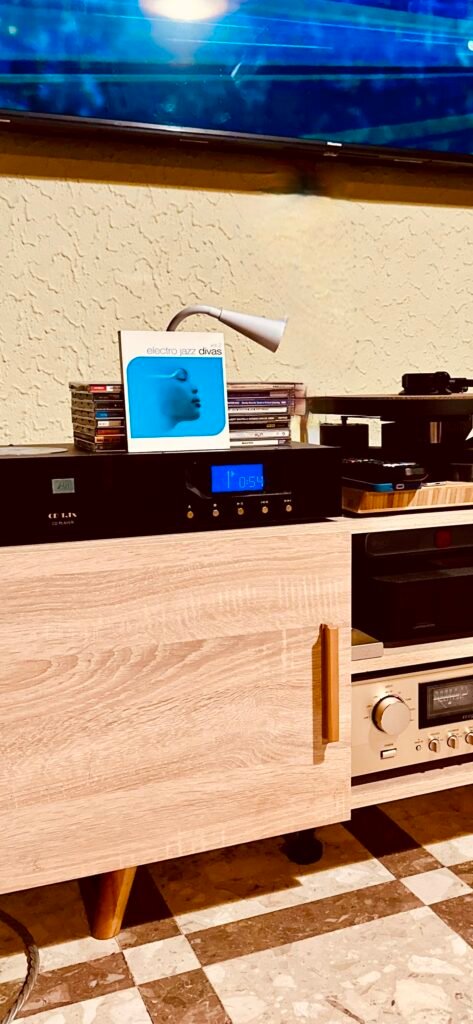
What I noticed was a difference in the way that information was organised within the overall presentation.
The CD 1.1x favours harmonic coherence, texture and continuity between musical events. My streaming and DAC combination, already considerably more organic than most, offers an open presentation, with a more defined attack and a clearer sense of spatial separation.
They have different strengths. The CD 1.1x has surprised me on several occasions with more micro-detail, but the Equinox gives me a more open overall picture, which is easier to analyse.
The Audio Note’s extended treble allows cymbals to retain their decay, voices reveal subtle nuances, and acoustic instruments acquire remarkable tonal richness.
The problem is that, in my system, the amplifier and loudspeakers already do a very good job of connecting musical events. The Audio Note does much the same further upstream.
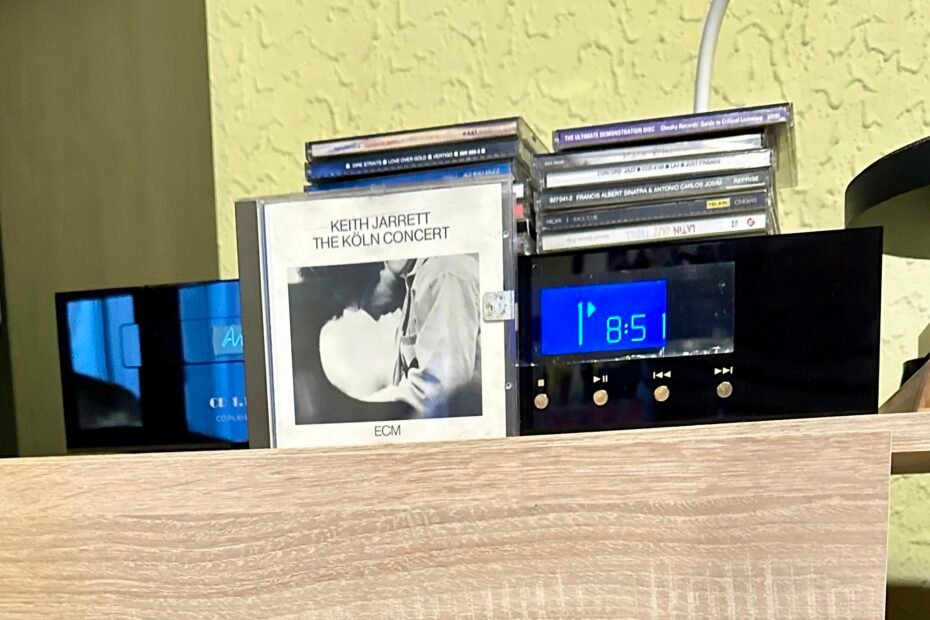
Keith Jarrett’s The Köln Concert

During the CD 1.1x’s stay, I played Keith Jarrett’s The Köln Concert several times. And I did not get tired of it.
The fact that I returned to this recording so often deserves to be emphasised, because I am not usually someone who listens to the same things repeatedly. I remember actually looking forward to getting home so that I could play it on the CD 1.1x.
And isn’t that one of the finest qualities an audio component can have? Making us look forward to getting home to listen to music?
The piano’s harmonic richness, the body of its notes and the way the sound develops over time made for a particularly involving experience. The Audio Note did not force me to choose between the natural character of the instrument and the desire to keep listening.
I wasn’t wondering whether the piano had more or less definition, whether the soundstage was deeper or shallower, or whether I could identify one more detail. I simply wanted to hear the record. And then hear it again.
Isn’t that what really matters?
I took the CD 1.1x to a friend’s house
There was one question I could not answer from my listening room. How would this rounded presentation work in a completely different system?
I took the player to a friend’s house, where we connected it to a Lyric Ti100 MkII amplifier, fitted with KT170 output valves, and Duevel Bella Luna omnidirectional loudspeakers equipped with horn tweeters.
It was an important change of context. The Bella Luna present sound in a very different way. In this combination, the amp seemed to give the music more drive, while the system as a whole brought a sense of contrast that I had missed at home. I would not turn this into a general rule about KT170 equipped amplifiers or loudspeakers with horn tweeters. I am simply describing what I heard in that particular system.
This was where the Audio Note had a chance to shine in a different way.
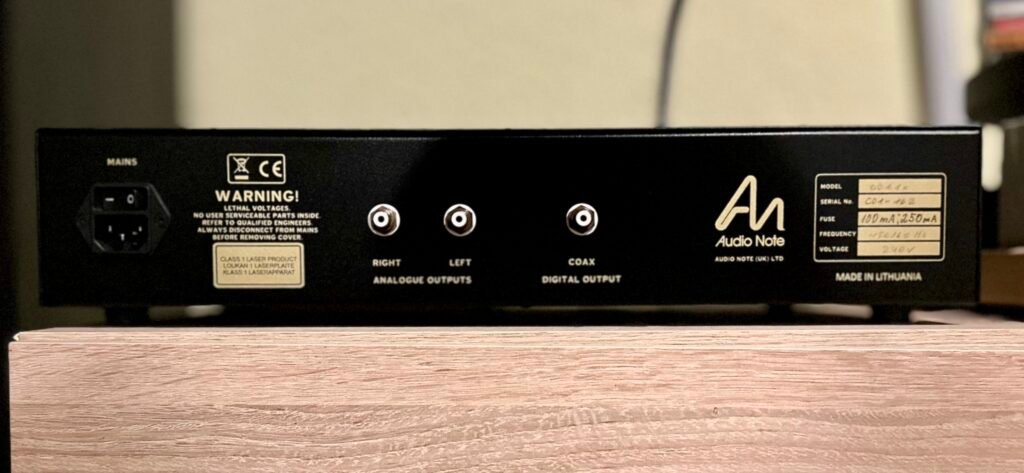
Its dense signature did not disappear. I could still recognise the weight of the midrange, the softning of hard edges and the way instruments seemed connected to one another. But what had sometimes struck me as over-romanticised at home now sounded refined.
The player had not stopped sounding velvety. This time, however, its smoothness was balanced by the drive and contrast of the rest of the system.
This experience mattered because it stopped me from reaching an overly simplistic conclusion. Had I only listened in my own system, Perhaps I had come to the conclusion that the 1.1x CD was simply too gentle. But hearing it in another context showed me that the matter was not quite so straightforward.
An audio component does not play on its own. A characteristic that becomes excessive in one system may be precisely what another system needs.
And one thing was obvious at the end of the evening: my friend was not particularly happy to see me take the player away…
It is one of the reasons we should avoid universal truths about audio equipment. What matters is not whether a CD player is warm, cold, fast or slow in the abstract. What matters is what happens when we connect it to a particular system and put some music on.
Poetry, Indian ink and watercolour
I have occasionally been accused of being too poetic when describing my listening experiences. That is one way of looking at it. But listening to music is not simply a matter of measuring instrument separation or counting how many details we can identify in a recording.
The problem is that poetry also needs some sense of proportion.
The CD 1.1x made me think about this. There is an obvious beauty in the way it presents music, in the continuity between notes and the density it gives to voices and acoustic instruments. But there are moments when I want to tear my shirt off, smash shopfronts and set fire to tyres.
I want poetry, but I also want rock ‘n’ roll.
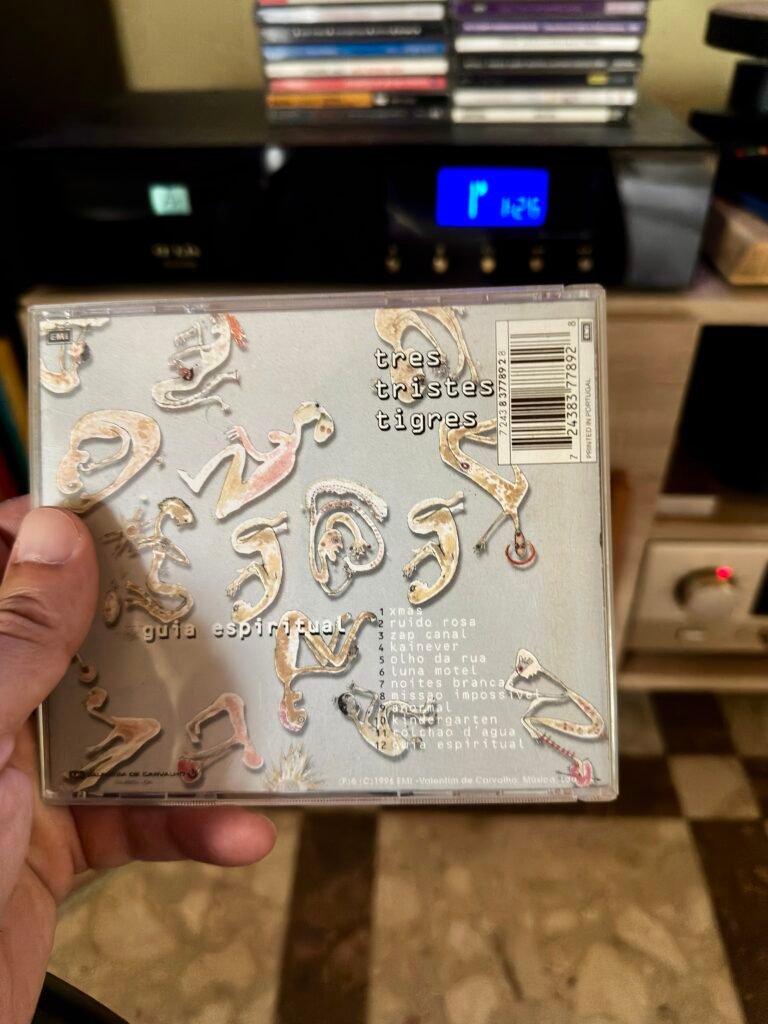
In my system, the Atalante 3 already give me plenty of what I look for in texture and body. The Accuphase helps everything flow with refinement and authority, without a tiring listening. Perhaps it is simply a matter of taste. My system already is generous in what the Audio Note is so good at providing.
I like chocolate, but I also like adding fleur de sel. Sometimes I even add chilli.
What I know is that, at this point, I am looking for a balance between organic presentation and attack. At my friend’s house, I heard that balance. At home, I reached a somewhat different conclusion.
I want to hear the wood, the drumhead, the breath. But I also want to hear the space created by the contrast between them.
Would I buy one?
If I had a lean sounding system, or one that veered too far into analytical territory, the Audio Note CD 1.1x would be an option I would take very seriously. Its ability to add body to voices, texture to instruments and continuity to music could provide exactly the balance that was missing.
In my system, however, it did not strike me as the all-round source I am looking for. For relaxed listening sessions, particularly with voices, acoustic jazz, folk, piano and small ensembles, it would be a very serious contender. Keith Jarrett’s The Köln Concert is a good example: the way the piano was presented made me return to that recording time and again.
My system already has its fair share of body, texture and fluidity. With the Audio Note, I missed more contrast, more space between instruments and sharper transients.
The same was not true in my friend’s system. And it was obvious he was sorry to see me take the player home!
I would not call the CD 1.1x dark, because it isn’t. Nor does it lack detail. My reservation is different: in my system, its way of integrating music became excessive on certain records. In my friend’s system, the same characteristic was better balanced.
The CD 1.1x showed me that musicality is not simply about removing sharp edges or making everything more enjoyable. Integration has enormous value, but it is not the only thing that matters. Space, contrast and tension are also part of music.
The CD 1.1x rounds things off, that is true. But it does not darken the sound or hide information. It integrates. Sometimes, relentlessly.
The Audio Note CD 1.1x has a personality of its own and, with some records, made me want to listen to more music. In a market where so much equipment seems designed simply to please everyone, that is no small achievement.
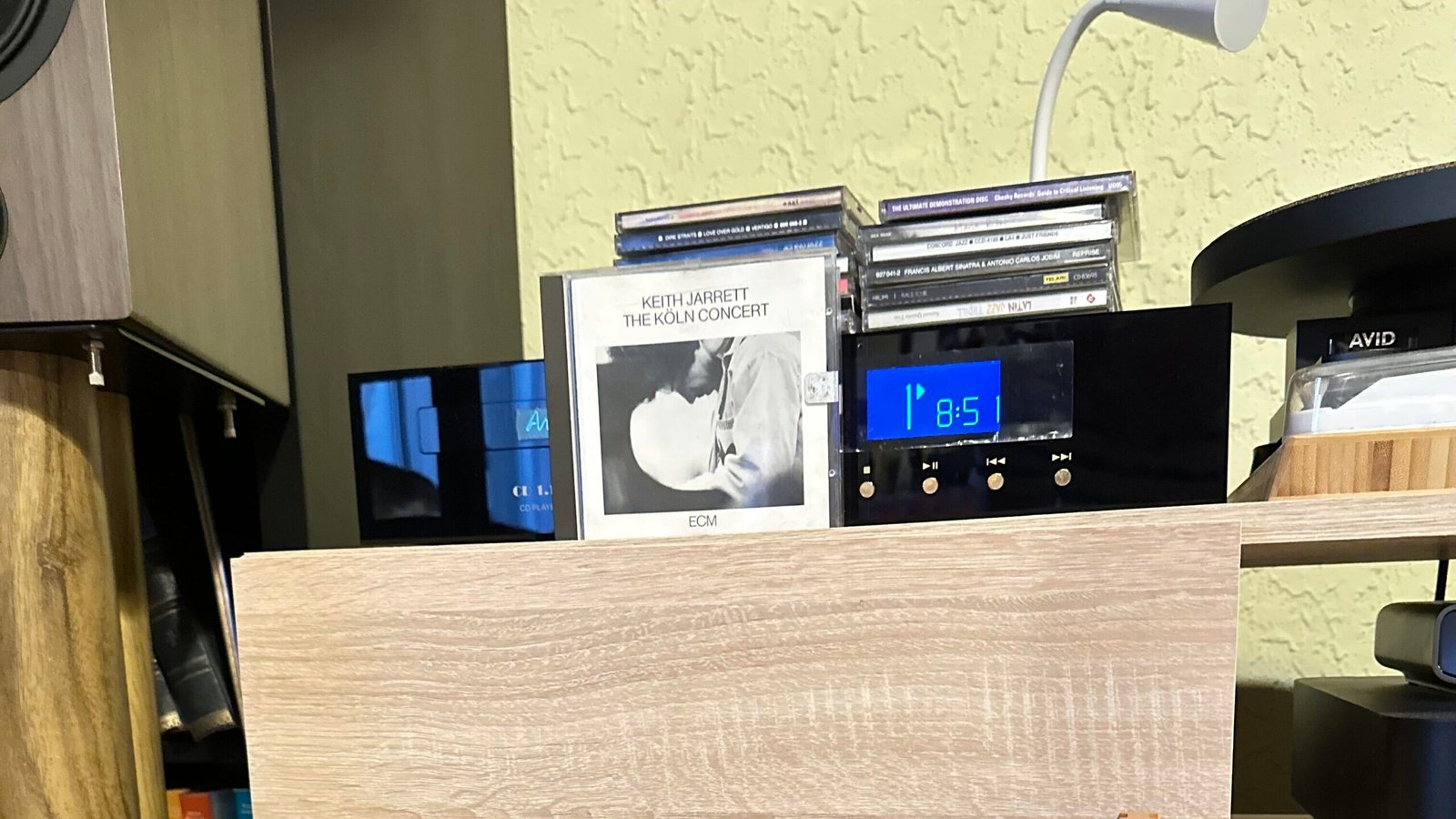
The Audio Note CD 1.1x Technical Specifications
The Audio Note CD 1.1x used in this review was temporarily loaned by Exaudio, Audio Note’s distributor in Portugal
Pingback: Audio Note CD 1.1x, O integrador implacável - MoustachesToys | High-End Audio Reviews & Experiences